
Superlok® USA · Chemical Processing
Why 316 Stainless Still Pits in Chemical Service, and How to Specify a Connection That Holds
Corrosion-resistant does not mean immune. In a chemical plant the failure starts in a crevice, a thread root, or a rough patch of bore, long before anything shows on the outside of the tubing.
A chemical plant rarely fails all at once. It fails at the connections, quietly, from the inside out. According to the landmark NACE International IMPACT study, corrosion costs the global economy roughly $2.5 trillion every year, about 3.4 percent of global GDP, and the chemical process industries carry a heavy share of that bill. Here is the part that catches good engineers out: specifying corrosion-resistant stainless steel does not by itself make a line safe. A 316 fitting can sit in a line for years and then leak, because the attack is local, it is chemical, and it begins on surfaces nobody can inspect once the system is closed. This is a practical guide to why that happens and what to confirm before a connection goes in.
Corrosion-resistant does not mean immune
Stainless steel does not resist corrosion because it is inert. It resists because chromium reacts with oxygen to form a thin passive oxide film that reheals itself when scratched. Everything about chemical service comes down to whether that film can keep repairing itself faster than the media can strip it away.
Chloride ions are very good at stripping it. That is why 316 outperforms 304 in chemical work: 316 adds roughly 2 to 3 percent molybdenum, which stabilises the passive film specifically against chloride attack. The industry compresses that into one number, the Pitting Resistance Equivalent Number, calculated as PREN equals percent chromium plus 3.3 times percent molybdenum plus 16 times percent nitrogen. Typical values land around 18 to 21 for 304, 24 to 26 for 316, and 33 to 36 for duplex 2205. Higher is more resistant to chloride pitting. It is a screening tool, not a guarantee, but it tells you honestly where a grade sits before you trust it with a process stream.
Three ways a chemical line kills a connection
General, even corrosion across a whole surface is the failure mode you can predict and plan for. The dangerous ones are local, and two of the three below are specific to the geometry of a fitting rather than the tubing it joins:
A joint that passed its pressure test can still be losing the argument with the fluid inside it:
Pitting
Chlorides break the passive film at one weak point and drive down. The pit turns acidic inside itself and accelerates, so it can bore through a wall while the surface around it stays bright.
Crevice corrosion
Any tight gap traps stagnant media and the chemistry inside it turns aggressive. A ferrule seat and an engaged thread are crevices by definition, which is why fittings fail before straight tube does.
Chloride stress cracking
Put an austenitic grade under tensile stress in a hot chloride environment and it can crack rather than thin. There is no wall loss to find on inspection, which is what makes it ugly.
The chloride number nobody states plainly
Ask what chloride level 316 can tolerate and you will get a single number, which is the wrong answer. For chloride stress corrosion cracking under full immersion, the risk is generally considered low below about 60 degrees Celsius, or 150 degrees Fahrenheit. The catch is that bulk concentration is not what attacks the metal. Wherever the fluid can evaporate and concentrate, under insulation, at a hot wall, beneath a deposit, or in a dead leg, the local chloride level climbs far above what the bulk sample says. Failures have been documented at bulk levels as low as 10 parts per million under exactly those concentrating conditions.
The practical takeaway is not to memorise a threshold. It is to ask where the fluid can sit still, dry out and concentrate, because that is where a joint will fail first, and a fitting with a dead volume or a rough internal surface gives it more places to do that.
Matching the alloy to the media
Most chemical process and instrumentation lines are correctly served by corrosion-resistant 316 or 316L stainless steel. Some are not, and pretending otherwise is how people get hurt. Here is the honest selection logic, screened by PREN:
| Service condition | Typical grade | PREN | Superlok® stock |
|---|---|---|---|
| Mild service, low chloride, ambient | 304 / 304L | 18–21 | Not for chlorides |
| General chemical process and instrumentation | 316 / 316L | 24–26 | In stock |
| Welded assemblies and heat-affected zones | 316L | 24–26 | In stock |
| Higher chloride, elevated temperature, cracking risk | 317L / duplex 2205 | 29–36 | Specialty |
| Sulfuric acid service | Alloy 20 | varies | Specialty |
| Mixed oxidising and reducing acids, wet chlorine | Hastelloy® C-276 | varies | Specialty |
Superlok® stocks corrosion-resistant 316 and 316L stainless steel. If your chemistry genuinely needs duplex, Alloy 20 or a nickel alloy, we will tell you that rather than sell you a 316 part that will not survive the service. Always confirm grade against your own media, concentration and temperature.
316 or 316L, and why the letter matters
These are not marketing variants. The L means low carbon, under about 0.03 percent. When stainless steel is welded, the heat can drive carbon to the grain boundaries where it combines with chromium to form carbides, which locally robs those boundaries of the chromium they need for the passive film. That is sensitization, and it makes the heat-affected zone vulnerable to intergranular attack even though the base material is fine. Low carbon 316L largely avoids it. If the assembly will be welded, specify 316L. If it is a mechanically made-up compression connection with no welding, standard 316 is normally appropriate.
Corrosion starts on the surface you cannot inspect
Two fittings can carry the same grade stamp, the same rating and the same thread, and behave differently in service, because pitting and crevice corrosion are surface events. A rough interior is a field of tool marks and valleys that disrupt the passive film and hold stagnant media, and published work on stainless steel confirms what that implies: smoother surfaces resist pitting initiation better, because there are simply fewer defects for a pit to nucleate in and less to trap the chlorides that start one.
Standard mill finishrough bore
Interior wall, magnified cross-section
Peaks, valleys and tool marks hold stagnant media and let chlorides concentrate, which is exactly where a pit gets started.
Dark dots mark where chlorides concentrate and pitting begins.
Superlok® finishsmooth bore
Interior wall, magnified cross-section
A smoother wall gives the attack fewer places to start and rinses clean instead of holding residue between batches.
Fewer surface defects means fewer sites for a pit to nucleate.
Alloy choice is only half the joint
This is the part most corrosion articles leave out. You can pick the right grade and still lose the connection, because in chemical service the fitting has to survive vibration from pumps, thermal cycling from batch operations, and being taken apart and remade during a turnaround. Mechanical integrity and corrosion resistance are the same problem.
That is the case for a twin-ferrule design. The front ferrule does the sealing against the tube surface, while the back ferrule grips the tube and absorbs vibration and bending load, so the seal is not being asked to do both jobs at once. A single ferrule has to seal and hold simultaneously, which is why twin-ferrule connections generally hold up better where lines vibrate and where joints get remade. Superlok® tube fittings are a twin-ferrule design, which is also what makes them cross-reference cleanly to the part numbers already on most process drawings.
- Grade and traceability. Corrosion-resistant 316 or 316L stainless steel, with a material test report on file so you know what is actually in the line.
- Interior surface finish. A smooth, clean bore, because pitting and crevice attack begin where the surface is roughest.
- Ferrule design and remake. Twin-ferrule where the line vibrates or the joint will be opened again at the next outage.
- Documentation. Pressure rating and material certification on paper, so QA and the inspector have a clean trail.
A turnaround will not wait for a back-ordered fitting
Specification is half the job. The other half is whether the part is on a shelf when a unit is down. A turnaround is planned to the hour, and an idle crew waiting on a fitting that costs less than lunch is the most expensive kind of quiet. The gap between the two outcomes is not small:
A specified brand on allocation, versus a corrosion-resistant part from stock:
Superlok® has supplied leak-tight connections around chemical injection pump systems and process lines for three decades, which is the least glamorous and most telling corner of a plant. We have made the same argument about oil and gas instrumentation, where the driver is pressure rather than chemistry.
Built cleaner, and ready to ship
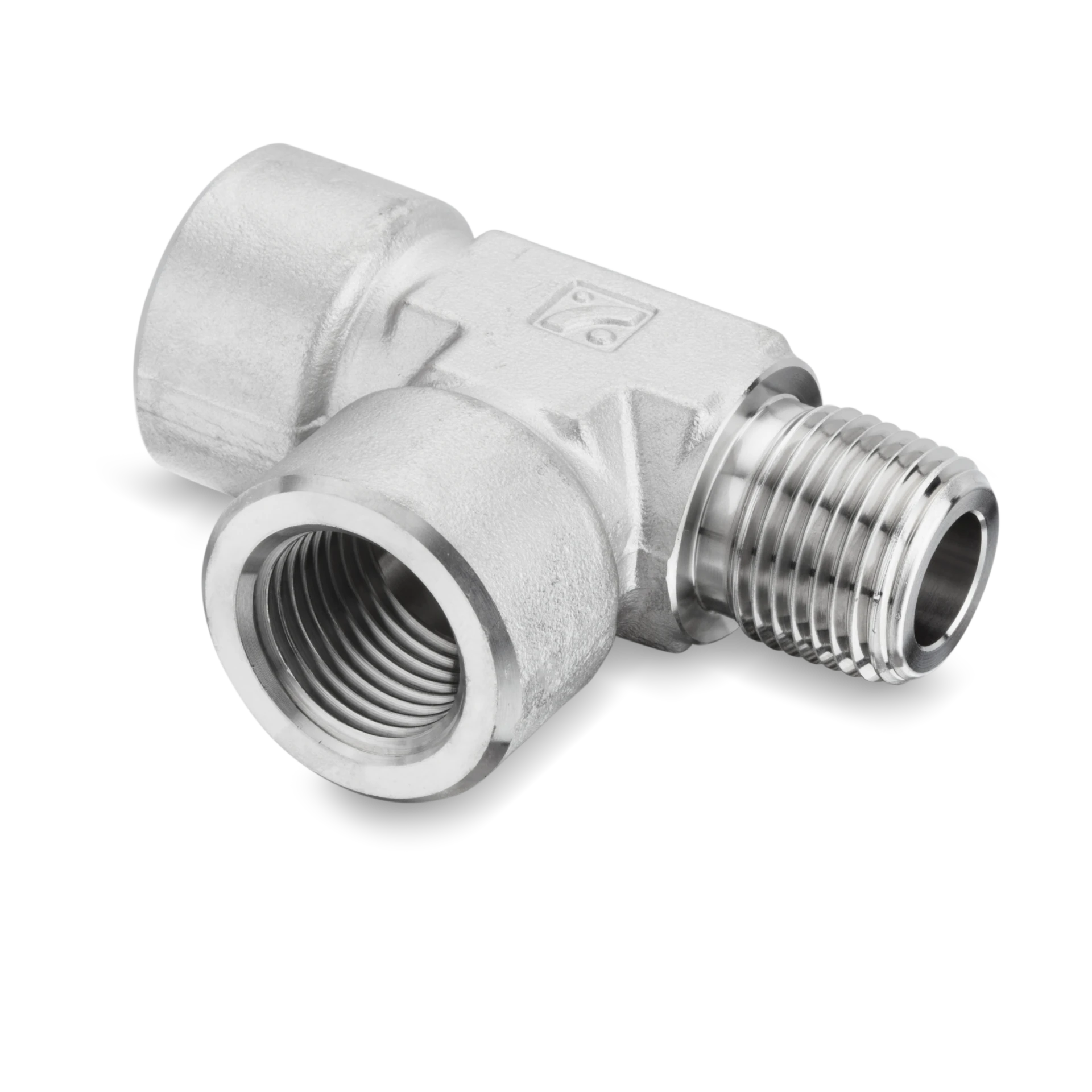
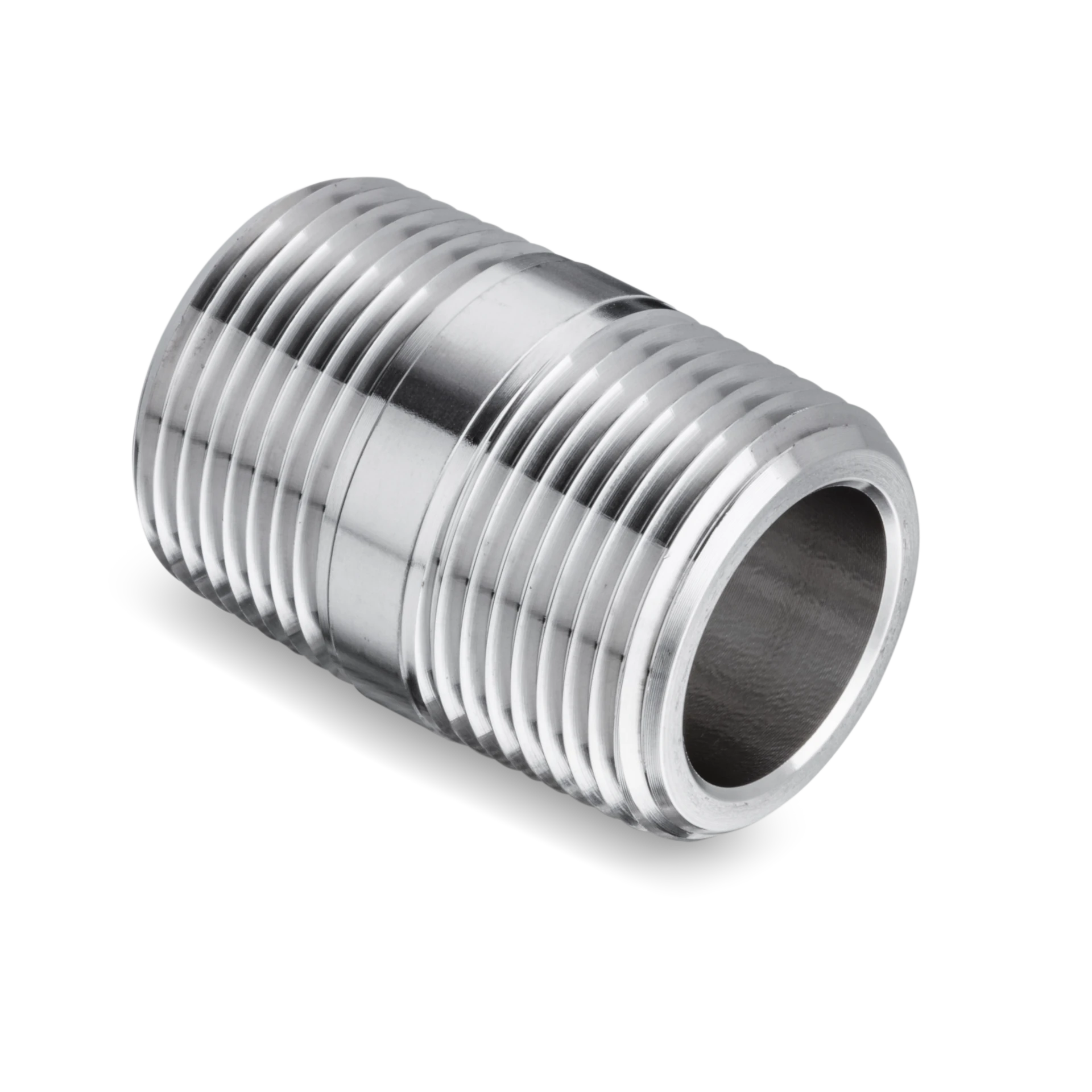
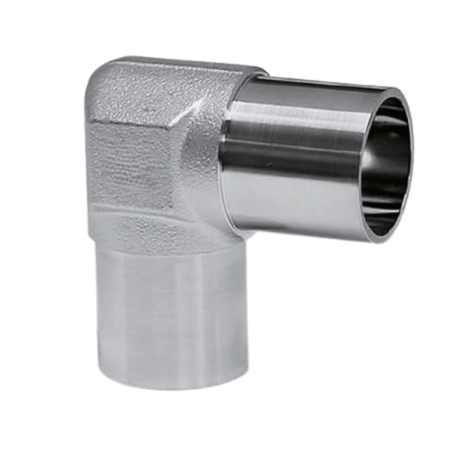
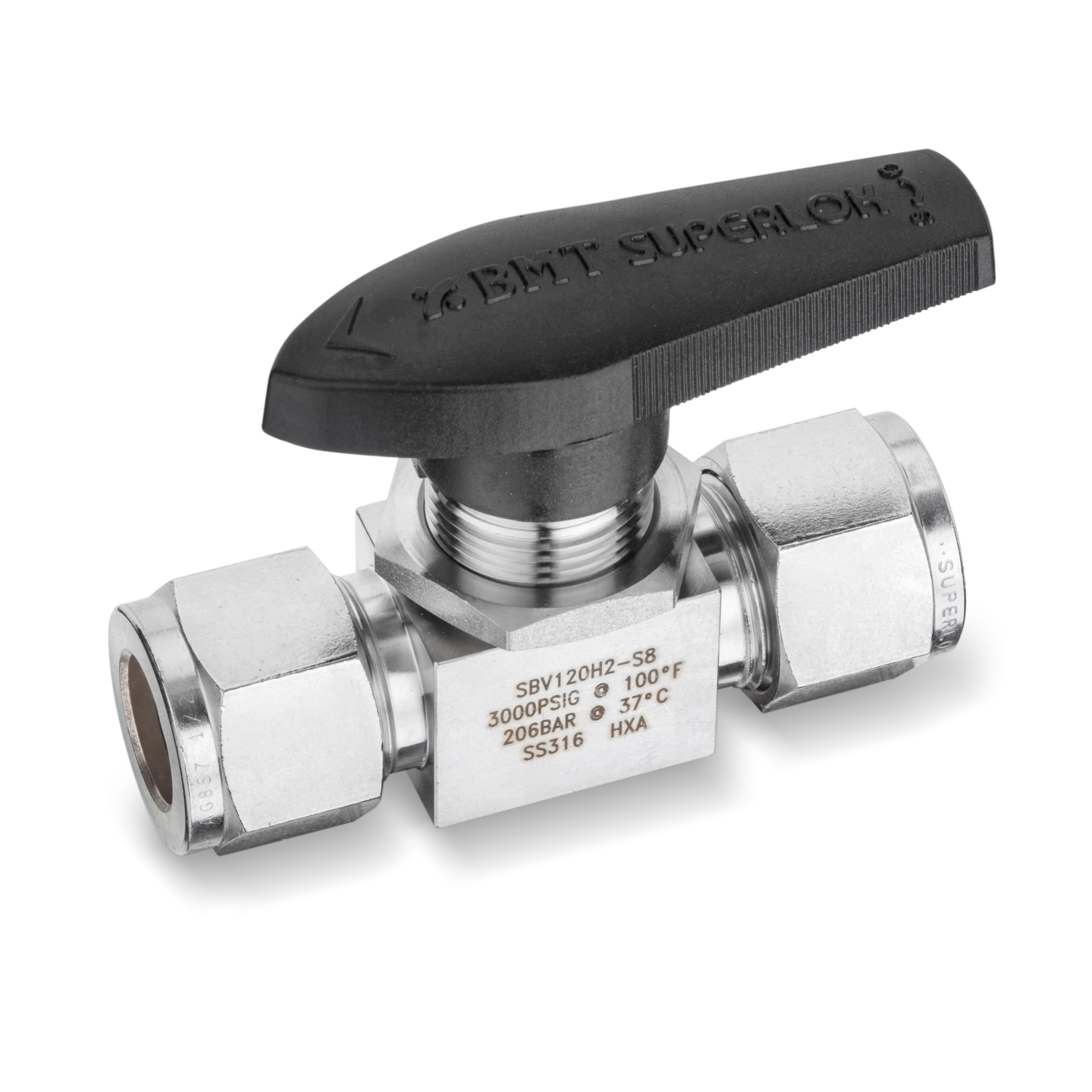
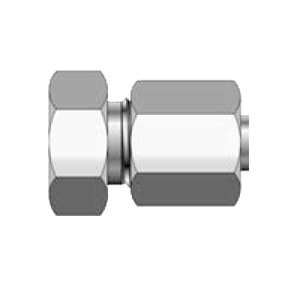
Superlok® is home to the finest interior surface finish of any tube and pipe fitting on the market, which is exactly the property that decides how a connection holds up in corrosive service. Pull corrosion-resistant 316 stainless steel tube fittings, tight-shutoff ball valves, fine-metering needle valves for injection duty, and check valves to keep product where it belongs.
Already engineered around another brand? Use the fitting cross-reference to cross-reference a Swagelok®, Parker® or Hy-Lok® part number by form, fit, and function to an in-stock Superlok® part, spec the job from the catalog, and we will confirm grade, rating and ship date before anything leaves.
Common questions
Why does 316 stainless still corrode if it is corrosion-resistant?
Because its resistance comes from a passive oxide film, not from being inert. Chlorides can break that film at a single point faster than it reheals, and the attack goes local. The result is a pit or a crevice that penetrates the wall while the surrounding surface still looks perfect.
What chloride level is safe for 316 stainless?
There is no single safe number, and anyone who gives you one is guessing. Stress corrosion cracking risk is generally low below about 60 degrees Celsius under full immersion, but cracking has been reported at bulk levels near 10 parts per million where evaporation concentrated the chlorides locally. Judge it by temperature and by whether the fluid can sit and concentrate, not by the bulk sample alone.
What is the difference between 316 and 316L?
316L holds carbon below about 0.03 percent. That matters when the part is welded, because welding heat can form chromium carbides at the grain boundaries and leave the heat-affected zone open to intergranular attack. Specify 316L for welded assemblies. For mechanically made-up compression connections, standard 316 is normally appropriate.
Is 316 enough for sulfuric acid?
Often not, and it depends heavily on concentration and temperature. Sulfuric service is a classic case for Alloy 20, which is formulated for it. We stock corrosion-resistant 316 and 316L, so if your service genuinely calls for Alloy 20, duplex or a nickel alloy, we will say so instead of selling you a part that will not last.
Single ferrule or twin ferrule for a chemical line?
Twin ferrule is the safer choice where pumps vibrate, lines cycle thermally, or joints get opened and remade at a turnaround. Splitting the work means the front ferrule seals while the back ferrule grips and absorbs load, rather than one ferrule attempting both. Superlok® tube fittings use a twin-ferrule design.
Do you provide material test reports?
Yes. Material documentation is available so QA and your inspector can trace grade and heat. Tell us what your specification requires when you send the list and we will confirm what ships with the order.
Working a chemical unit? Get the grade right, and get it now
Put corrosion-resistant 316 stainless steel, the finest interior surface finish on the market, and same-day availability on your next process job.
Superlok® USA
Home of the finest interior surface finish of any tube and pipe fitting, with the corrosion resistance and availability your process lines depend on.
Sources
- NACE International (now AMPP), “IMPACT” study, global cost of corrosion estimated at US$2.5 trillion, about 3.4% of global GDP. impact.nace.org
- Specialty Steel Industry of North America, guidance on pitting, crevice corrosion and chloride stress corrosion cracking in austenitic stainless steels, including temperature and concentration effects. ssina.com
- American Chemistry Council, “Mid-Year 2026 Outlook,” chemical industry capital spending projected to accelerate to 3 to 4 percent annually from 2027. americanchemistry.com
Technical note: PREN values and temperature guidance above are published industry screening figures, not a substitute for materials engineering on your specific service. Grade, media compatibility and pressure rating are confirmed per order. Shipping note: most in-stock orders placed during business hours ship the same day; orders placed after hours or on weekends ship the next business day.
Swagelok®, Parker®, Hy-Lok® and Hastelloy® are registered trademarks of their respective owners. Superlok® USA is an independent distributor and is not affiliated with, authorized by, or endorsed by those companies. Cross-references identify equivalent parts by form, fit, and function only.