

Superlok® USA · Valves
Sizing a Check Valve by Flow Rate, Not by Line Size
A check valve that matches the pipe on the drawing can still be the wrong check valve for the duty running through it.
A check valve does not know what size pipe it is bolted into. It only knows the flow moving through its own bore, and that is the number a sizing decision has to start from. That sizing logic applies across our whole valve range, not just check valves. According to Valve Magazine, the trade publication of the Valve Manufacturers Association of America, the instruction is to “size the check valve (and the spring if it has one) for the application, not necessarily the line size.” Drop a valve sized to match a 2 inch line into a run that only ever carries a fraction of that line’s rated flow, and the valve spends its life doing a job it was never sized for.
What the flow coefficient actually measures
Every valve sizing conversation eventually lands on Cv, the flow coefficient. The Fisher Control Valve Handbook, a widely used reference published by Emerson’s Fisher business, defines it as “the number of U.S. gallons per minute of 16°C (60°F) water that will flow through a valve with a one pound per square inch pressure drop.” That single number lets two valves of different design be compared on the same basis: at a given pressure drop, the one with the higher Cv passes more flow. It says nothing about cracking pressure or spring selection, those are separate published figures, and nothing about which orientation the valve tolerates. It is strictly a capacity number, and sizing work starts there rather than at the nominal pipe size.
Manufacturer catalogs publish Cv by valve series and size. Parker® Hannifin’s check valve catalog, for example, lists Cv figures across its check valve series ranging from well under 1 up to several units, each tied to a specific body size, alongside the water and air flow that figure implies at a stated test pressure. The pattern to take from a table like that is not any single number, it is that Cv climbs with body size in steps that do not track pipe nominal size one for one, which is exactly why matching the pipe is not the same exercise as matching the duty.
Why an oversized valve chatters instead of sitting quietly open
A check valve is not held open by pressure alone, it is held open by enough flow velocity across its poppet or disc to keep it against the stop rather than drifting back toward the seat. Writing in Valve Magazine, Noah Miller of Check-All Valve puts the requirement in plain terms: for a swing or double-door type check valve “there is a minimum flow velocity requirement” set by the individual manufacturer, series and size. Size a valve for the line rather than the duty and the actual flow through it can sit well below that figure. The rapid clicking that follows is the diagnostic, and the same article gives the usual cause as a valve, or a spring, that is “oversized for your application.” Chatter is not cosmetic: the article notes that any check valve which chatters “will likely wear prematurely.” Every cycle is one more small impact on a seat that was specified to need no attention at all.
Why undersizing has its own cost
Sizing is not a one-way push toward the largest available valve either, and the Cv definition itself shows why. Because Cv is a flow figure measured at a fixed one pound per square inch drop, a smaller Cv passing the same gallons per minute has to do it at a larger pressure drop. That is arithmetic, not a test result. The trade press makes the mirror-image point about a valve that never opens fully: “a partially open valve has a lower Cv value than it does when fully open,” so its real pressure drop is higher than the catalog figure suggests. Either way a check valve that fights the flow instead of getting out of its way charges the pump or the process for it, quietly, on every cycle the system runs. Pressure figures by size and series for the fitting side of the same line are listed on our pressure rating pages.
Two ways to miss the duty, in opposite directions
Oversized for the flow
Velocity across the poppet never reaches what holds it open. The result is chatter, and chatter is wear the valve was not designed to absorb.
Undersized for the flow
The valve becomes the restriction. Pressure loss climbs, and so does noise and vibration at every point downstream of the valve.
Sized to the pipe, not the duty
Matching nominal pipe size feels safe on paper. Cv tables show why it is not the same number as matching actual flow.
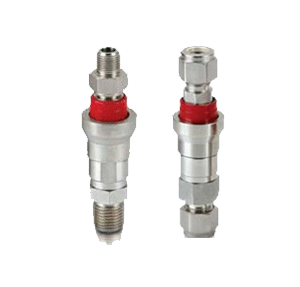
The fix is to work from the actual operating flow rate, not the line’s rated capacity, and compare that duty against the published Cv for the candidate valve and size. Our check valve range is offered in 316 stainless steel, corrosion-resistant enough for most instrument and process service. Capacity is about the bore, and so is cleanliness: Superlok® fittings leave the finest interior surface finish of any tube and pipe fitting on the market, meaning the flow path on either side of the valve stays as smooth as the sizing calculation assumed. Published Cv by series and size sits in the Superlok® catalog, and a callout written around another brand’s check valve can be worked through our cross-reference tool on form, fit and function.
| Sizing input | What it tells you | Where it is published |
|---|---|---|
| Flow coefficient (Cv) | Flow at 1 psi drop, comparable across valves | Manufacturer catalog, by series and size |
| Actual operating flow rate | The duty the valve has to hold open against | Process data, not the line’s rated capacity |
| Minimum flow velocity | Threshold below which chatter risk rises | Manufacturer sizing guidance |
| Pressure drop at duty flow | Cost of an undersized selection | Manufacturer catalog flow data |
Terms as defined in the Fisher Control Valve Handbook and as discussed in Valve Magazine, with Cv examples drawn from Parker®’s own published catalog. Confirm Cv and flow data against the specific valve’s own catalog entry.
Buying questions
Is Cv the same thing as cracking pressure?
No. Cv is a flow capacity number measured at a stated pressure drop. Cracking pressure is a separate published figure that describes the pressure needed to start opening the valve. Treat them as two different data points on the same datasheet, both listed against the specific check valve series and size.
Can I just match the check valve size to the pipe size?
You can, but the guidance in trade press is to work from the application and the flow instead. A valve picked off the pipe size alone can be oversized for the duty actually running through it.
What does chatter actually damage?
Repeated small impacts on the seat and on the disc or poppet. Trade press ties that to premature wear rather than to any single sudden event.
Does a bigger valve always mean less pressure drop?
Only up to the point where flow velocity still keeps the closure member open. Past that point a larger valve trades pressure drop for chatter risk, which is why sizing is a balance, not a maximum.
Where do I find Cv for a specific Superlok® check valve?
Cv and flow data are listed by series and size in the catalog. Send us the duty and we will confirm the figures and configuration per order.
Have a duty flow rather than a pipe spec?
Give us the flow, the fluid and the drop you can afford, and the Cv discussion starts there.
Superlok® North America
Size the valve to the duty, never to the drawing’s pipe.
Sources
- Emerson Fisher, “Control Valve Handbook,” Sixth Edition, a valve manufacturer’s own technical reference. Supports the definition of the flow coefficient Cv. emerson.com
- Noah Miller, “What’s the Chatter About Check Valves?”, Valve Magazine, published by the Valve Manufacturers Association of America, trade press, 28 July 2025. Supports sizing for the application rather than the line size, the minimum flow velocity requirement for swing and double-door designs, oversizing as the usual cause of chatter, the premature wear that follows, and the lower Cv of a partially open valve. valvemagazine.com
- Parker® Hannifin, “Check Valves, Filters and Relief Valves,” catalog 4135-CV, a valve manufacturer’s own technical publication. Supports the description of published Cv figures scaling by series and body size. parker.com
Technical note: the Cv definition comes from a control valve reference published by a manufacturer, the velocity, chatter and pressure drop points come from a trade publication, and the example Cv figures come from one maker’s own catalog. Between them they establish what those sources say about the sizing method; none of them tested a Superlok® valve, and no Cv figure, flow rate or pressure drop for a Superlok® valve appears anywhere in this article. Size from the operating duty in front of you. Grade, pressure rating and certification for a Superlok® item are fixed per order against that duty, and published Cv is confirmed the same way.
Trademark disclaimer: Parker® is a registered trademark of Parker® Hannifin Corporation. Superlok® is a registered trademark of its owner. All other marks belong to their respective owners. Use of these names is for identification only and does not imply any affiliation, endorsement or approval. Cross-references are made by form, fit, and function only.