
Superlok® USA · Materials
304 vs 316 in Instrument Tubing: Where the Molybdenum Earns Its Keep
Same family of stainless steel, one added element. That element decides how the tubing behaves once chlorides get involved.
Type 304 and Type 316 are close relatives, both chromium-nickel austenitic stainless steels, and side by side the difference on paper looks small. According to the Specialty Steel Industry of North America, an industry association publication, Type 316 carries “an addition of at least 2% molybdenum, which significantly increases the metal’s resistance to ‘salt’ corrosion,” while Type 304 lacks that element entirely. On a bench in a dry shop that difference barely shows. On a coastal skid or an offshore platform, exposed to chloride ions day after day, it is the whole story.
Same family, one added element
Both grades start from the same basic recipe: chromium and nickel in an austenitic structure, relying on a thin chromium oxide film for corrosion resistance. A presentation from the International Molybdenum Association, hosted by SSINA, lists Type 316’s composition as including “chromium (17%), nickel (11%), and 2% molybdenum,” and describes Type 304 as containing chromium and nickel but no molybdenum at all. That single addition is the entire point of this comparison. It is not about carbon content, it is not about weld practice, and it is not about the difference between the standard and low-carbon versions of either grade, those are separate questions with their own answers.
What molybdenum changes is how the passive film behaves once it is under chemical attack rather than sitting in dry air. Chromium builds the film. Molybdenum helps that film hold together and re-form faster in the presence of chloride ions, which is exactly the condition that starts both pitting and crevice corrosion.
What pitting corrosion actually is
Pitting is not general rust. According to SSINA’s own explanation of the mechanism, “pitting occurs when there is a localized breakdown of the stainless steel’s protective passive layer on an openly exposed surface.” Course notes on corrosion types published by the U.S. Naval Academy describe the same idea more bluntly: pitting is “an extremely localized attack that eventually results in holes in the metal.” A single microscopic spot fails while the surface around it looks fine, and once a pit starts, the chemistry inside it becomes more aggressive than the bulk fluid outside, so the attack tends to accelerate rather than stall.
Chloride ions are the usual trigger. They attach to weak points in the passive film faster than the film can repair itself, and on Type 304 there is nothing extra in the alloy to slow that process down.
Crevice corrosion: the attack you cannot see coming
Crevice corrosion is pitting’s quieter cousin, and it happens exactly where a tube fitting installation creates one. SSINA describes it as occurring “at locations where oxygen cannot freely circulate such as tight joints, under fastener heads and in other circumstances where the pieces of metal are in close contact.” The U.S. Naval Academy’s corrosion notes explain the mechanism in mechanical terms: a shielded, oxygen-depleted area becomes anodic relative to the surrounding, oxygen-rich metal, and the trapped solution grows more acidic and more concentrated in chloride as the reaction runs, which only accelerates the attack.
A tube fitting installation creates crevices by design. Here is where chlorides find them
Under a ferrule or gasket face
Any tight metal-to-metal or metal-to-elastomer contact traps a thin film of stagnant fluid, which is the starting condition crevice corrosion needs.
Under a bracket or clamp
Support hardware pressed against a tube or fitting body creates the same shielded, low-oxygen spot as a gasket, without anyone treating it as a sealing surface.
Inside a stagnant dead leg
A capped branch or a rarely used bleed port holds still fluid long enough for chlorides to concentrate, even though the pipe wall there sees no unusual mechanical stress.
Coastal and offshore service: where the extra alloy pays for itself
SSINA’s own coastal design guidance is direct about the recommendation: “Type 316/316L is preferred for most coastal architectural applications, because it contains molybdenum, which increases resistance to pitting caused by salt exposure.” That guidance was written for architectural metalwork, but the underlying chemistry, airborne chloride from sea spray, splash zones, deicing salt near the coast, does not know the difference between a handrail and an instrument tube fitting. An offshore platform, a coastal chemical plant or a facility that washes down with salt-laden water puts the same chloride load on tubing and fittings that it puts on any other exposed stainless part. Our oil and gas instrumentation post covers some of the other service conditions that come with that setting.
A published IMOA case study, “Moly Does the Job,” gives a concrete, if narrow, illustration of the stakes. A Type 304L heat exchanger handling chloride-containing water developed leaks from pitting within about two years of service above roughly 150°F. The next material tried, Type 316L, held up better in that same chloride environment, though the case study notes it was not trouble-free at the higher end of the temperature range the plant was running. The broader point stands independent of that one facility’s numbers: added molybdenum measurably raised the bar before chloride attack found a way in.
The cost trade, plainly stated
Molybdenum is a more expensive alloying addition than the rest of the recipe, which is the whole reason Type 304 still exists as a standard option rather than everyone defaulting to Type 316. For indoor, dry, low-chloride service, that extra alloy content buys resistance to a failure mode the environment was never going to trigger. Near the coast, offshore, or anywhere wash-down water or process fluid carries chlorides, the calculation flips: the alloy cost is small next to the cost of a pitted or leaking fitting on a live system.
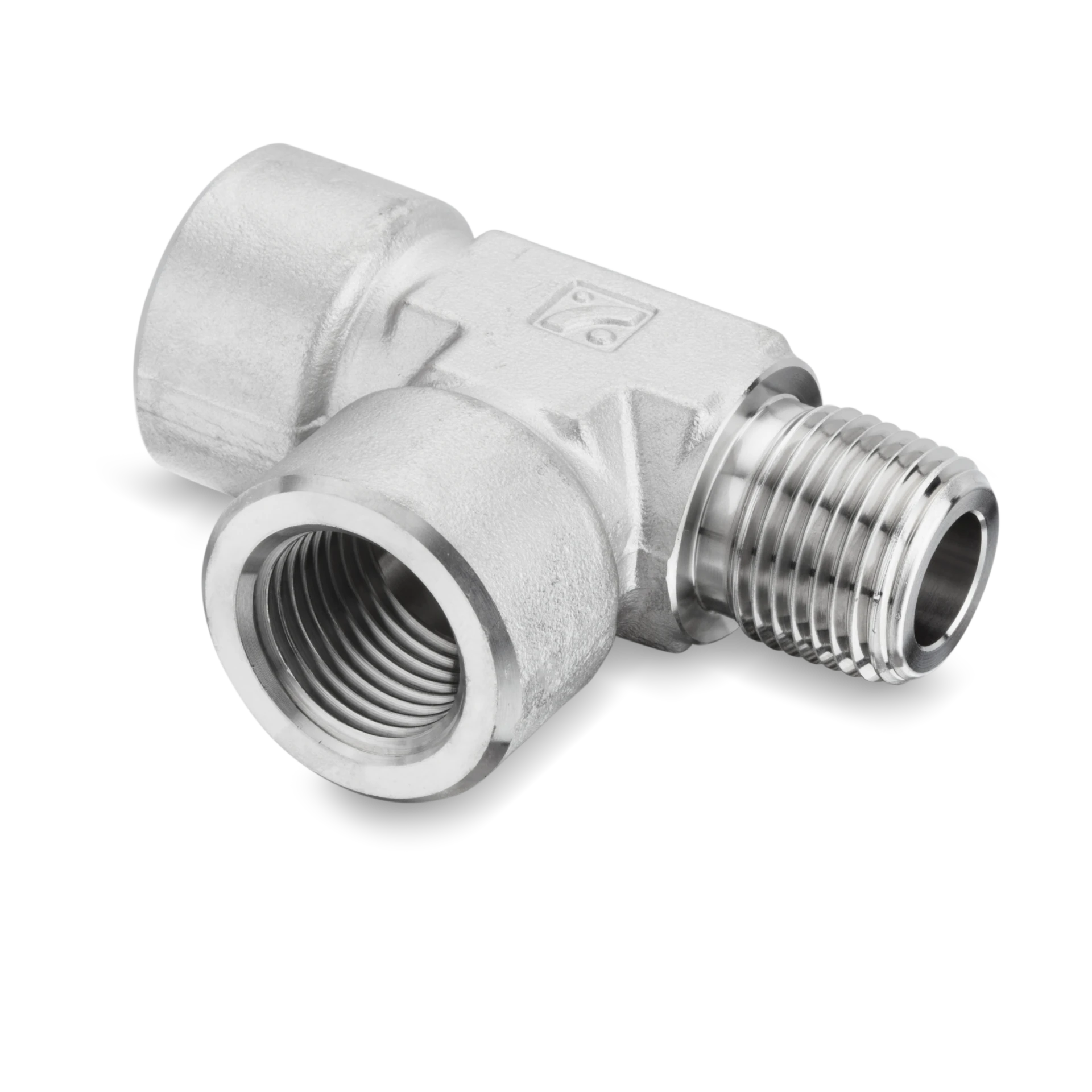
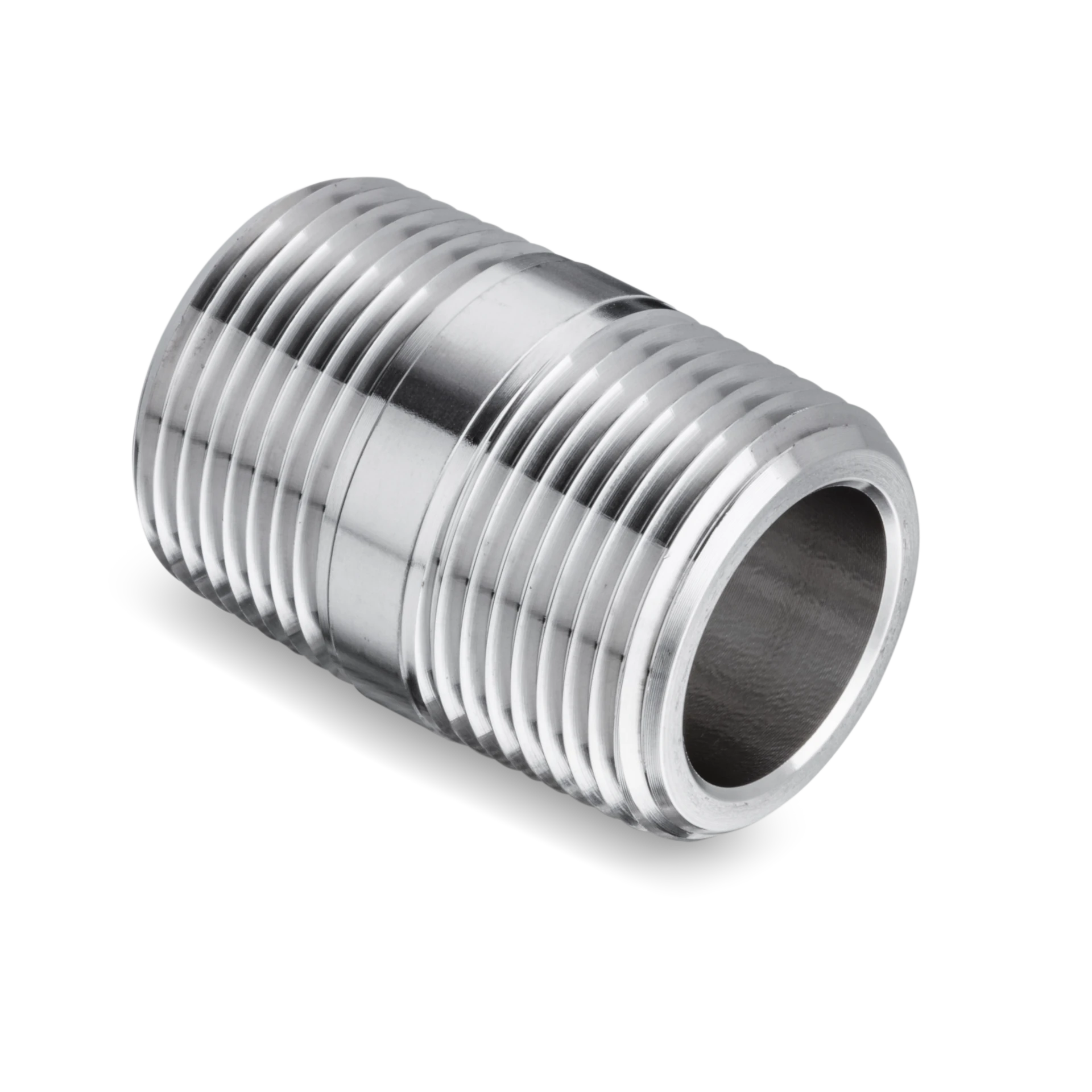
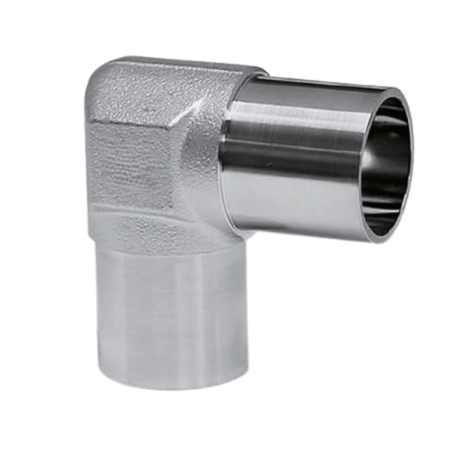
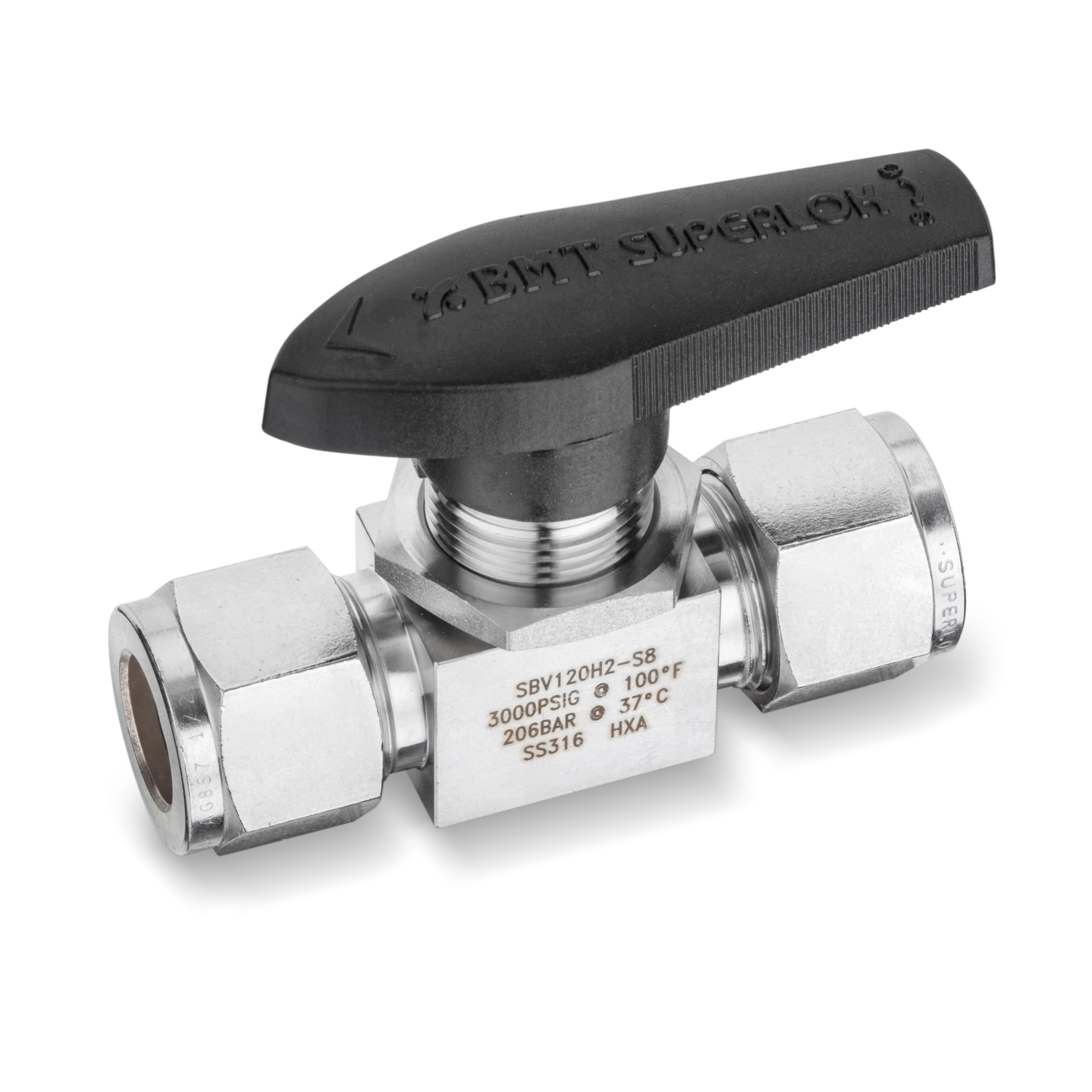
Superlok® fittings, including the tube fittings that go on an instrument line, are offered in 316 stainless steel, the corrosion-resistant grade this whole chloride discussion has been pointing at. Surface condition belongs in the same conversation, since crevice attack starts wherever fluid can sit still: Superlok® fittings also arrive with the finest interior surface finish of any tube and pipe fitting on the market, trimming the stagnant pockets that crevice corrosion needs to get going. The grade behind any given order is documented at purchase, and our material test report page shows what that documentation looks like. Published pressure figures by size and grade sit on our pressure rating pages.
| Grade | Molybdenum | Typical chloride/coastal duty |
|---|---|---|
| Type 304 | None, per SSINA | Common where chloride exposure is limited or intermittent |
| Type 316 | At least 2%, per SSINA | Preferred for coastal and marine service, per SSINA |
Composition figures as published by SSINA and IMOA. The heat chemistry behind a given Superlok® order is recorded on that order’s material test report rather than inferred from a table of family averages.
Common questions
Is Type 316 immune to pitting and crevice corrosion?
No. Molybdenum raises the resistance threshold, it does not remove chlorides from the equation. High enough chloride concentration and temperature can still attack 316, just at a higher bar than 304.
Is 304 wrong for every coastal site?
Not necessarily. Indoor, climate-controlled, low chloride exposure near a coastline is a different case from direct salt spray or wash-down. The exposure at the specific location, not the zip code, is what should drive the grade choice.
Does this comparison cover 316 vs 316L?
No. That is a separate question about carbon content and welding practice. This post is about the molybdenum difference between the 304 and 316 families, not the L suffix.
Why not just specify 316 everywhere and stop worrying about it?
You can, and many specifications do. The trade-off is cost, not risk, since molybdenum is one of the pricier alloying additions. Where chloride exposure is genuinely low, that added cost buys margin against a failure mode that was unlikely anyway.
How do I confirm which grade a Superlok® fitting actually shipped in?
Every order can be confirmed against its material test report. See our sample material test report for the format.
Is chloride the thing your tubing has to survive?
Describe the wash-down, the spray and the distance to open water, and the alloy choice follows.
Superlok® North America
Read the exposure, then pick the alloy.
Sources
- Specialty Steel Industry of North America, “Pitting and Crevice Corrosion,” industry association education page, supports the pitting and crevice corrosion definitions and the chromium/molybdenum/nitrogen basis of the pitting resistance equivalent formula. ssina.com
- Specialty Steel Industry of North America and International Molybdenum Association, “Designer Handbook: Stainless Steel for Coastal and Salt Corrosion,” industry association publication, supports the recommendation of Type 316/316L for coastal service and the “at least 2% molybdenum” composition statement. ssina.com
- International Molybdenum Association, composition presentation hosted by SSINA, industry association publication, supports the Type 316 chromium, nickel and molybdenum percentages quoted and the statement that Type 304 contains no molybdenum. ssina.com
- International Molybdenum Association, “Moly Does the Job: Rendering Plant,” industry association case study, supports the description of a Type 304L to Type 316L material change in a chloride-containing water application and the approximate service life and temperature figures cited. imoa.info
- United States Naval Academy, “Corrosion Types,” EN380 course notes, a university publication, supports the pitting and crevice corrosion mechanism descriptions, including the oxygen depletion and localized cell explanation. usna.edu
Technical note: the composition figures and coastal service recommendations cited here are published by industry associations and an academic source for stainless steel generally, and they prove what those sources state about Type 304 and Type 316 as families, not the exact heat chemistry of any single Superlok® part. The rendering plant case study describes one facility’s experience and is not a guarantee of performance in any other application. Carbon content, low-carbon L grades and welding practice are separate questions not addressed here. The material grade, pressure rating and certification behind a Superlok® item are fixed when the order is written and then evidenced on that order’s material test report.
Trademark disclaimer: Superlok® is a registered trademark of its owner. All other marks belong to their respective owners. Use of these names is for identification only and does not imply any affiliation, endorsement or approval. Cross-references are made by form, fit, and function only.