

Superlok® USA · Analytical Instrumentation
Instrument Tube Fittings for Analyzer Sample Systems: Where a Bad Reading Really Starts
When an online analyzer drifts, the analyzer usually gets the blame. More often the trouble is in the tubing and fittings that carry the sample to it.
An analyzer can only report what reaches it. According to ISA Fellow Ian Verhappen, writing in Control Global, sample systems are generally accepted to be responsible for 80 percent of analyzer system problems. That tracks with what most instrument techs already know: the gas chromatograph or moisture analyzer is rarely the weak link. The weak links are the dead pockets, the slow leaks and the rough internal surfaces between the sample tap and the analyzer inlet. This is a plain guide to how instrument tube fittings affect a reading, and where to look when a reading goes wrong.
The analyzer is rarely the problem
An analyzer system is more than the analyzer. It includes the sample tap, the sample conditioning system, the transport line, the sample return and the signal back to the control room. If any one of those pieces fails, the plant loses the benefit the analyzer was bought to deliver, whether that is product quality, emissions compliance or tighter process control.
The sample system is where most of the failures show up, because it is where the process fluid meets the most joints, the most changes in direction and the most places for something to sit still. Every tube fitting in that path is either helping the sample arrive unchanged or quietly changing it on the way.
Three ways a fitting spoils a sample
None of these trip an alarm. A sample line can pass a leak check and still deliver a reading that is wrong, late, or both:
Dead volume
Pockets where fluid gets trapped and stops moving with the rest of the sample. Old sample bleeds out slowly and blends with new, so the reading lags and smears every change in the process.
Leaks both ways
A joint that weeps outward loses sample. On a line running near or below atmospheric pressure, the same joint can pull ambient air and moisture in, which is exactly what an oxygen or moisture analyzer is trying to measure.
Surface hold-up
Some components, moisture and sulfur compounds among them, can cling to rough internal surfaces and release later. The analyzer sees a delayed, flattened version of what actually happened.
Lag time: the number on the screen is already old
Total lag is the time the sample spends travelling to the analyzer plus the time the analyzer takes to measure it. Operators act on that number as if it were live, so every extra second of transport is a second of control running on stale data.
Verhappen recommends keeping sample velocity in the range of 1 to 2 meters per second, about 3 to 6 feet per second, so that every component in the sample keeps moving, and purging the sample system three times for each analyzer cycle. Both targets get harder to hit with every dead leg, oversized tee and sharp-edged change in flow. The practical rules follow from that: keep runs short, keep the tube bore sized to the flow, use as few fittings as the layout allows, and make sure each one is made up correctly so it adds no pocket of its own.
Why double ferrule is the default in instrument lines
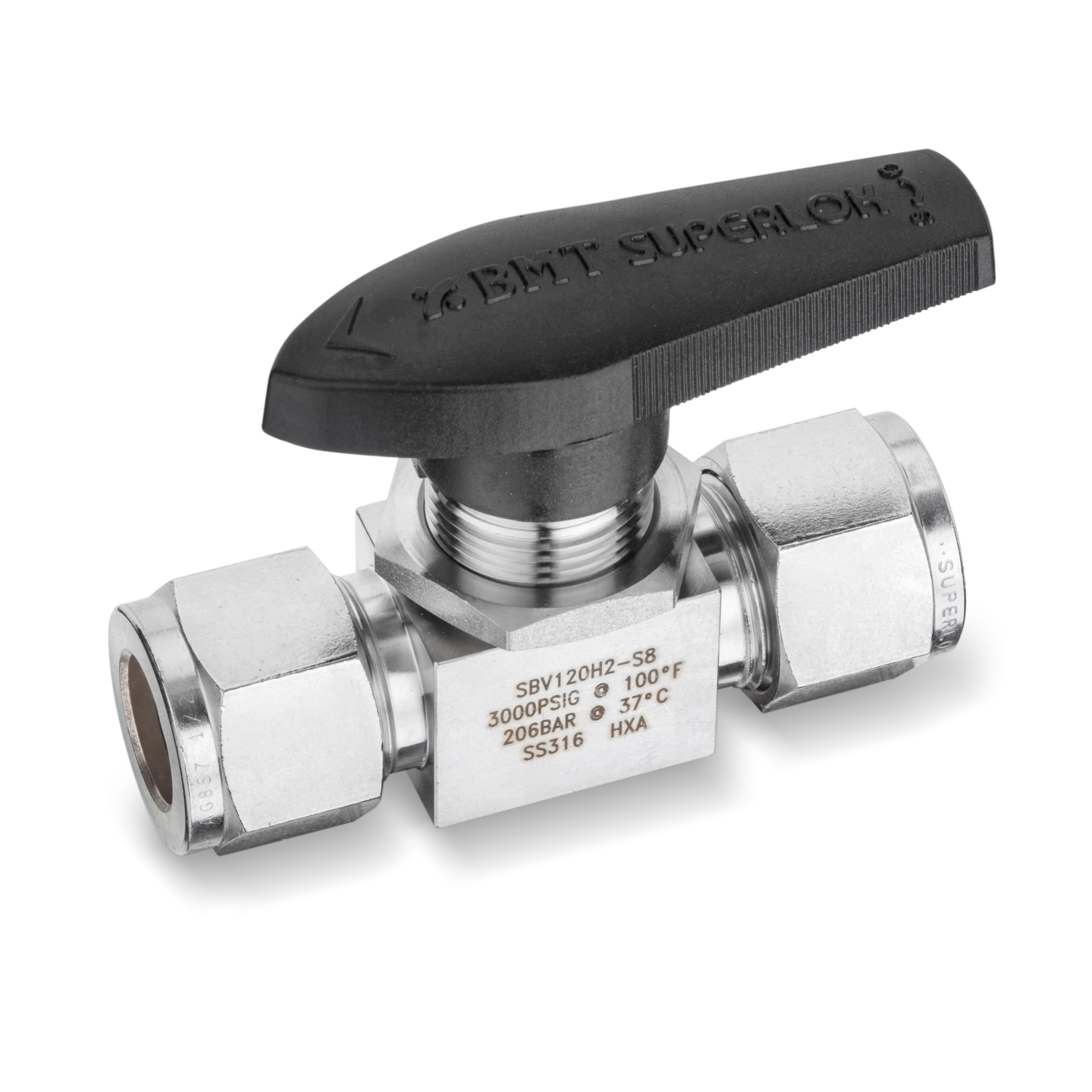
Many instrument tube fittings used in analyzer and sample work are a double ferrule design, sometimes called twin ferrule, and there is a good reason for it. The front ferrule seals against the tube. The back ferrule grips the tube and takes the vibration and bending load, so the seal is not also being asked to hold the tube in place. Sample panels get opened for maintenance, filters get changed and analyzers get swapped, so a connection that can be remade and still seal is worth a great deal.
When a reading does go wrong, the fittings are a good place to start looking:
| What you see | Likely fitting cause | Where to look |
|---|---|---|
| Slow response after a process change | Dead volume in tees, oversized fittings or a dead leg | Extra tees and branches left over from old changes |
| Oxygen or moisture reading too high | A small leak pulling in outside air on a low-pressure line | Joints that were opened recently or never fully made up |
| Reading drifts or smears between samples | Residue held on rough internal surfaces | Older fittings and any section that is hard to purge |
| Leak after a filter change or panel repair | A joint remade with worn or mismatched parts | Connections remade with parts from a different brand |
These are common starting points, not a diagnosis. Your analyzer supplier’s troubleshooting guide comes first.
The surface the sample touches
Two fittings can share the same size, rating and thread and still behave differently in a sample line, because the sample only ever touches the inside. A rough bore is a field of tool marks and valleys that trap residue and give moisture and sulfur compounds somewhere to cling. A smooth bore gives them less to hold onto and rinses clean faster when the sample changes.
Standard mill finishrough bore
Interior wall, magnified cross-section
Valleys and tool marks hold old sample and give sticky components a place to cling, then release it into the next reading.
Dark dots mark where residue collects between cycles.
Superlok® finishsmooth bore
Interior wall, magnified cross-section
A smoother wall gives residue fewer places to sit and flushes clean when the sample changes.
Less surface area for residue means a cleaner, faster response.
Built for the sample line
Superlok® is home to the finest interior surface finish of any tube and pipe fitting on the market, which is the property that matters most once a fitting is carrying a sample instead of just a process stream. Build the line from corrosion-resistant stainless steel tube fittings, fine-metering needle valves to set sample flow, inline filters to protect the analyzer, and check valves to stop backflow from a shared header.
Make every joint up the same way with the installation guide, and check the line against the published pressure ratings before it goes into service. If your analyzers sit on high-purity gas, we covered that side in our piece on semiconductor fab fittings.
Already built around another brand? Use the fitting cross-reference to match a Swagelok®, Parker® or Hy-Lok® part number by form, fit, and function to a Superlok® part, or spec the panel straight from the catalog.
Common questions
What are instrument tube fittings?
They are compression fittings made for small-bore instrument tubing, the kind used to connect transmitters, gauges and analyzers to a process. Many use a double ferrule design and are made in corrosion-resistant stainless steel so they can be made up, taken apart and remade without losing their seal.
Why does my analyzer respond slowly after a process change?
Usually because of lag in the sample system rather than the analyzer itself. Long runs, oversized tubing, dead legs and trapped pockets in fittings all slow the sample down and blend old sample with new. Shortening the run and removing dead volume is often the fastest fix.
Can a leaking fitting affect an analyzer reading?
Yes, in either direction. A joint that leaks out loses sample, and on a low-pressure or vacuum line a leak can pull in ambient air and moisture, which contaminates the very components many analyzers are measuring.
Do you provide material test reports?
Yes. Material documentation is available so QA and your inspector can trace grade and heat. Tell us what your specification requires when you send the list and we will confirm what ships with the order.
Building or repairing a sample system? Send us the list
Corrosion-resistant stainless steel instrument tube fittings with the finest interior surface finish on the market. We will confirm stock and ship date before you commit.
Superlok® USA
Home of the finest interior surface finish of any tube and pipe fitting, with the corrosion resistance your analyzer systems depend on.
Sources
- Ian Verhappen, ISA Fellow, “Basics of Analyzer Sample Systems, Parts 1-2,” Control Global, February 2011. States that sample systems are generally accepted to be responsible for 80% of analyzer system problems, recommends a sample velocity of 1 to 2 m/s (3 to 6 ft/s), and recommends purging the sample system three times for each analyzer cycle. controlglobal.com
- Ian Verhappen, “The Basics of Analyzer Sample Systems,” published on the Engineering Institute of Technology ICEweb site. Gives the same velocity and purge guidance. eit.edu.au
Technical note: velocity and purge figures above are published design guidance, not a substitute for engineering on your specific analyzer system. Size, material and pressure rating are confirmed per order. Shipping note: most in-stock orders placed during business hours ship the same day; orders placed after hours or on weekends ship the next business day.
Swagelok®, Parker® and Hy-Lok® are registered trademarks of their respective owners. Superlok® USA is an independent distributor and is not affiliated with, authorized by, or endorsed by those companies. Cross-references are made by form, fit, and function only.