

SUPERLOK NORTH AMERICA · UHP SYSTEMS
Gas Panel Design for Fab Process Tools
What sits on the stick between the facility gas line and the chamber, and the choices that set footprint and serviceability.
Gas panel design is where a fab’s gas supply meets the process tool, and the work lands after the building is finished. According to Engineering News-Record, a construction trade publication, TSMC’s Arizona Fab 2 has completed construction and is expected to begin 3-nanometer production in 2027, in its report of 22 July 2026. The period between those two dates is when tools are set and gas is connected, using UHP fittings at every joint on the panel. This post covers what the panel holds and how its design sets footprint and service work.
What Sits Between the Facility Line and the Tool
A Lam Research patent application defines a gas stick as a series of gas distribution and control components, listing a mass flow controller, pressure transducers or regulators, a heater, filters or purifiers and shutoff valves. Attached to a base plate, the sticks form what it calls a gas panel or gas box. A second published application, for a valve manifold box, describes each stick as two valves with a regulator valve and a pressure transmitter between them. The orders differ between designs, so treat both as examples.
The useful habit is to draw each stick as a function chain: isolate, reduce, clean, measure, meter, shut off. Then ask what each element costs in length, in seals and in time to replace.
Gas Panel Design, Component by Component
| Element | Job | Design question |
|---|---|---|
| Regulator | Holds delivery pressure at the tool | Rated for UHP service? Setpoint range? |
| Filter or purifier | Removes particles, or impurities | Own substrate block or built into the stick? |
| Valves | Isolate and shut off | Count, position and actuation |
| Pressure transducer | Reports line pressure | Where it reads, and how it is replaced |
| Joints | Hold it together | Weld, face seal or substrate seal? |
Elements as listed in the Lam Research and valve manifold box filings; the questions are ours.
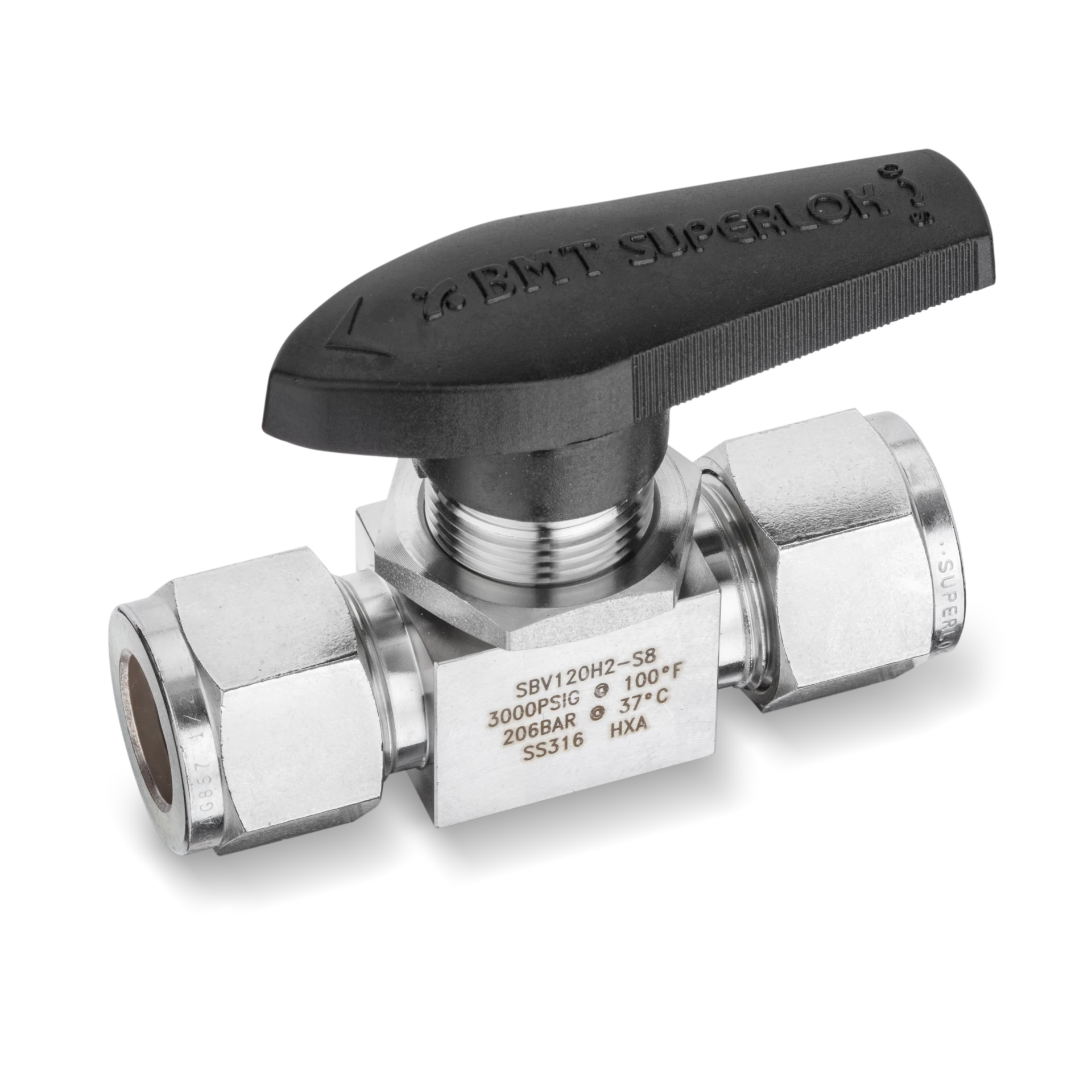
On regulators, Superlok® describes its UHP regulators as a specialized control device for ultra-high-purity service and links a details sheet; the page itself gives no rating, so take ratings from that sheet and confirm per order. For isolation, its UHP diaphragm valves page says its valves are electro-polished and D.I. water cleaned, then assembled, tested and boxed under certified clean room conditions. Stainless steel is corrosion-resistant, but grade is checked part by part and confirmed per order. Purifiers and pressure transducers come from their own makers and are specified by the tool builder; we make no claim about them here.
Filters show the footprint trade clearly. An Entegris patent says a standalone filter needs its own substrate block, which lengthens and weighs down the gas stick, and states the goal of a filter that minimizes seals, length and height. Every extra element is length, and length is footprint.
Welded, Face Seal or Surface Mount
The SEMI F106 listing says that standard covers both conventional metal face sealing and surface mount gas delivery systems, which are the two architectures it names; the listing marks that edition inactive and superseded, so use it as a description only. In a surface mount design, per the Lam Research filing, components are mounted down onto manifold blocks and a base plate, removing connection parts such as tubing and couplers. The Entegris patent describes the same modular architecture, with components mounted to substrate blocks, and presents it as a way to reduce footprint.
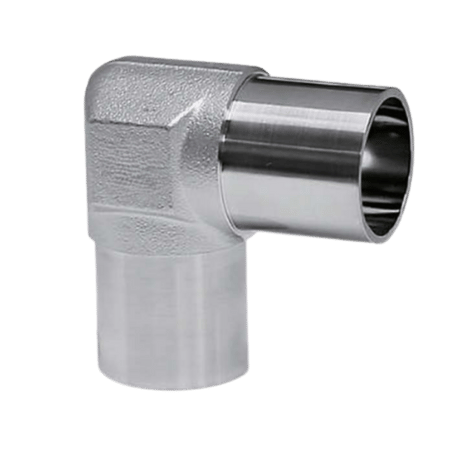
Where a panel is built with tube between components, the joint choice is the one set out in UHP gas line installation at equipment move-in: weld where it will never open, metal seal where it will. The weld and metal seal parts we list include the UHP TBW connector, the UHP male weld gland and the UHP gasket. Whatever the joint, the bore is the surface the gas sees; see electropolished tubing.
Footprint and Serviceability
The Lam Research filing says less room is left for components as device dimensions shrink, and that when one component fails the whole component is replaced even though most failures are mechanical. It also says maintenance exposes components to room air, which it names as a contamination source. Design for the swap: the element most likely to be changed should be reachable without disturbing its neighbors.
The same filing says the minimum number of sticks is 6, the standard is 9, panels of 12 or 16 are possible, and there is no efficient way to add a stick to an existing panel. It also warns that unused sticks can form a dead leg, a section where gas does not flow, which it identifies as a contamination source. So size the panel to the gas list, and plan on paper how a future gas would be tied in. After make-up, the panel still has to be proven; see helium leak testing.
Questions on Panel Layout
Is a gas box different from a gas panel?
The Lam Research filing uses the two names for one assembly: components attached to a base plate.
How many sticks does a tool need?
One for each process gas the recipe uses. The 6, 9, 12 and 16 figures are from one filing and are not a rule.
Does a surface mount panel remove all tube?
It removes the tubing and couplers between components, per the filing, but the panel still connects to the facility run by tube.
Which parts can Superlok® confirm for a panel?
Send the list. Weld and metal seal fittings, diaphragm valves and regulators listed on our site are checked per order; transducers and purifiers are outside what we claim here.
Bring the stick list
Elements, tube size and joint type per gas line are enough for a first pass on the UHP parts.
SUPERLOK NORTH AMERICA
Panels shrink and joints multiply, but the gas still touches only the bore. Superlok® makes that bore with the finest interior surface finish of any tube and pipe fitting on the market.
Sources
- Engineering News-Record, "TSMC Arizona megaproject grows to $265 billion," 22 July 2026. Supports Fab 2 having completed construction and expected 3-nanometer production in 2027. enr.com
- Lam Research Corporation, US patent application 20080302434, "Flexible manifold for integrated gas system gas panels," filed 11 June 2007, published 11 December 2008, background section. Supports the gas stick definition, gas panel or gas box, surface mount description, serviceability, stick counts and dead legs. patents.justia.com
- US patent application 20220336235, "Valve box module, semiconductor device manufacturing system and method for manufacturing semiconductor device," published 20 October 2022. Supports the stick of first valve, regulator valve, pressure transmitter and second valve. patents.justia.com
- Entegris, Inc., US patent 7,575,616, "Low-profile surface mount filter," filed 10 February 2006, issued 18 August 2009, background section. Supports modular substrate blocks, the cost in length of a standalone filter and the aim of fewer seals. patents.justia.com
- SEMI, store listing for SEMI F106-0308 (marked inactive and superseded). Supports the statement that it covers conventional metal face sealing and surface mount gas delivery systems. store-us.semi.org
- Superlok North America, UHP regulator page (manufacturer publication). Supports the description as a specialized control device for ultra-high-purity service and the absence of ratings on the page. superloknorthamerica.com
- Superlok North America, UHP diaphragm valves page (manufacturer publication). Supports electro-polished, D.I. water cleaned valves assembled, tested and packaged under clean room conditions. superloknorthamerica.com
Technical note: These sources establish how patent filings and a trade report describe gas sticks, panels and surface mount construction, plus the stated scope of one SEMI listing and two Superlok® product pages. A patent background reflects its inventor’s view, not a standard; the stick counts, dead leg and serviceability remarks are the filings’ own. They do not establish a panel layout for your tool, regulator ratings, a transducer or purifier choice, or any surface mount product from Superlok®, and the function chain and design questions are our framing. Material grade and pressure rating are confirmed per order.
Trademark disclaimer: Superlok® is a registered mark of its owner. TSMC, Engineering News-Record, Lam Research, Entegris and SEMI are named only to identify the sources cited, and their marks belong to their respective owners. Cross-references are made by form, fit, and function only.