

Superlok® USA · Installation
Thread Sealant on NPT: Tape, Paste, and How Far Down the Thread
NPT seals on the taper, not on a flat face, and the sealant only has one job: fill the spiral gap the taper leaves behind.
NPT threads do not seal by two surfaces meeting square. They seal because the taper wedges flank against flank as the joint is drawn up, and that wedging still leaves a spiral clearance path along the thread unless something fills it. According to the Oatey Company, a plumbing and mechanical products manufacturer, the tape goes on by wrapping “clockwise, following the tightening direction” and the installer should “leave the first thread bare to avoid contamination.” Those two instructions, direction and where to start, cover most of what goes wrong with sealant on a tapered thread.
Why a tapered thread needs help sealing at all
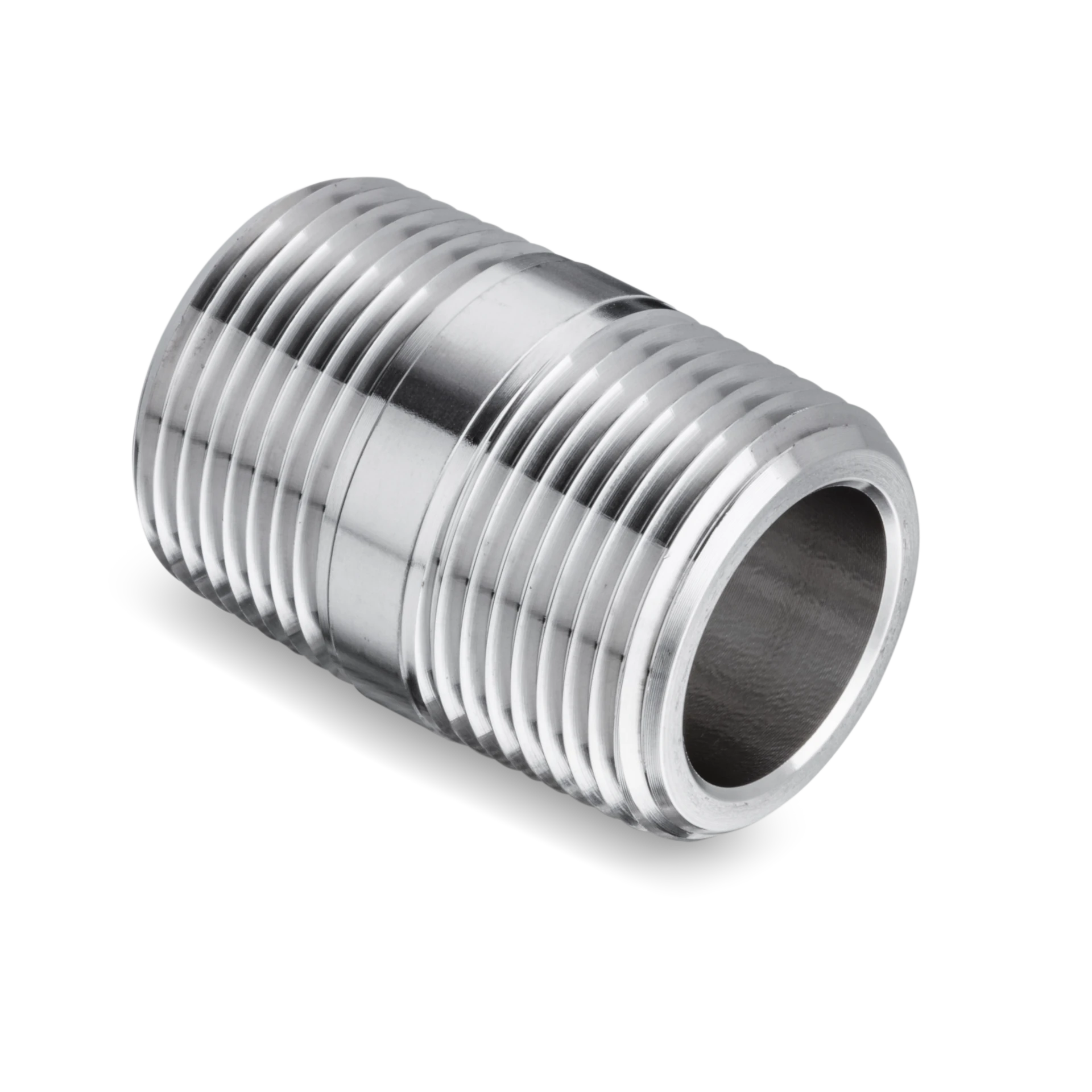
A parallel thread relies on a separate seal, a face gasket or an O-ring, because the crests and roots never interfere. NPT is cut to a taper instead, roughly 1 in 16 along its length, which the ASME B1.20.1 standard for taper pipe threads expresses as an angle of 1 degree 47 minutes 24 seconds from the centerline, and it uses the same 60 degree thread form as most other pipe and machine threads. As the joint is turned past finger tight, the taper forces the flanks into increasing contact, which is what makes NPT self tightening under vibration. What it does not do on its own is close the fine helical gap that follows the thread all the way around. That gap is what tape or paste fills. It is a supporting seal, not a substitute for the taper doing its job, which is why the wrap has to sit in the thread, not bridge over it.
Tape or paste, and what each one is actually doing
PTFE tape is a thin film that is compressed into the thread profile as the joint is made up. Oatey’s guidance notes that tape “requires no curing time” and seals as soon as the joint is tightened, which is why it is the common choice where a line has to go into service right away. Pipe joint compound, sometimes called pipe dope, is a different form entirely, described in the same manufacturer material as “a thick paste applied to male threads before assembly,” and depending on the formula it may need time to set before the line is pressurized. Neither product changes the taper geometry. Both are there to occupy the spiral clearance the thread leaves open, and picking one over the other is usually a question of cure time, chemical compatibility with the process fluid, and whether the joint will be broken and remade often.
Wrap direction, wrap count, and where to start
Direction matters because the joint is about to be turned in one direction only. TFCO’s PTFE thread sealant instructions state plainly to “always wrap the threads in a clockwise direction,” adding that the direction “is extremely important to prevent the female threads from pushing the PTFE out of the joint during the assembly process.” Wrap the tape the other way and the first few turns of makeup unwind it instead of compressing it.
Count is a range, not a fixed number, because tape thickness and thread size both change how much material is needed. TFCO’s own instructions call for wrapping the male threads “with 2 to 4 layers of wrap, depending on the size of the thread,” and note that larger diameter threads take more layers. Oatey’s guidance gives the same range, describing an overlap of “half the tape’s width, two to four times.” Start the first wrap set back from the pipe end. Oatey’s practice is to “start one to two threads back from the end of the pipe” and to “leave the first thread bare to avoid contamination,” so nothing hangs past the opening where it can shear off into the bore during makeup.
Getting the wrap wrong fails in two different directions
Too few wraps
The spiral clearance never fully fills. The joint may look tight to the wrench yet still weep once it is under line pressure, because the taper closed before the tape had anything left to compress into.
Too many wraps
The wrap itself becomes a spacer. The threads bind before the taper has drawn up properly, torque climbs fast near the end of makeup, and a soft body fitting can gall or crack before the joint actually seats.
Tape shed into the bore
Cover the pipe opening with tape and makeup can shear a strip loose. On an instrument or analyzer line that strip can lodge in a filter, an orifice or a valve seat, which is exactly what leaving the first thread bare is meant to prevent.
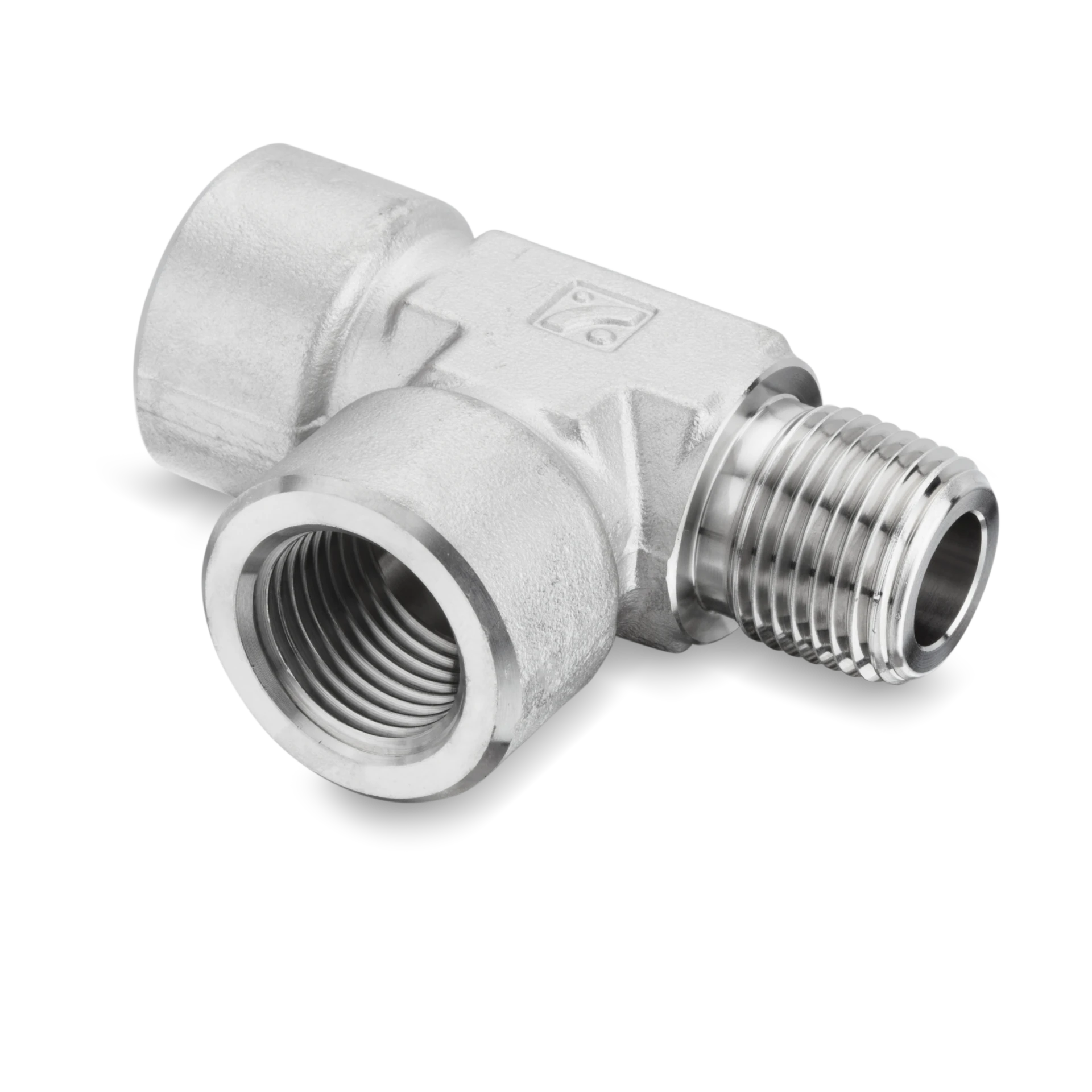
The cure for all three is the same discipline: clockwise, within the published layer range, first thread bare. Superlok® pipe fittings are produced with tapered NPT ports cut to that thread form, and our own installation guide sets out makeup practice for the fittings we supply.
Oxygen and high purity service take a different tape
Ordinary white PTFE tape is not automatically suitable for oxygen or other high purity gas threads. Fluoramics, which manufactures a thread seal tape specifically for oxygen connections, publishes a density of 1.20 to 1.55 grams per cubic centimetre for its full density tape and states that the product is “colored green to designate suitability for use on oxygen connections,” referencing MIL-T-27730A and A-A-58092. Two separate ideas are doing work there. A denser tape leaves less loose material behind in a system where debris and contamination are a hazard rather than a nuisance, and the green colour exists so that nobody has to read a label to know which roll is which. Superlok® UHP fittings and components for high purity and oxygen duty are listed in 316 stainless steel, corrosion-resistant and clean-bore by design, and are held to the finest interior surface finish of any tube and pipe fitting on the market, a point that matters on a clean gas line every bit as much as the sealant does. Sizes, ports and material options are listed in the Superlok® catalog, and certification paperwork for a given lot is available through our certifications page.
| Thread and service | Wraps, as published | Note |
|---|---|---|
| General purpose PTFE tape, smaller threads | 2 to 3 layers | overlap roughly half the tape width each pass |
| General purpose PTFE tape, larger threads | 3 to 4 layers | larger diameter needs more material to fill the gap |
| Oxygen or high purity rated tape | Per that tape’s own instructions | full density and colour coded green for oxygen |
| Pipe joint compound | No wrap count applies | follow the coverage and cure time on the compound’s data sheet |
Figures as published by tape and compound manufacturers for their own products. Always follow the instruction sheet supplied with the sealant you are using and the tapered thread standard governing your equipment.
Common questions
Which way do I wrap the tape?
Clockwise, in the tightening direction, as viewed looking at the end of the male thread. Wrapping the other way lets the first turns of makeup peel the tape back instead of compressing it.
How many wraps is enough?
Manufacturer instructions generally call for 2 to 4 layers, with more on larger diameter threads. Treat it as a range to judge by feel and by the tape’s own data sheet, not a number to hit exactly every time.
Why leave the first thread bare?
So there is nothing hanging past the pipe opening to shear off during makeup and end up downstream in a filter, orifice or valve seat.
Do tape and paste ever get used together?
Follow whichever single method the fitting and the process fluid call for. Manufacturer instructions are written around one product at a time, and stacking both defeats the wrap count or coverage each one publishes.
Does the sealant change the pressure rating of the joint?
No. Sealant fills the thread’s spiral clearance. The rating still comes from the fitting, the material and the standard it is made to, confirmed per order.
Ordering tapered-port pipe fittings for a clean line?
Name the size, the port and the fluid, and we will flag any oxygen or high purity handling.
Superlok® North America
Clockwise, in the thread, first turn left clean.
Sources
- Engineering ToolBox, summary of ANSI/ASME B1.20.1 taper pipe thread standard, supports the 1 degree 47 minute 24 second taper angle and the 60 degree thread form angle. engineeringtoolbox.com
- Oatey Company, “Thread Sealants: How to Seal Pipe Threads with Tape or Compound,” a plumbing and mechanical products manufacturer publication, supports the wrap direction, the two to four wrap overlap count, leaving the first thread bare, and the tape versus compound cure time distinction. oatey.com
- TFCO Inc., PTFE thread sealant tape installation instructions, a manufacturer publication, supports the clockwise wrap direction, the two to four layer count by thread size, and the starting position near the pipe end. tfcoinc.com
- Fluoramics, “LOX-8 Full Density Thread Seal Tape,” a sealant manufacturer’s own product data, supports the 1.20 to 1.55 grams per cubic centimetre density range, the green colour designating suitability for oxygen connections, and the MIL-T-27730A and A-A-58092 references. fluoramics.com
Technical note: the wrap direction, layer counts, starting position and oxygen tape properties quoted here come from sealant manufacturers writing about their own products, while the taper and thread angle figures summarise ASME B1.20.1 as reported by a widely used engineering reference. Taken together they show how those products are meant to be applied and how an oxygen rated tape differs from a general purpose one. None of them establishes a pressure rating, a leak rate or a service life for an assembled joint, and no wrap count above is a specification for a Superlok® part. Follow the instruction sheet that came with the sealant in your hand and the thread standard governing your equipment. For any Superlok® item, material grade, pressure rating and certification are established on the order itself.
Trademark disclaimer: Superlok® is a registered trademark of its owner. Product and company names mentioned for reference, including Oatey, TFCO, Fluoramics, LOX-8 and ASME, are the property of their respective owners. No affiliation, sponsorship or endorsement by any of them is claimed or implied. Cross-references are made by form, fit, and function only.