

Superlok® USA · Instrumentation
Root Valve vs Isolation Valve on an Instrument Tap
One valve sits at the process, the other sits at the instrument. Mix up the names and you mix up the maintenance plan.
Ask five technicians what a “root valve” is and you may get five different answers, because the term describes a position on the line, not one fixed valve design. According to the Los Alamos National Laboratory Engineering Standards Manual, a government facility engineering standard covering field-mounted instrumentation, a root valve marks the point where “I&C design responsibility should begin,” and for a remote-mounted instrument the same guidance calls for “at least two valves between the process tap and the instrument,” naming the root valve and the instrument isolation valve as the pair that will suffice. Two valves, two positions, two different jobs on the same tap.
What a root valve actually is
A root valve is defined by where it sits, not by what it is made of or how it operates. It is the first valve a technician meets after the process connection, before any tubing, fitting or instrument. Its whole job is to give the plant one point, right at the source, where the process side of the loop can be shut off completely and locally. Everything downstream, the tubing run, the manifold if there is one, the gauge or transmitter, is considered instrumentation from that point on.
Because the root valve sits closest to the process, it usually takes the harshest duty on the tap: full line pressure, whatever the process fluid happens to be, and the least convenient access for maintenance. That is one reason plants standardize on a small number of proven valve types for this position rather than improvising case by case.
Why a gauge valve or a ball valve usually fills that spot
A root valve does not need to throttle flow. It needs to open fully, close fully, and hold that state for months or years without being touched. That duty cycle points toward simple, quarter-turn or straight-through designs. The naming that goes with the position is standard enough to appear in product literature: Yokogawa® and AS-Schneider, in a manufacturer catalogue for process-to-instrument valves, refer to the valve at the tap as the “primary isolation valve” and describe their monoflange alternative as “close coupled to the process piping flange, for connecting process to instruments.” Close coupling is the point. Whatever style of valve fills the position, it belongs at the process connection rather than somewhere along the tubing, and a needle valve is the exception rather than the rule there, useful only where fine adjustment matters more than fast, positive shutoff.
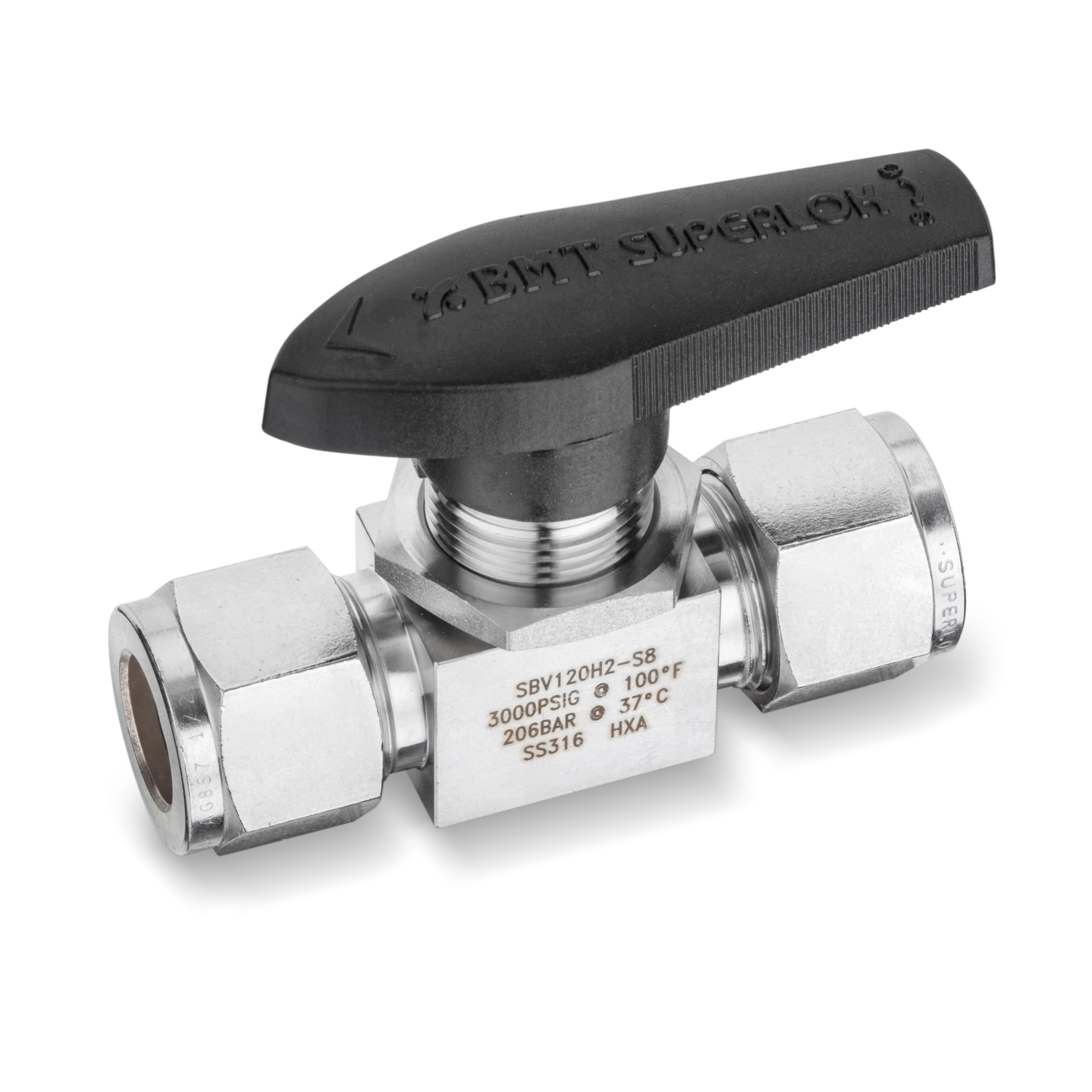
In practice, a two-piece ball valve gives full bore, low pressure drop and a quarter turn to isolate, which is why it shows up often at the tap. A gauge valve is the other common choice directly ahead of a pressure gauge, sized and packed for that single duty. Either way, the valve at the tap is chosen for reliable on-off service under full process conditions, not for metering.
Where the isolation valve sits, and why one valve is not enough
The instrument isolation valve lives at the opposite end of the sensing line, immediately ahead of the gauge, switch or transmitter. Its job is different from the root valve’s: it lets someone remove, service or calibrate the instrument without depending on access to the process connection, which may be on a hot line, inside a trench, or simply a longer walk away.
Skip the second valve, and here is what the tap loses
No local service point
Every instrument change, however small, now requires a trip back to the root valve, which may be far away or hard to reach quickly.
One point of failure
A single valve is the entire margin between the live process and an open connection. There is no second line of defense if it leaks or is left open by mistake.
No safe vent path
Without a valve at the instrument end, the whole run has to be depressurized from the root valve just to bleed the line down for a gauge swap.
That is the practical reason the LANL guidance lands on two valves as the minimum for a remote-mounted instrument. The root valve protects the process. The isolation valve protects the technician working on the instrument, and it does that without forcing a shutdown upstream every time.
The hookup order, tap to instrument
Read left to right, a straightforward pressure hookup runs: process tap, root valve, sensing tubing, instrument isolation valve, gauge or transmitter. Our installation guide covers tubing and fitting makeup for that run. A manifold, when the application calls for one, sits between the isolation valve and the instrument rather than replacing either single valve. Our valve range covers both ends of that hookup in 316 stainless steel, corrosion-resistant stock for tap and instrument positions alike, and the Superlok® parts along that run hold the finest interior surface finish of any tube and pipe fitting on the market, useful on a sensing line where a partly plugged tap shows up on the panel as an instrument fault rather than as a piping problem.
Naming drifts by site and by industry. Some specifications call the first valve a “block valve,” others a “primary isolation valve,” and the second one may simply be called “the isolation valve” with no further label. The position in the hookup is what matters for troubleshooting and lockout planning, whatever the tag on the drawing says. If you are weighing which valve style to standardize on at either end, our needle valve vs ball valve comparison covers the operating trade-offs.
| Position | Common name | Typical valve type | Main job |
|---|---|---|---|
| At the process tap | Root valve, block valve, or primary isolation valve | Ball valve or gauge valve | First shutoff, closest to the process fluid |
| Along the sensing line | Tubing run | Not a valve position | Carries the process signal to the instrument |
| At the instrument | Instrument isolation valve | Needle valve, ball valve, or manifold valve | Lets the instrument be serviced without touching the tap |
Naming and valve style vary by site specification. Grade, rating and configuration for any Superlok® valve are confirmed per order.
Common questions
Is a root valve the same thing as a block valve?
Usually yes, both names describe the first valve at the process tap. Which term a site uses depends on its own specification, not on the valve’s design.
Can a ball valve be used as a root valve?
Yes. A ball valve’s full bore and quarter turn action suit the simple on-off duty a root valve needs, and it is a common choice at that position.
Does every instrument tap need two separate valves?
Guidance for remote-mounted instruments calls for at least two, one at the tap and one at the instrument. A locally mounted gauge threaded directly onto a fitting may rely on the root valve alone, per the applicable site specification.
What is the difference between an isolation valve and a root valve if both isolate?
Position, not function. The root valve isolates the process end of the run, the instrument isolation valve isolates the instrument end, and each protects a different side of the same tubing run.
Should the valve at the instrument be a needle valve?
Often, especially where fine bleed control matters for calibration, but a ball valve or a manifold valve fills the same isolation role depending on the instrument and the site specification.
Standardising the valves on your instrument taps?
Send the tap detail and the instrument at the far end, and we will lay out both positions.
Superlok® North America
Name the valve by where it sits, not by what it looks like.
Sources
- Los Alamos National Laboratory, “Engineering Standards Manual STD-342-100, Chapter 8 I&C, Attachment D: Installation and Calibration of Instruments,” a government facility engineering standard, supports the root valve definition, the point where I&C responsibility begins, and the two-valve minimum for a remote-mounted instrument. engstandards.lanl.gov
- Yokogawa® and AS-Schneider, “Process to Instrument Valves: C13SF Monoflanges,” manufacturer catalogue, supports the use of “primary isolation valve” for the valve at the process tap and the description of that connection as close coupled to the process piping flange. yokogawa.com
Technical note: one source here is a national laboratory’s own engineering standard and the other a manufacturer catalogue. Both speak to valve position and naming, and neither is a universal rule: site specifications differ on what each valve is called and on whether a second valve is required for a given instrument. The piping and instrumentation diagram for the facility in question governs. For a Superlok® valve at either position, material grade, pressure rating and certification are agreed on the order, against the tap it is going on.
Trademark disclaimer: Superlok® is a registered trademark of its owner. Yokogawa® is a registered trademark of Yokogawa Electric Corporation, and AS-Schneider is the name of Armaturenfabrik Franz Schneider GmbH. All other marks belong to their respective owners. Use of these names is for identification only and does not imply any affiliation, endorsement or approval. Cross-references are made by form, fit, and function only.