

Superlok® USA · Valve Selection
Needle Valve vs Ball Valve: Pick by the Job, Not by Habit
One is built to be open or shut. The other is built to be held somewhere in between. Using either one for the other job is how seats get wrecked and readings get unstable.
Most instrument hookups need both valves, and most panels have at least one of them doing the wrong job. A ball valve is an isolation device: quarter turn, full bore, either open or closed. A needle valve is a metering device: a tapered stem that moves a long way for a small change in flow. According to a technical article published by the stainless distributor Unified Alloys, ball valves are “designed for on-off operation” and should not sit in throttled service for long periods, while needle valves are what you reach for when fine control matters. That one distinction settles most selection arguments before they start.
What each one is built to do
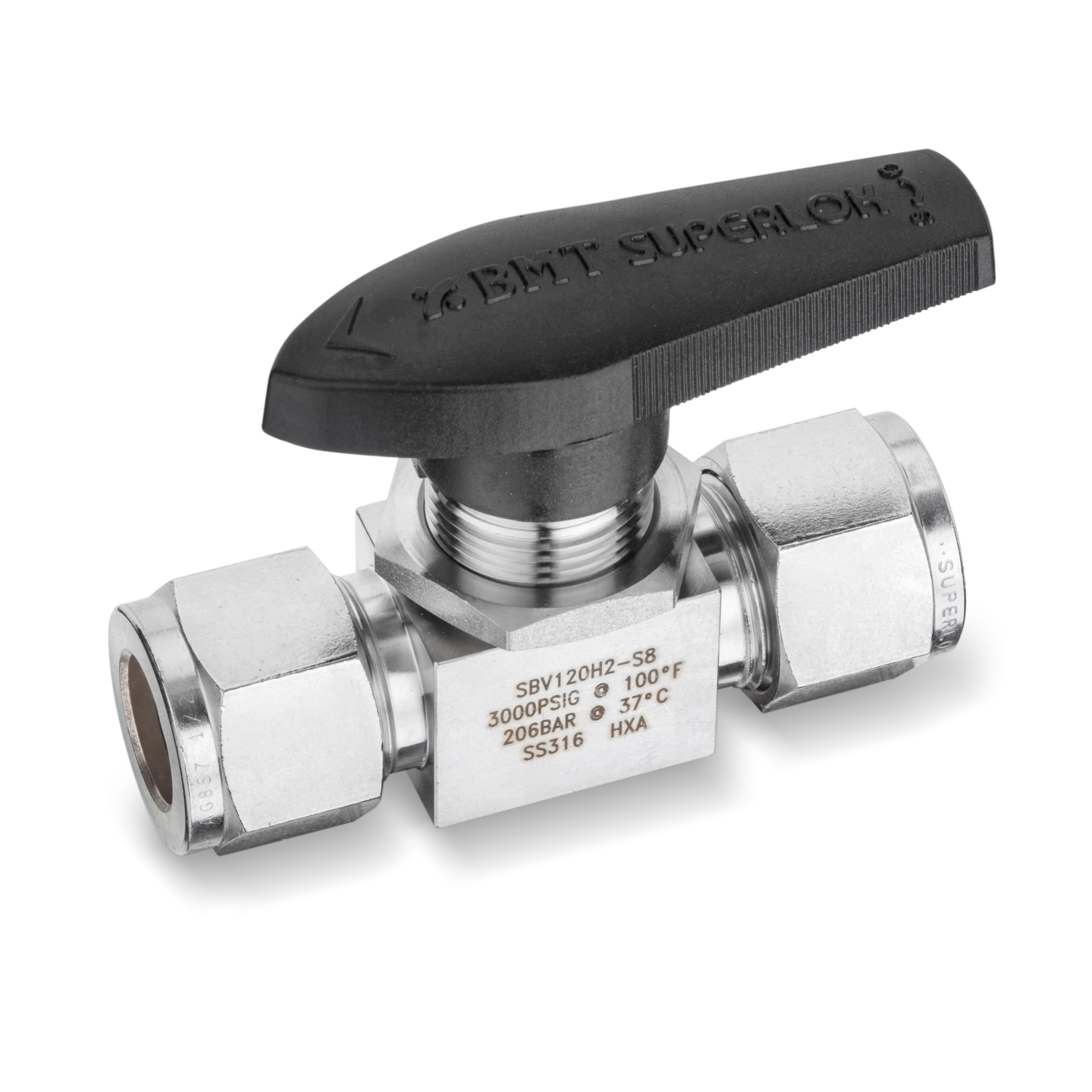
A ball valve carries a bored sphere between two seats. Turn the handle ninety degrees and the bore lines up with the line, which is why it opens fast, drops almost no pressure and gives you a visible handle position you can check from across a platform. That is an isolation valve.
A needle valve carries a long tapered stem that lowers into a matching seat. The taper means stem travel translates into a very small change in flow area, so you can set a rate and leave it. That is a metering valve, and it is why sample lines, analyzer feeds, purge lines and flow controllers use them.
What goes wrong when you swap them
Both mistakes are common, and both show up months later rather than on the day:
Throttling a ball valve
Held part open, flow accelerates past the edge of the ball and across the seat. The seat wears unevenly, and the valve that was supposed to be your isolation point stops shutting tight.
Isolating with a needle valve
It will shut off, but it takes many turns to do it, and shutting a metering valve hard onto its seat is how stems get galled. In an emergency nobody wants to count turns.
Using one valve for both
A single valve doing isolation and flow setting means every time the line is shut, the setting is lost. Two valves in series keeps the rate you dialled in.
Where each belongs on a hookup
| Position | What it needs to do | Valve |
|---|---|---|
| Root, at the tap | Full isolation from the process, fast, with a handle position you can read | Ball valve |
| Flow setting to an analyzer or rotameter | A rate you set once and hold | Needle valve |
| Gauge or transmitter isolation | Isolate the instrument, then vent it safely before removal | Gauge valve, or block and bleed |
| Venting and draining | Prove the line is depressurised before anything opens | Bleed valve |
| Calibration and purge connections | Small, repeatable adjustment without losing the main setting | Needle valve |
The pattern most panels land on is a ball valve for isolation and a needle valve downstream of it for rate. Two cheap valves beat one expensive compromise.
What to confirm before ordering either one
Pressure and temperature rating against the real service, stem and seat materials against the media, packing suited to the temperature, end connections that match the tubing already in the line, and corrosion-resistant 316 stainless steel as the baseline body material. Superlok® is home to the finest interior surface finish of any tube and pipe fitting on the market, and the same attention to the wetted surface matters in a valve body that has to stay clean between samples.
Pull fine-metering needle valves, tight-shutoff ball valves, gauge valves for instrument isolation, and bleed valves for safe venting, or start from the full valve range. Check the line against the published pressure ratings before it goes into service. If the line feeds an online analyzer, the flow setting matters as much as the fitting, which we covered in instrument tube fittings for analyzer sample systems.
Common questions
Can I throttle with a ball valve if it is only temporary?
Briefly, yes, and every technician has. The problem is sustained throttling, where flow across a partly exposed seat wears it unevenly and the valve stops sealing when you need it to. If the line needs a set rate, put a needle valve downstream.
Can a needle valve be my isolation valve?
It can shut a line, but it takes many turns, it is easy to damage the stem by over-seating, and nobody wants to count turns during an upset. Use a ball valve at the isolation point and keep the needle valve for rate.
Why does my flow setting change every time the line is shut?
Because one valve is doing both jobs. Isolate with the ball valve and leave the needle valve where it was set, and the rate comes back on its own when the line reopens.
What about a valve that does both?
There are designs aimed at it, and they are a compromise on both counts. For instrument and sample work, two valves in series is the arrangement that holds up.
Building a hookup? Send us the line
Corrosion-resistant stainless steel needle, ball, gauge and bleed valves. Tell us the service and we will confirm materials, rating and stock before you commit.
Superlok® USA
Home of the finest interior surface finish of any tube and pipe fitting, in corrosion-resistant stainless steel.
Sources
- “Ball Valves vs. Needle Valves for Flow Control,” Unified Alloys, a stainless steel distributor. States that ball valves are designed for on-off operation and should avoid extended throttled operation, and that needle valves give the finer regulation. unifiedalloys.com
Technical note: the source above is a distributor technical article rather than a standards document, and is cited for the general selection reasoning. Materials, pressure rating and media compatibility are confirmed per order against your actual service.
Swagelok®, Parker® and Hy-Lok® are registered trademarks of their respective owners. Superlok® USA is an independent distributor and is not affiliated with, authorized by, or endorsed by those companies. Cross-references are made by form, fit, and function only.