

SUPERLOK® NORTH AMERICA · VALVES
Excess Flow Valves in Propane Service
Where the valve sits on a propane tank or cylinder, and why liquid and vapor openings are rated and judged differently.
Propane is stored as a liquid and leaves a damaged line as a liquid, which makes a broken withdrawal connection a harsher event than a broken natural gas one. According to the Propane Education & Research Council, a trade association, liquid propane released into the air vaporizes quickly and expands 270 times its original volume. That is the case for the excess flow valve propane systems carry at their container openings. This article places the valve on a tank or cylinder, separates liquid from vapor duty, and shows where the excess flow valves from Superlok® apply. The mechanism itself is covered in our earlier piece on natural gas service.
Where the Code Puts the Valve on a Propane Container
The clearest public description we could fetch is the Railroad Commission of Texas Fire Safety Analysis Manual for LP-Gas Storage Facilities (October 2022), which reproduces sections of the 2017 edition of NFPA 58. Under section 5.9.8.1 as quoted there, every container opening gets either an internal valve, or a positive shutoff valve together with an excess flow or backflow check valve. The listed exceptions are pressure relief devices, liquid level gauging devices, pressure gauges, filler valves, combination backflow check and excess flow vapor return valves, actuated liquid withdrawal excess flow valves, and plugged openings.
Three locations account for most of what a plant engineer or skid builder meets.
Liquid withdrawal
PERC describes liquid drawn off the bottom of a supply tank through a manual shutoff with an excess flow valve, and the same pairing on a pump bypass return line.
Vapor service
A vapor opening takes the same internal valve or shutoff-plus-valve choice, but the valve is sized to a vapor rated flow, which is a different number.
Cylinder valve
Where a cylinder needs one and is not in mobile or engine fuel service, NFPA 58 permits the valve at the outlet of the cylinder shutoff valve.
Placement rules in the same section matter as much as the choice of valve. On ASME containers the valve goes inside the container, or immediately outside where the line enters or leaves it. If it is outside, the installation must keep strain beyond the valve from breaking anything between the container and the valve. And the line leading to or from an opening must have a flow capacity greater than the rated flow of the valve protecting it. Our reading is that this last rule exists so a real break can push the flow past the trip point. The sources do not state the purpose, so confirm it with your authority having jurisdiction.
Excess Flow Valve Propane Duty: Liquid Versus Vapor
NFPA 58 defines the valve as one designed to close when the liquid or vapor passing through it exceeds a prescribed flow rate, and says it must close automatically at the rated flows of vapor or liquid specified by the manufacturer. Those two words carry the design. A rating is a statement about one phase, so a figure for vapor tells you nothing about a liquid line.
| Question | Liquid opening | Vapor opening |
|---|---|---|
| What escapes in a break | Liquid that vaporizes and expands about 270 times, with a refrigerating effect and frostbite risk | Gas that is already expanded and disperses as vapor |
| What the rating describes | Rated flow of liquid, set by the manufacturer | Rated flow of vapor, set by the manufacturer |
| Special variant | Actuated liquid withdrawal valve, normally closed and plugged, opened by external actuation | Combination backflow check and excess flow vapor return valve |
| Bypass limits | No larger than a No. 60 drill opening, to allow pressure equalization (stated for the valve generally) | That ceiling applies, and below 1/2 in. NPT the bypass must limit propane vapor flow to 10 scf/hr at 100 psig |
The vapor-side hazard row is our plain-language summary, not a quotation from either source.
The bypass row explains a common field surprise. The small opening that lets pressure equalize after a trip means a closed valve is not a sealed one. Treat it as a flow limiter, not as isolation. Isolation still comes from the shutoff valve in front of it, and in tubing you would normally add ball valves or needle valves for that job.
Backflow Checks, Relief and What Sits Beside the Valve
The Texas manual quotes NFPA 58 as requiring a backflow check valve to be spring-loaded or weight-loaded and to close when flow stops or reverses. That is a different job from tripping on excess forward flow, and the code accepts it as an alternative on container openings. Our check valves are covered in the notes on check valve orientation and cracking pressure. Over-pressure is a separate duty: relief devices appear in the exceptions list above and belong with relief valves.
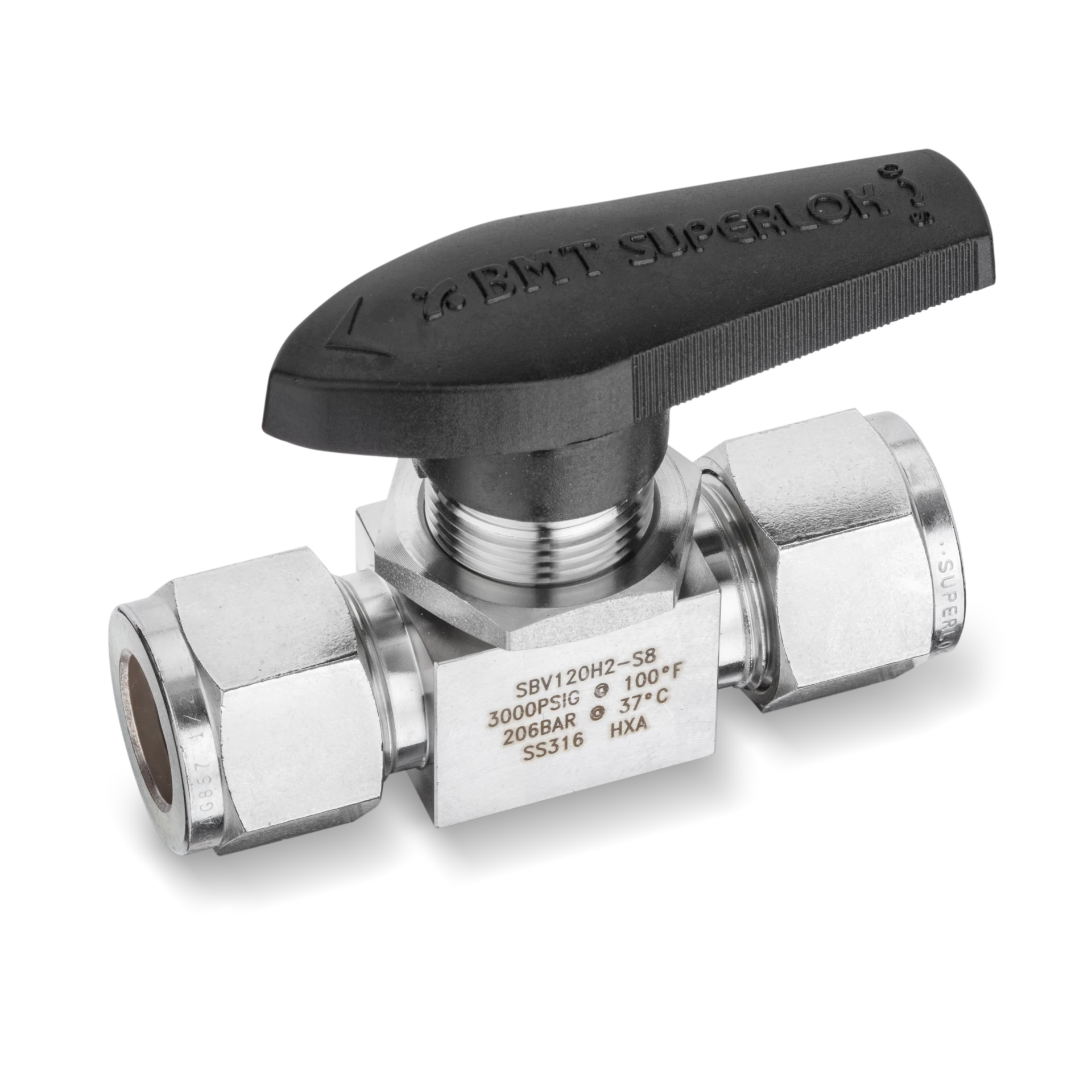
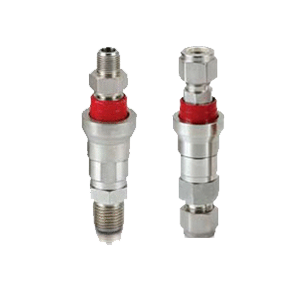
Be exact about scope. The valves on a propane container are listed container appurtenances made for that duty, and we do not claim Superlok® valves are listed container appurtenances or approved for container service. Our valves serve the tubing side: instrument connections, sample points and test rigs on an LPG skid. Specify 316 stainless steel, which is corrosion-resistant, where the site calls for it. Grade is listed in 316 stainless steel and confirmed per order, and our pressure rating page lists the limits by size.
Questions on Propane Tanks and Cylinders
Is a backflow check valve a substitute for the flow-tripped type on a tank opening?
The code text allows either one in combination with a positive shutoff valve, but they react to different events. One closes on excess forward flow, the other when flow stops or reverses.
Why do the gauge and filler openings skip it?
Section 5.9.8.1 as quoted by the Texas RRC lists liquid level gauging devices, pressure gauges and filler valves among the exceptions, with relief devices and plugged openings.
Where does it go on a portable cylinder?
If one is required and the cylinder is not in mobile or engine fuel service, NFPA 58 permits it at the outlet of the cylinder shutoff valve.
Can I size from a vapor figure and use it on a liquid line?
No. The rating is set by the manufacturer for vapor or for liquid, so use the figure for the phase in the line.
Which edition of NFPA 58 applies to my site?
We cannot say. The Texas document describes the 2017 edition, and the edition in force depends on your jurisdiction, so ask the authority having jurisdiction.
The finish on the bore matters as much as the body, so we end on the claim we stand behind.
SUPERLOK® NORTH AMERICA
Tubing connections with the finest interior surface finish of any tube and pipe fitting on the market
Sources
- Railroad Commission of Texas, “Fire Safety Analysis Manual for LP-Gas Storage Facilities,” October 2022, reproducing NFPA 58 (2017 edition) sections 3.3.85.3, 5.9.4.4, 5.9.7.1 and 5.9.8.1: definition, rated flows, bypass limits, container openings, exceptions, placement, cylinder outlet, backflow check description. rrc.texas.gov
- Propane Education & Research Council, “Dispensing Propane Safely into Agricultural Equipment,” 2007, liquid vaporizing to 270 times its volume, refrigerating effect, 80 percent fill, excess flow valves on supply tank withdrawal and bypass return lines. propane.com
- Superlok North America, “Excess Flow Valves” product page (manufacturer publication), linked for the product range. superloknorthamerica.com
Technical note: The sources establish how NFPA 58 (2017 edition, as reproduced by a Texas regulator) describes valve duty, bypass limits and container openings, and what PERC says about liquid propane. They do not establish which NFPA 58 edition your jurisdiction has adopted, the rated flow of any product, or that any Superlok® product is approved for container service. The PERC document is from 2007. Material grade and pressure rating are confirmed per order.
Trademark disclaimer: Superlok® is a registered mark of its owner. NFPA, PERC and the Railroad Commission of Texas are named only to identify sources. Cross-references are made by form, fit, and function only.