

SUPERLOK® NORTH AMERICA · FITTINGS KNOWLEDGE
Socket Weld vs Butt Weld on Small-Bore Lines
Joint geometry, the gap you must leave, where each joint is used, and how each is inspected.
The socket weld vs butt weld decision on a small-bore line comes down to joint geometry, the inspection route you can use, and the vibration the line will see. It is not decided on cost alone. Superlok® builds socket weld connectors for tube, so the questions below come up on our own order desk. According to ASME, a standards body and not a manufacturer, B16.11 covers ratings, dimensions, tolerances, marking and material requirements for socket-welding and threaded forged fittings, with socket-weld ends in Class 3000, 6000 and 9000.
Joint Geometry: Fillet in a Socket, Groove at a Bevel
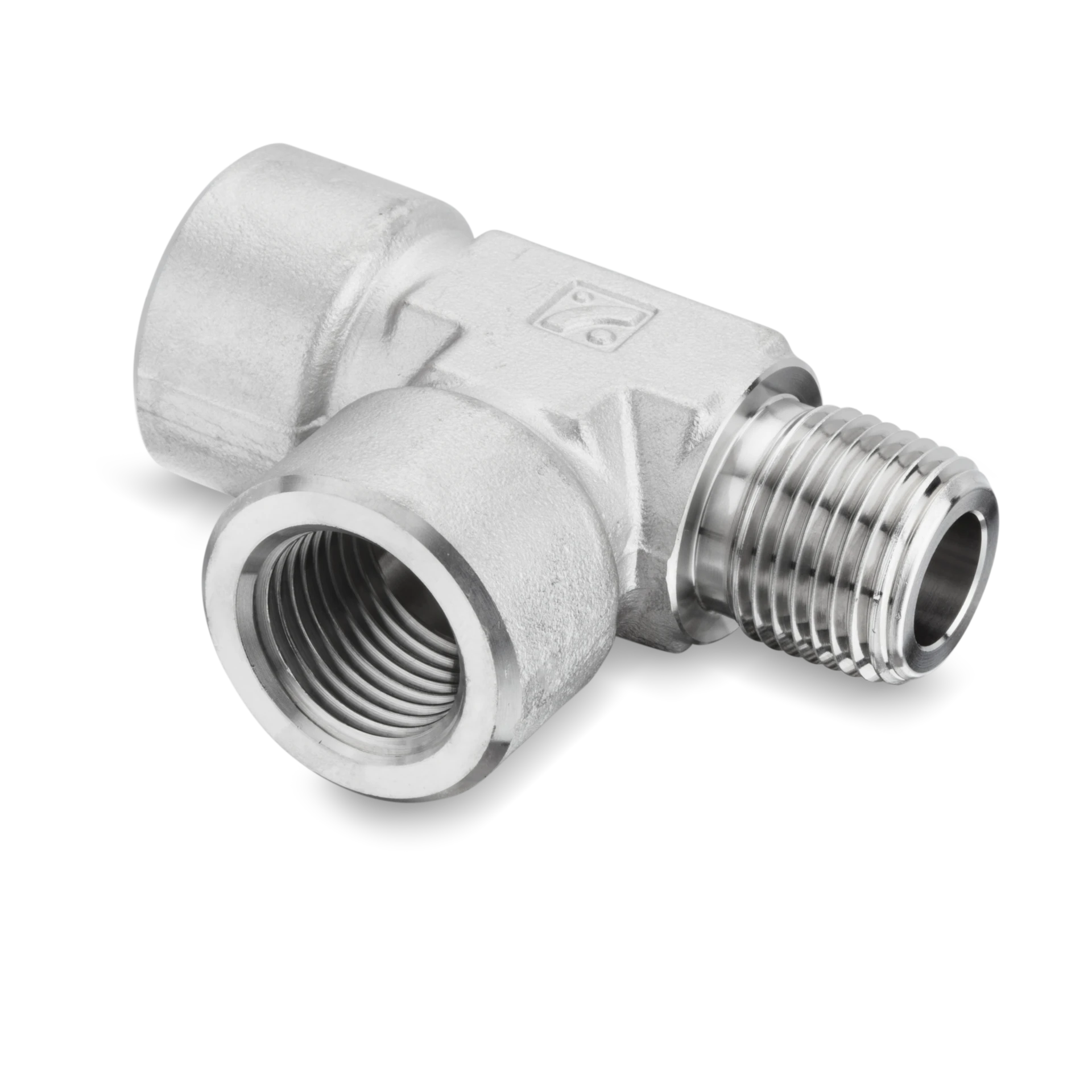
In a socket weld the pipe or tube is inserted into a recess in the fitting, and a fillet weld joins the outside of the pipe to the face of the socket. No end preparation is needed on the pipe, which is one reason fillet welds are described as simpler and usually cheaper than butt welds.
A butt weld joins two ends square to each other. Where wall thickness is above 3/16 in., the ends are chamfered to about 37.5 degrees, and the prefabrication gap is about 3 to 4 mm so the weld can penetrate. The same reference states a rule that settles many choices on its own: where complete weld penetration to the inside of the piping is required, socket welds are not acceptable and a butt weld generally has to be used. ASME B16.9 covers factory-made wrought buttwelding fittings from NPS 1/2 through NPS 48, which tells you butt-weld fittings are not a small-bore-only product.
The Expansion Gap in a Socket Weld
A socket weld is assembled with the pipe withdrawn slightly from the bottom of the socket. A U.S. Nuclear Regulatory Commission notice of violation from January 1983 records that the ASME Code, Section III, 1977 edition, requires a 1/16-inch gap in socket-welded connections before welding. The cited failing was procedural: the contractor had no procedure to ensure the gap existed and no records to show it.
Wermac, a piping reference site, cites ASME B31.1 paragraph 127.3 for the same practice: insert the pipe to full depth, then withdraw it about 1/16 in. from the shoulder. It gives two reasons, relief of residual stress at the weld root as the metal solidifies, and allowance for differential expansion between the joined parts. Practically, mark the tube at insertion depth, back off, and check the gap before the first tack. We did not retrieve the current B31.3 paragraph, so confirm the gap requirement against the edition your project cites.
Socket Weld vs Butt Weld: Where Each Joint Is Used
Socket-weld fittings are generally for piping of NPS 2 or smaller. In the HOIS inspection project reported by ESR Technology, they are described as typical at instrumentation points, vents and drains, in carbon steel or austenitic or duplex stainless steel. That matches how instrument tubing is built: short branches, many connections, small sizes.
Butt welds take over where the joint must be fully penetrated or where weld quality is critical. They also perform better in fatigue. Wermac says socket welds have lower fatigue resistance than butt-welded construction because of the fillet welds and abrupt geometry, and the HOIS project names high cycle fatigue at the fillet welds as the most common failure, made worse by vibration, component weight and unsupported connections. If a line shakes, brace the branch or choose another joint.
| Feature | Socket weld | Butt weld |
|---|---|---|
| Joint | Fillet weld at a socket | Groove weld at a bevel |
| Fitting standard | ASME B16.11 | ASME B16.9 |
| Pre-weld gap | About 1/16 in. | About 3 to 4 mm root gap |
| Usual size | NPS 2 and smaller | NPS 1/2 up to NPS 48 |
| Radiography | Not practical on the fillet | Used where weld quality is critical |
| Fatigue | Lower resistance | Better resistance |
Values are those reported by ASME, Wermac and the HOIS project. They are not Superlok® test results.
Inspection Differences
The two joints are examined differently. Wermac states that radiography is not practical on a fillet weld, so correct fit-up and welding are critical, and that the fillet may be examined by surface methods: magnetic particle or liquid penetrant. A butt weld can be X-rayed. ASME describes B31.3 as covering examination, inspection and testing of process piping, so your examination requirements come from the fluid service and the edition, not from the fitting alone.
Surface examination has a limit. The HOIS project notes that cracks starting at the weld root are not surface breaking, and that some practitioners doubt the detection probability of magnetic particle, dye penetrant and visual methods for them. At the time of its page, the project had run blind trials with phased array ultrasonic and electromagnetic methods, but the page reports no detection results. So treat a socket weld that has passed surface examination as examined, not as proven, and weigh that against the consequence of a leak.
Fitting Choices on the Superlok® Range
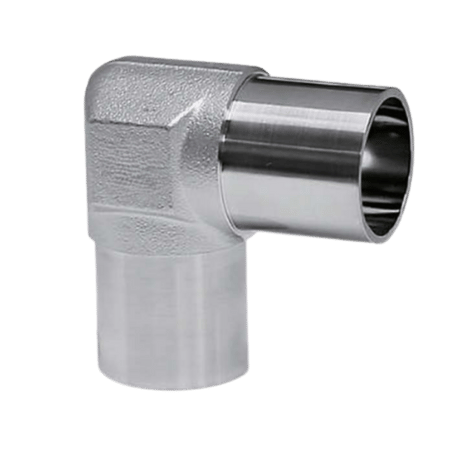
The SSWC listing shows five tube sizes, 1/4 to 1 in. OD, and describes a deep socket for secure welding. The SSWE socket elbows are listed as 90 degree elbows in inch sizes, in corrosion-resistant stainless steel. Where a tube run must end at a pipe weld, the SPWC male pipe weld connector joins fractional or metric tube to pipe; its page says the weld end is built to Schedule 80 wall or heavier and cites B31.1 and B31.3, and advises removing the nut and ferrules before welding. Wall thickness decisions are covered in tube wall thickness, and the wider range is on the pipe fittings page. Pressure ratings and grade are confirmed per order.
Questions
Why leave a gap in a socket weld?
Wermac gives two reasons: it relieves residual stress at the root as the weld solidifies, and it allows for differential expansion. Section III of the ASME Code, as cited by the NRC, requires 1/16 in. before welding.
Can a socket weld be radiographed?
Radiography is not practical on the fillet weld. Magnetic particle or liquid penetrant examination is used instead.
Which is better for a vibrating line?
The butt weld has the better fatigue resistance. The HOIS project names fatigue at the fillet as the most common socket-weld failure.
What size limit applies to socket-weld fittings?
They are generally for NPS 2 and smaller, with B16.11 socket-weld ends in Class 3000, 6000 and 9000.
Planning a welded tube or pipe branch?
Send the size, schedule and service, and we will confirm what is listed.
SUPERLOK® NORTH AMERICA
Weld ends and tube ends, built around the finest interior surface finish of any tube and pipe fitting on the market.
Sources
- ASME, “B16.11 Forged Fittings, Socket-Welding and Threaded,” product page, 2021 edition listing. Supports the scope and Class 3000, 6000 and 9000 socket-weld ends. asme.org
- ASME, “B16.9 Factory-Made Wrought Buttwelding Fittings,” product page, 2024 edition listing. Supports NPS 1/2 through NPS 48. asme.org
- ASME, “B31.3 Process Piping,” product page, 2024 edition listing. Supports the scope covering examination, inspection and testing. asme.org
- U.S. Nuclear Regulatory Commission, Notice of Violation, Docket 50-508, 17 January 1983. Supports the 1/16-inch gap requirement cited from ASME Section III. nrc.gov
- Wermac, “Socket Weld Fittings General” (piping reference site). Supports the B31.1 gap practice and reasons, NPS 2 and smaller, fatigue and inspection statements. wermac.org
- Wermac, “Types of Welding Joints.” Supports bevel, root gap and the penetration rule for butt welds. wermac.org
- ESR Technology, HOIS Highlights 2023-2024, “Inspection of Socket Weld Fittings.” Supports use at instrumentation points, vents and drains, fatigue failure and root-crack detection limits. esrtechnology.com
- Superlok® North America, SSWC, SSWE and SPWC product pages (manufacturer of record). Supports the sizes and welding notes quoted. superloknorthamerica.com
Technical note: The ASME pages establish scope, class and size ranges only, not the text of B16.11, B16.9 or B31.3. The 1/16-inch gap comes from an NRC notice citing ASME Section III (1977) and from Wermac citing B31.1; we did not retrieve the current B31.3 paragraph. The HOIS page reports no detection results. Wermac is a reference site, not a standard. Grade and rating confirmed per order.
Trademark disclaimer: Superlok® is a registered trademark. ASME, ESR Technology, HOIS, Wermac and the U.S. Nuclear Regulatory Commission are named only to identify the sources and standards cited and belong to their owners. Cross-references are made by form, fit, and function only.