

SUPERLOK NORTH AMERICA · UHP SYSTEMS
Helium Leak Testing a High-Purity Gas Line
Inboard or outboard, sniffer or vacuum, and what a leak rate number has to say before it means anything.
The helium leak test is the last sign-off before a high-purity gas line carries process gas, and fab commissioning is when that sign-off is in highest demand. According to SEMI, a semiconductor industry trade association, in its 13 October 2026 press release, global fab construction spending is projected to rise 23% to $47.5 billion in 2026 and another 33% to $63.3 billion in 2027. TrendForce reported on 22 October 2026 that Intel has begun production equipment installation at Fab 62 in Arizona. Those tools are fed through UHP fittings, and every joint has to be proven tight first.
How a Helium Leak Test Works on a Gas Line
Helium goes on one side of a joint, a mass spectrometer watches the other, and any helium that crosses shows up as a signal. Valve Magazine, reporting a webinar by Agilent leak-detection product manager John McLaren, lists the reasons helium is used: it is non-toxic and inert, its atoms are small enough to pass through very small leaks, and ambient air holds only about 5 ppm of it, so a real leak stands out from background.
The reason to use it on a UHP line is sensitivity. The same article tabulates approximate detection limits in cc/sec: pressure or vacuum decay at 1 x 10⁻⁴, helium tracer gas at 1 x 10-11. That is a gap of seven orders of magnitude, by simple arithmetic. Mike Fitzpatrick and Ken Goldstein, writing on gas systems, call bubble testing and static pressure decay "entirely inadequate" for high-purity cleanroom systems.
Inboard and Outboard: Which Way the Helium Moves
In gas-system practice the two terms describe the direction of the helium. In an inboard test the system is evacuated, helium is applied outside each joint, and the detector at one end of the line sees whatever enters. In an outboard test the system is pressurized with helium or a helium mixture and a probe samples outside each joint for whatever escapes. Fitzpatrick and Goldstein describe both. SEMI F106 defines the inboard method for conventional metal face seal and surface mount gas delivery systems; its listing does not mention an outboard method.
| Point | Inboard | Outboard |
|---|---|---|
| Line condition | Under vacuum, spectrometer on one end | Pressurized with helium or a helium mixture |
| Where helium goes | Sprayed into bags over the joints | Probe slid into each bag to sniff |
| Sensitivity | Leaks down to 10-10 cc/sec detectable | Several orders of magnitude lower |
| Speed | Slow, minutes to hours | Extremely fast |
| Finds the location | No, when all bags are tested together | Yes, the bag with helium marks the joint |
| Residue | Not raised | Helium can linger, perhaps for years |
These are detectability figures, not acceptance limits. The article is undated on the page.
The residue row drives the order of work. The authors note that helium can saturate plastic components and can rule out later inboard tests. They use the inboard test invariably on cylinder-fed specialty gas systems, and some owners require it everywhere. Settle which method your owner requires before anyone pressurizes with helium.
Choosing a Helium Leak Test: Sniffer or Vacuum
Sniffer and vacuum describe the instrument mode, and they line up with outboard and inboard. According to the Leybold UL 200 operating manual, a publication from a leak-detector manufacturer, in the vacuum method the sample is evacuated and sprayed with helium on the outside, while in the sniffer method the sample holds a helium overpressure and is searched from outside with a probe.
The same manual states the detection limit of that instrument in each mode: no more than 5 x 10-11 mbar·l/s in vacuum mode and no more than 1 x 10⁻⁷ mbar·l/s in sniffer mode. The ratio is 2,000. Those figures belong to one model, but the lesson carries over: a limit below your sniffer’s own detection limit cannot be demonstrated with that sniffer.
Valve Magazine adds that spraying from outside and sniffing from inside locate leaks but do not on their own measure total leakage, and both depend on operator skill.
Reading a Leak Rate Specification
A leak rate alone is not a specification. Four things must travel with the number.
- Units. Detectors report mbar·l/s or Pa·m3/s, and trade literature quotes standard cc/sec. By arithmetic, 1 mbar·l/s is 0.1 Pa·m3/s and about 0.99 atm·cc/s. Valve Magazine defines a standard cc at one atmosphere and 0°C, so check each document’s definition.
- Method. Inboard and outboard results differ in sensitivity, per the table.
- Test pressure. Valve Magazine quotes McLaren: test it like you use it. In its summary, testing at a lower pressure than service means tightening the specification.
- Scope. Complete system, subsystem or single component. SEMI describes F1 as covering all three and setting limits for acceptance and qualification testing. The public listing gives no values, so this post quotes none; take the number from the standard or the project specification.
What Gets Bagged, and What the Fittings Contribute
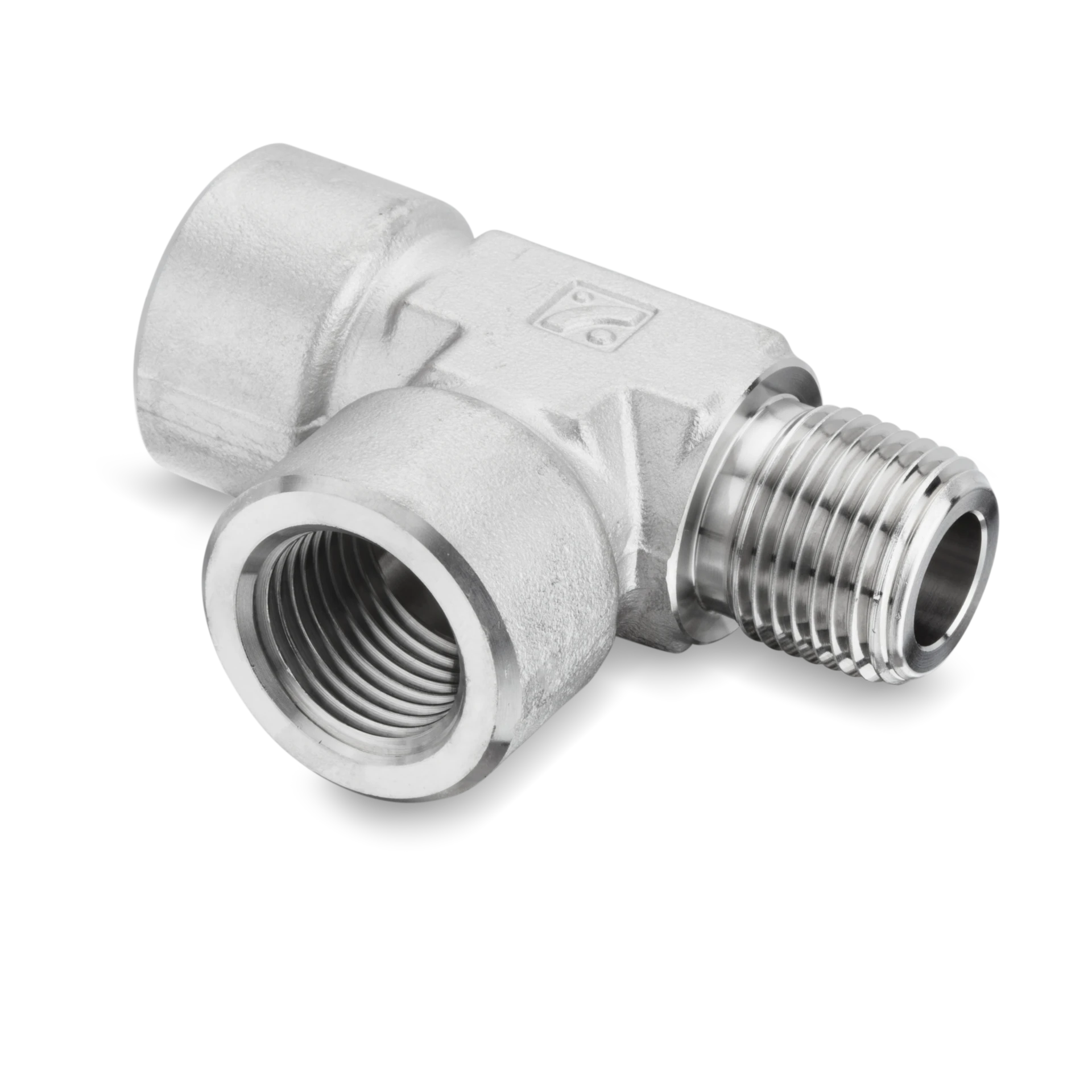
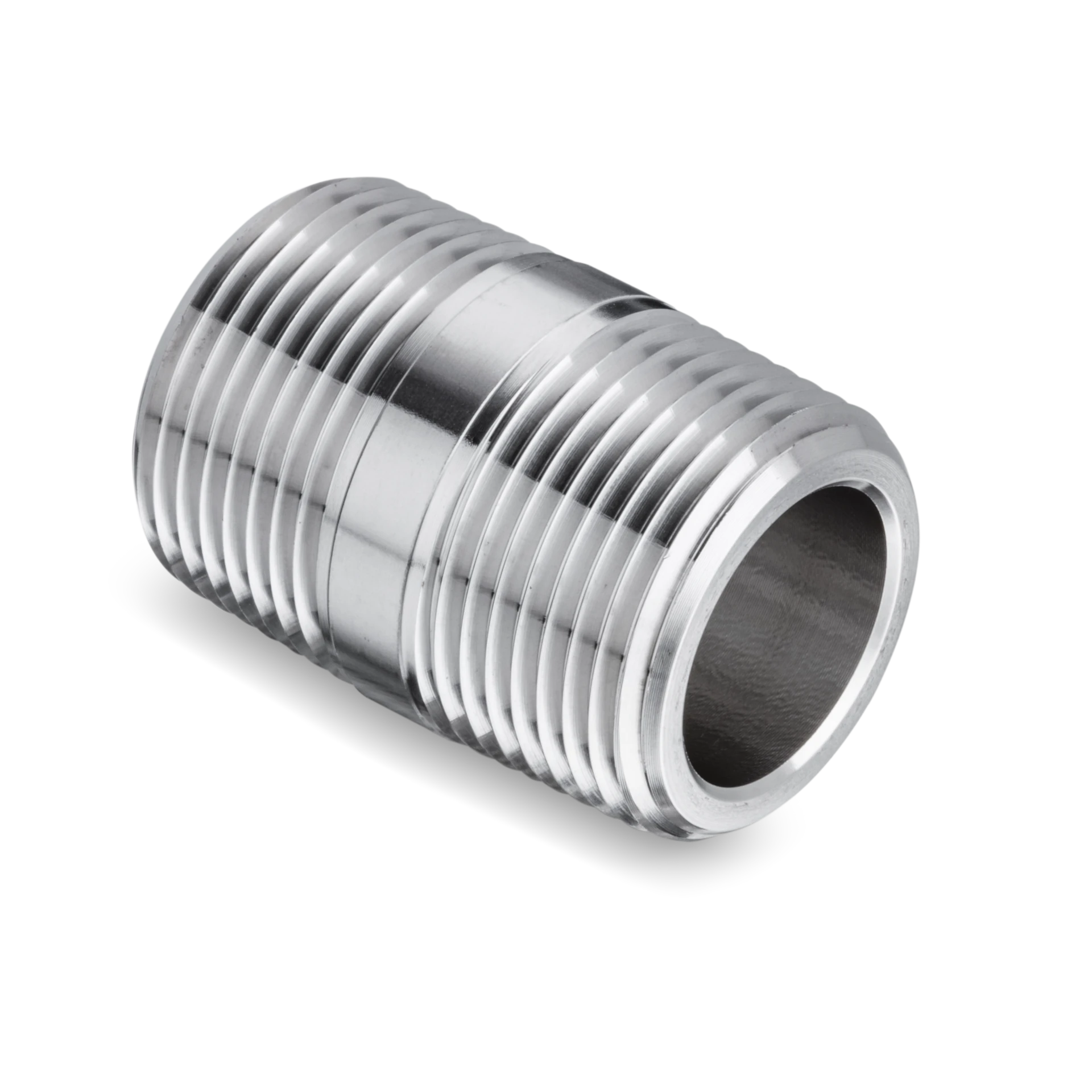
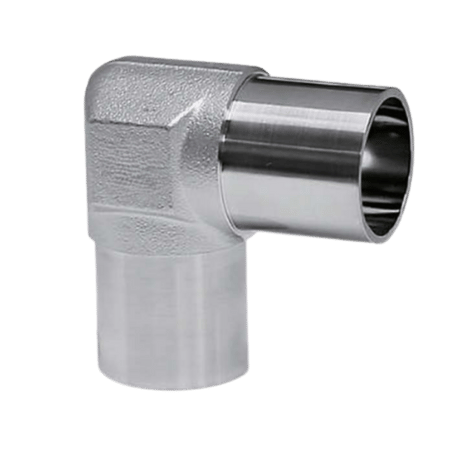
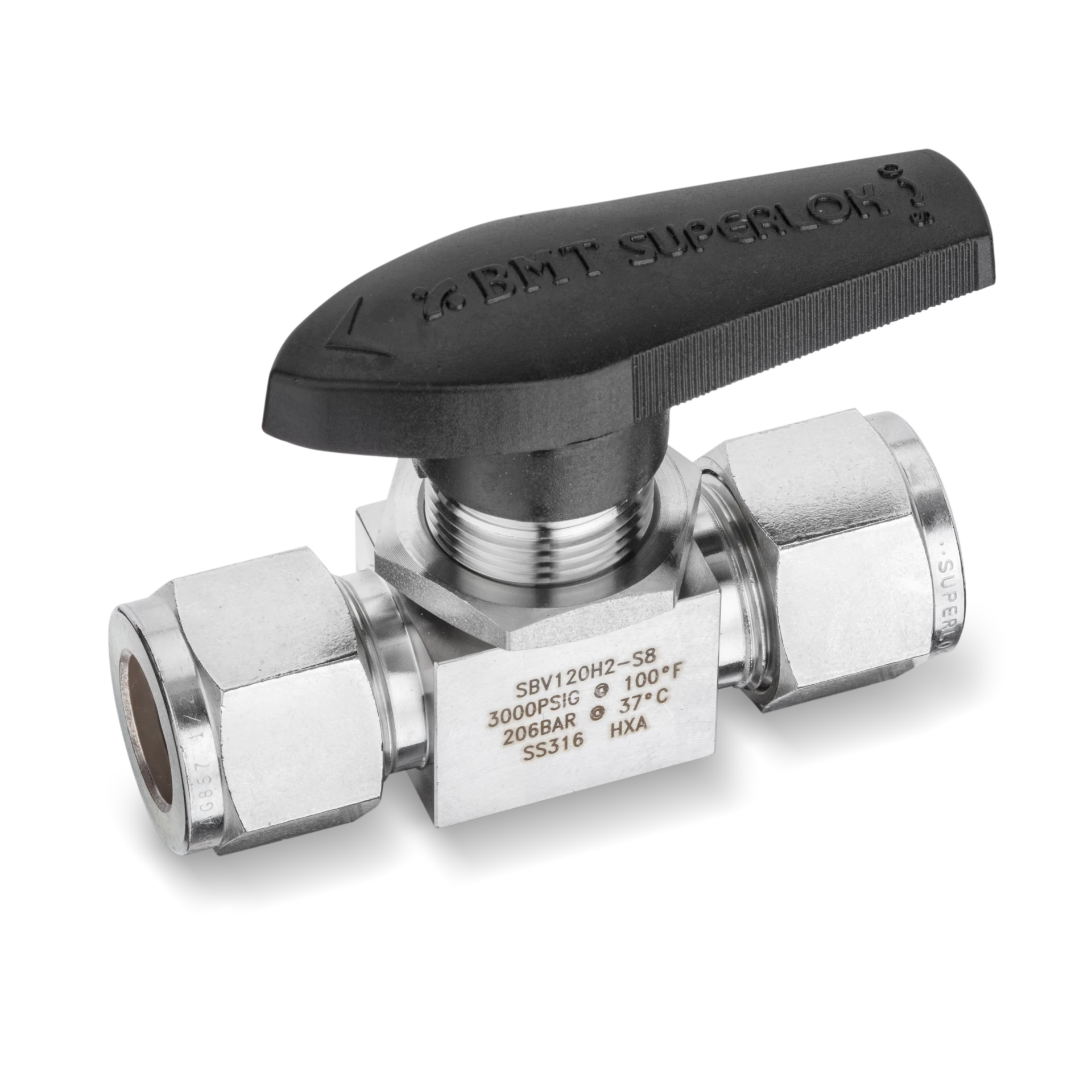
Fitzpatrick and Goldstein list the sites to bag as welds, valves and mechanical fittings. Build that joint list from the isometrics before test day. On a Superlok® UHP weld metal seal fittings run, the joints are welds and metal-sealed connections, and the metal seal parts, such as the UHP gasket, belong on the list as joints. Valves belong on it too; see our UHP diaphragm valves.
Material is a separate question. Stainless steel is corrosion-resistant, but a clean helium test says nothing about grade, which is confirmed per order. See 316 vs 316L and the sample material test report. For the wider fab picture read semiconductor fab fittings, and for assembly before test, the installation guide.
Questions on Commissioning Leak Checks
Can a pressure decay test replace the helium test?
Not on a high-purity line. Valve Magazine puts decay methods near 1 x 10⁻⁴ cc/sec and helium tracer near 1 x 10-11 cc/sec.
Why not run the fast outboard test first and the inboard test after?
Residue. Helium can remain in the system and in plastic parts and can spoil a later inboard test, so if inboard is required, do it first.
Why does a sniffer read something when nothing is leaking?
Ambient air carries about 5 ppm helium, per Valve Magazine and Quality Magazine, so a sniffer works against a baseline, not zero.
Which leak rate should the line meet?
The one in the governing specification. Do not take a number from a blog post, including this one.
Send us the joint list before test day
Part numbers, tube size and a quantity are enough for us to check the weld and metal seal items against your isometrics.
SUPERLOK NORTH AMERICA
A tight joint keeps the atmosphere out. For the bore, Superlok® stands behind the finest interior surface finish of any tube and pipe fitting on the market.
Sources
- SEMI, "Global 300mm Fab Equipment Spending to Reach $227 Billion in 2029," press release, 13 October 2026. Supports fab construction spending of $47.5 billion in 2026 (up 23%) and $63.3 billion in 2027 (up 33%). semi.org
- TrendForce, news item, 22 October 2026. Supports Intel announcing that production equipment installation has begun at Fab 62. trendforce.com
- Mike Fitzpatrick and Ken Goldstein, "Gas leak testing: balancing time and money with accuracy," Solid State Technology (undated on the page). Supports inboard and outboard procedures, the comparison table, residue, and the criticism of bubble and pressure decay testing. sst.semiconductor-digest.com
- Barbara Donohue, "Leak Testing Gas Components and Systems," Valve Magazine, 28 August 2019, reporting a webinar by John McLaren of Agilent Technologies. Supports helium properties, 5 ppm background, method sensitivity figures, test-it-like-you-use-it, units and the standard cc definition. valvemagazine.com
- Leybold, UL 200 operating manual (copy hosted by KTH). Manufacturer publication. Supports the vacuum and sniffer method descriptions and the two detection limits quoted for that model. nanophys.kth.se
- SEMI, store listing for SEMI F106, test method for determination of leak integrity of gas delivery systems by helium leak detector. Supports the inboard method definition and its scope. store-us.semi.org
- SEMI, store listing for SEMI F1, specification for leak integrity of high-purity gas piping systems and components. Supports its scope and the existence of acceptance and qualification limits; the listing gives no values. store-us.semi.org
- Peter Bonyhati, Cincinnati Test Systems, Quality Magazine, 10 June 2019. Supports the 5 ppm ambient helium figure. qualitymag.com
Technical note: These sources establish how the inboard and outboard methods differ, what the two instrument modes can detect on one named detector, and what the SEMI listings say they cover. They do not establish an acceptance leak rate, a test pressure, or a procedure for your project; the SEMI pages are store listings, not the standards, and the Solid State Technology article is undated. Detection limits are for one detector model. Conversions between units are arithmetic. No leak rate is claimed for any Superlok® part here, and material grade and rating are confirmed per order.
Trademark disclaimer: Superlok® is a registered mark of its owner. Leybold, Agilent, SEMI, TrendForce, Valve Magazine and Quality Magazine are named only to identify the sources cited, and their marks belong to their respective owners. Cross-references are made by form, fit, and function only.