
SUPERLOK® NORTH AMERICA · HYDROGEN SERVICE
700 Bar Hydrogen Fittings at 300 g/s: What High-Flow Fuelling Does to a Joint
Pressure margin, tube wall, connection type, leak integrity and cycle count, read against the public record.
A 700 bar hydrogen fittings specification starts with a number that is easy to misread. 70 MPa, which is 700 bar, is the pressure a vehicle tank is built to take on, not the highest pressure the hardware upstream carries. Our guide to high pressure hydrogen fittings covers the basics of material and rating; this post asks what a joint goes through as fuelling rates climb. According to Toyota Motor North America’s news release of 20 October 2026, a company publication and not a standards body or a fittings maker, Toyota and the U.S. Department of Energy’s National Laboratory of the Rockies are researching 70 MPa high-flow fuelling for heavy-duty trucks, at speeds up to 300 grams per second.
What the 20 October release leaves out
The release gives a fill time of about eight minutes, a range of up to 450 miles and a test standard, SAE J2601-5. It does not mention tubing, fittings, valves, temperatures or fill counts.
A May 2024 DOE project review from NREL describes a reference station aimed at 700 bar with 10 kg/min, and a test device aimed at high-flow fuelling of 300 g/s peak and more than 100 kg. In a March 2024 DOE webinar, NREL’s Shaun Onorato said the hardware needed to implement the faster-flow protocols is lacking, and named valve dynamic response, flow coefficients, reliability and durability. He was speaking about dispensing valves, not tube joints.
What 700 bar hydrogen fittings must carry: pressure with margin
Start with the pressure ladder. DOE webinar slides on the light-duty fuelling protocol list a maximum pressure of 87.5 MPa for a 70 MPa nominal system, with fuelling cut off when vehicle pressure reaches 125% of nominal. That is 875 bar, or about 12,690 psi. The slides cover light-duty vehicles, so confirm the limit that governs your station. Upstream can sit higher still: NREL’s December 2023 turboexpander report models a storage cascade whose top limit is 80.2 MPa, with simulated fills ramping from 5 to 70 MPa.
The working pressure of a fitting has to clear the highest pressure on its line, and the margin should be a stated design factor rather than a rounded guess. The Superlok® pressure rating page states a safety factor of 4 on tube tensile strength and says its ratings assume minimum wall and maximum outside diameter under ASTM A269. It does not mention hydrogen or 70 MPa, so we do not present any Superlok® part as rated for 700 bar service.
Tube wall and connection type
The tube sets the ceiling. A fitting can only be as strong as the wall it grips, so settle wall thickness first; our note on tube wall thickness covers how. Size matters as well. An NREL project slide states that increasing tubing from 9/16 in, typical of light-duty, to 1 in, typical of heavy-duty, increases risk by 8x. The text we read gives no basis for that multiple, so we use it only for direction: larger lines, more at stake per joint.
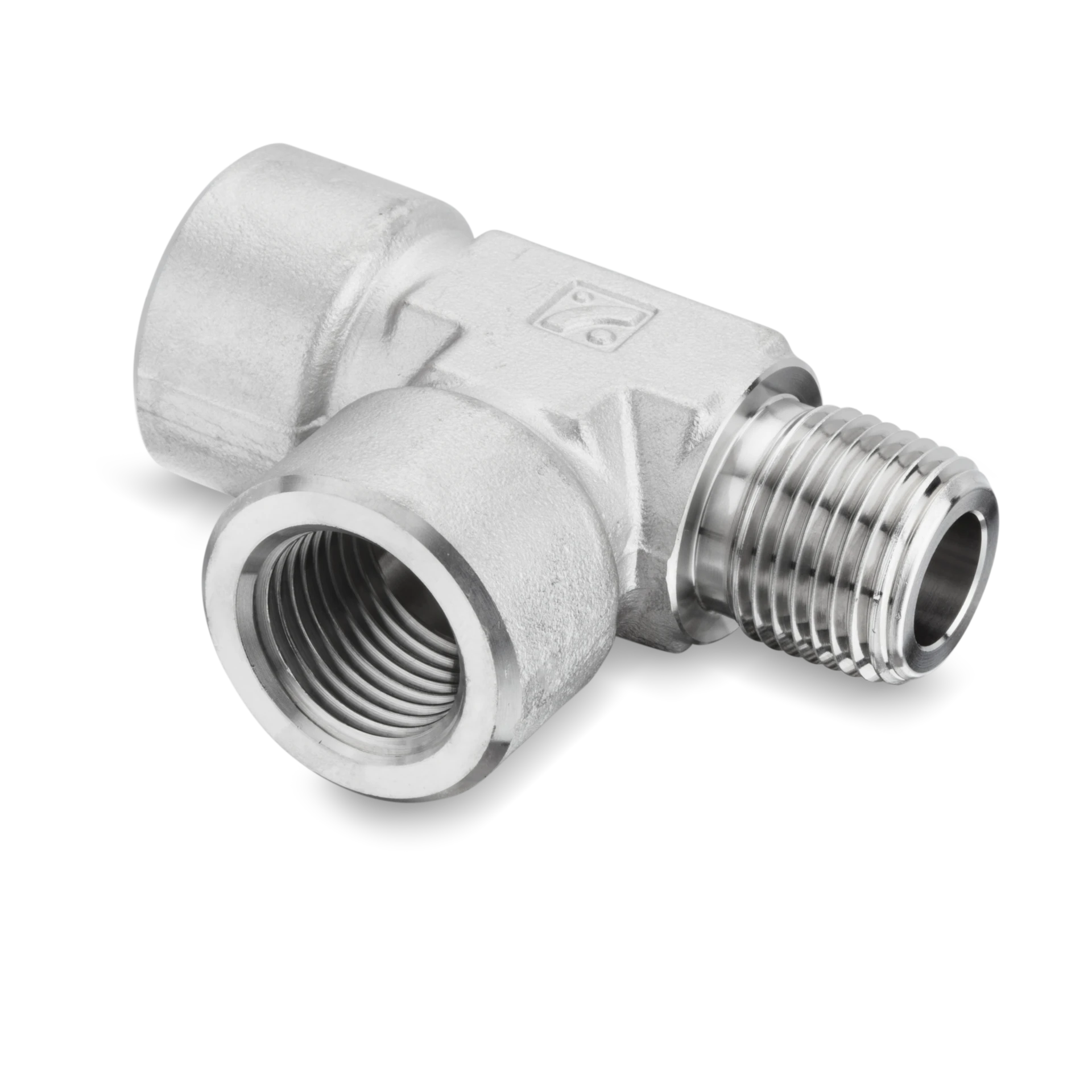
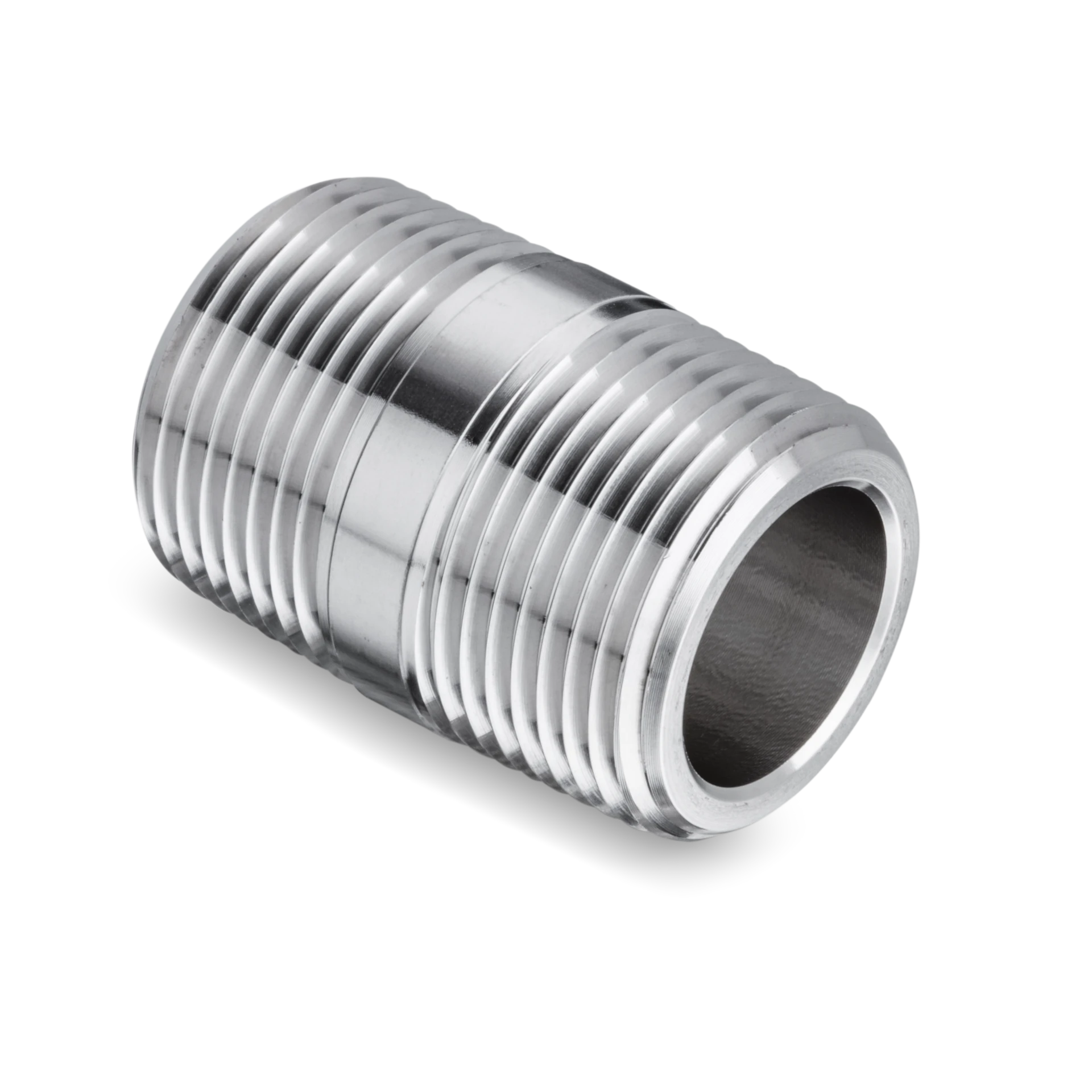
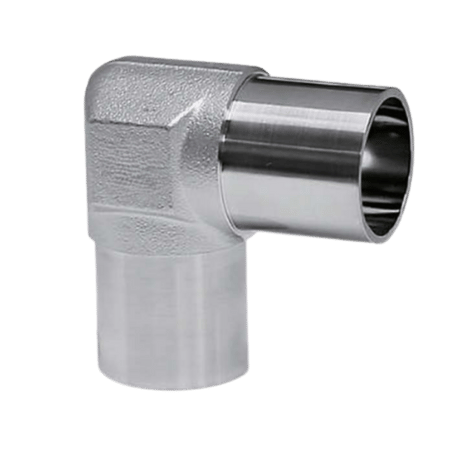
Connection type is a separate decision. The leak record in the next section involved a cone-and-thread fitting. Our tube fittings page lists single and double ferrule options, and the trade-offs between them are in single vs double ferrule. Which connection suits a 700 bar line cannot be answered by category. It is a rating question for the specific part, answered by test data at your pressure.
Leak integrity: the small leak a fixed detector misses
The European Commission’s Hydrogen Incidents and Accidents Database holds an entry drawn from Japan’s KHK accident database. Hydrogen stored at 40 MPa leaked from a cone-and-thread fitting in a storage pressure and flow control system. The fixed detector did not register it. A safety officer found it with a portable detector.
The entry says the fixed detector probably missed it because the leak was very small, about 10 ppm. It lists the root cause as a lack of manufacturing quality and control, with non-metallic inclusions in the base material acting as crack starting points after other mechanisms were ruled out. It notes hydrogen’s high diffusivity as a reason to weigh cleanliness and quality control. The pressure was 40 MPa, not 70, so read it as a lesson in method. Test every joint at commissioning with a method that finds small leaks, keep portable detection in the daily routine, and keep the material test report with the order. Follow the installation guide, then use the gap gauge check.
Cycle count: every fill is a pressure ramp
A fill takes a line from low pressure to peak and back. DOE’s 2020 dispenser reliability review from NREL and Sandia ramped test components at an average of 17.6 MPa/min at -20°C and 19.1 MPa/min at -40°C. It reports that most components at -40°C had about a 50% chance of surviving around 2,000 fills, and that stations should not expect dispenser components to last much beyond about 6,000 fills before repair or replacement. Those parts were nozzles, breakaways, valves and a filter, not tube joints. We found no equivalent figure for joints at 300 g/s, so ask any supplier for cycle evidence in your units: pressure range, ramp, temperature and count. Metallurgy is covered in hydrogen embrittlement.
| Question | What the sources give | Still to confirm |
|---|---|---|
| Pressure margin | 70 MPa nominal, 87.5 MPa light-duty cut-off, 80.2 MPa modelled bank | Governing limit for J2601-5 and your own station |
| Tube wall | Larger tube, more at stake per joint | Wall and rating for your tube size |
| Connection type | A cone-and-thread leak at 40 MPa | Test data for the part at your pressure |
| Leak integrity | A fixed detector missed about 10 ppm | Commissioning leak method and daily checks |
| Cycle count | About 2,000 fills to 50% survival for dispenser parts at -40°C | Cycle evidence for the joint itself |
The right column is our checklist, not a source.
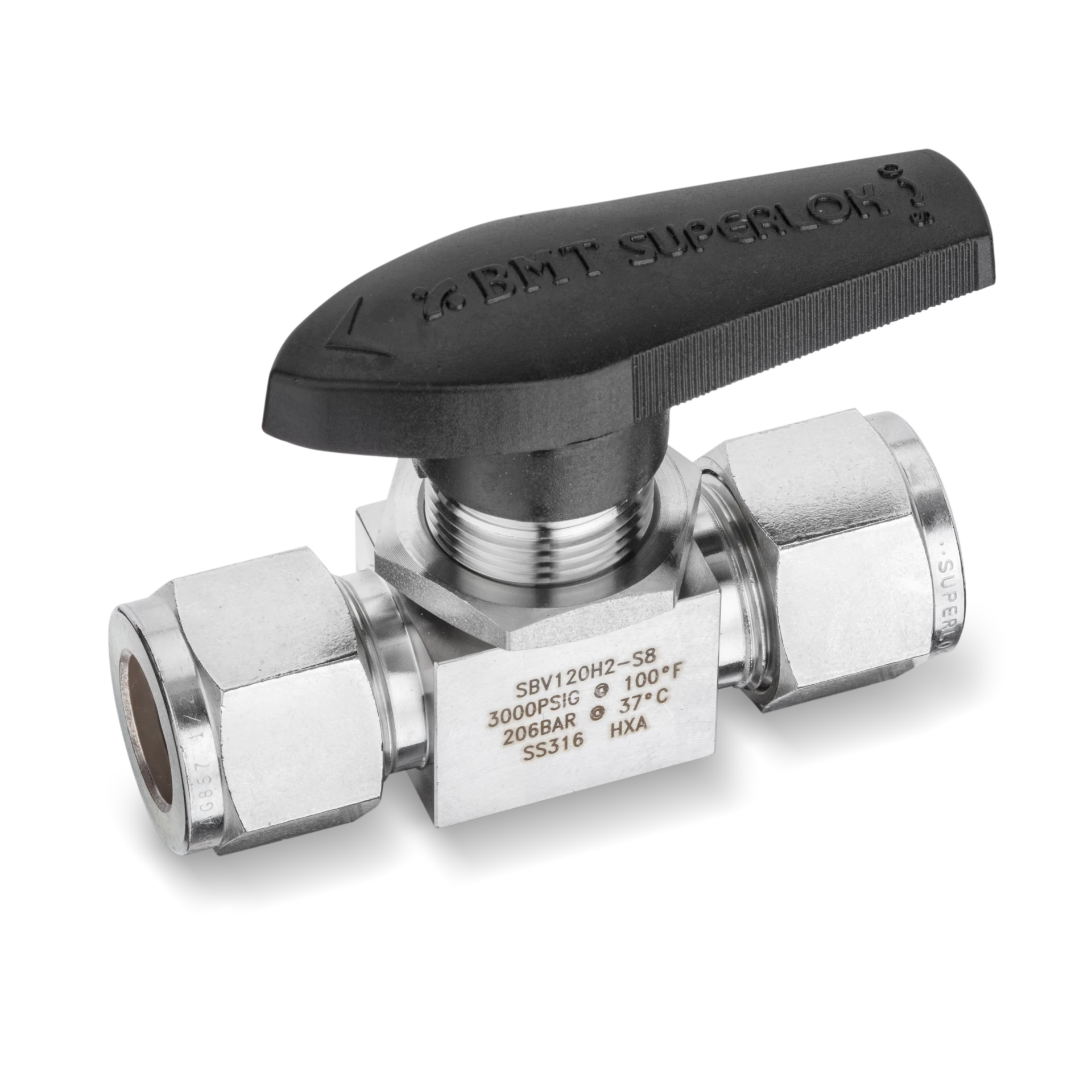
Superlok® fittings are listed in 316 stainless steel, a corrosion-resistant grade (316 vs 316L). For the station layout, see our hydrogen fueling station post.
Questions on 70 MPa service
Does 700 bar equal 70 MPa?
Yes. One megapascal is ten bar, so 70 MPa is 700 bar. The release states MPa; the bar figure is our conversion.
Is 87.5 MPa the limit for heavy-duty fuelling?
Not established. The figure comes from light-duty protocol slides. A May 2024 NREL review described J2601-5 as a Technical Information Report, not yet an approved fuelling protocol.
Is any Superlok® part rated for 70 MPa?
We do not claim it. The pressure rating page does not mention hydrogen or 70 MPa. Send us the line and we will confirm the rating per order.
Bring the pressure, the tube and the duty
Send the highest line pressure, tube size and wall, and the fills per day, and we will answer with what we can rate.
SUPERLOK® NORTH AMERICA
Clean bores matter most where a leak is hardest to see, which is why Superlok® is made with the finest interior surface finish of any tube and pipe fitting on the market.
Sources
- Toyota Motor North America, “Toyota Achieves Heavy-Duty Hydrogen Truck Milestones,” news release, 20 October 2026, via PR Newswire. Company publication. Supports 70 MPa high-flow research with the National Laboratory of the Rockies, up to 300 g/s, SAE J2601-5, about eight minutes, up to 450 miles, and the absence of any hardware detail. prnewswire.com
- U.S. Department of Energy, “Light Duty Fuel Cell Electric Vehicle Hydrogen Fueling Protocol,” webinar slides (date not stated on the page). Supports 87.5 MPa maximum for 70 MPa nominal and the 125% vehicle limit. energy.gov
- Post et al., NREL, “Turboexpander for Direct Cooling in Hydrogen Vehicle Fueling Infrastructure,” NREL/TP-5700-86669, December 2023. Supports the 80.2 MPa cascade limit and 5 to 70 MPa simulated ramps. nrel.gov
- Sprik, Hecht and Thorson, “H2@Scale CRADA: CA Research Consort.,” DOE Annual Merit Review project H2041, 6 May 2024. Supports 700 bar at 10 kg/min, 300 g/s peak test device, tubing size risk slide, and the J2601-5 status. nrel.gov
- U.S. Department of Energy, “March H2IQ Hour: Hydrogen Fuel Dispensing for Medium- and Heavy-Duty Vehicles,” text version, webinar of 26 March 2024, speaker Shaun Onorato of NREL. Supports the comments on lacking hardware, valve response and reliability. energy.gov
- Peters et al., NREL and Sandia, “Dispenser Reliability,” DOE Annual Merit Review project in008, 30 May 2020. Supports ramp rates, the 2,000 and 6,000 fill statements and the component types tested. hydrogen.energy.gov
- European Commission, Clean Hydrogen Partnership knowledge hub, Hydrogen Incidents and Accidents Database, “Leaks from threaded joint” (KHK incident 2022-608). Supports the 40 MPa cone-and-thread leak, detection, cause and lessons. knowledge.clean-hydrogen.europa.eu
Technical note: the Toyota release is the company’s own account and says nothing about station or vehicle hardware. The DOE slides are light-duty material and undated on the page, and we found no J2601-5 pressure limit to set beside them. The dispenser reliability data concerns nozzles, breakaways, valves and a filter, not tube joints, and the incident entry concerns a 40 MPa unit. Older reports cited here were published under the NREL name; the Toyota release names the National Laboratory of the Rockies in Golden, Colorado. Conversions are our arithmetic. No source rates any Superlok® part for 70 MPa service; grade and rating confirmed per order.
Trademark disclaimer: Superlok® is a registered mark of its owner. Toyota, SAE, NREL and KHK are names of their respective owners, used only to identify sources and a standard, with no affiliation implied. Cross-references are made by form, fit, and function only.