

SUPERLOK NORTH AMERICA · DATA CENTER COOLING
Data Center Liquid Cooling: Where the Fittings Actually Sit
A walk through the facility loop, the coolant distribution unit and the secondary loop, and the joints in each.
The data center liquid cooling build-out is where a hyperscaler's capital budget turns into pipe, pumps and a lot of small connections. According to Meta's third-quarter 2026 results release of 21 October 2026, a company publication, capital expenditures including finance lease principal payments were $34.91 billion in the quarter, and the 2026 outlook is $135-145 billion, narrowed from $130-145 billion. This post maps the architecture and shows where tube fittings and quick disconnects sit in it. Supply and lead times are covered in our earlier note on cooling hardware availability, so they stay out of this one.
Data Center Liquid Cooling as Three Loops
Every source we read draws the same boundaries and uses different names. According to Vertiv, an equipment manufacturer, in its educational guide to fluid networks, the primary loop or facility water system connects heat rejection equipment such as chillers, cooling towers or dry coolers to the room air handlers and the coolant distribution units. The coolant distribution unit, or CDU, is the bridge to the IT side: it moves heat from the secondary loop into the facility loop through a liquid-to-liquid heat exchanger, filters the coolant, and regulates temperature, pressure and flow.
| Source | Facility side | Between | IT side |
|---|---|---|---|
| Vertiv | Primary loop, facility water system | CDU | Secondary fluid network, or technology cooling system |
| Lenovo Press | Facilities Water System, primary loop | CDU | Secondary loop, Datacom Equipment Cooling System |
| ASME column | Facility Water System | CDU | Technology Cooling System |
| Consulting-Specifying Engineer | Facilities water system | CDU | Technology cooling system |
Read a specification by its boundary, the heat exchanger, not by its label.
Lenovo's Neptune water-cooling standards, a manufacturer publication, state that the facility and IT liquids sit in separate loops, so different fluids can be used in each. The CDU itself can sit at the rack, row or pod level. In the Consulting-Specifying Engineer article by Ardas Sabuncuyan of Dynaten (8 April 2025), CDU capacities run from 60 to 80 kW for a small in-rack unit, 300 to 800 kW for an in-row unit, and 1 MW or more for a large one. Those are unit ratings, not a statement about rack density, which this post does not quote.
What Each Loop Carries and What It Touches
Vertiv says the primary loop circulates facility water or a water-glycol mixture. On the IT side, the same Consulting-Specifying Engineer article says a 25% propylene glycol concentration with deionized water is preferred in most cases, and that CDUs typically filter debris with fine mesh at 50 micrometers or finer. It also passes on ASHRAE guidance against zinc, aluminum, brass containing more than 15% zinc, and non-stainless-steel iron in the wetted path.
That guidance is the starting point for material choice. The reported exclusion of non-stainless-steel iron leaves stainless steel, a corrosion-resistant alloy, in play, and Vertiv notes that row-level headers are typically 4-inch or 6-inch stainless steel or polypropylene. Mixing metals in one loop is a separate hazard; our note on galvanic corrosion between dissimilar metals covers it. Grade is confirmed per order, and 316 vs 316L explains the choice most buyers face.
Where the Connections Sit, Loop by Loop
Row headers of 4 or 6 inches are large-bore pipe. In our reading, small-bore hardware begins where lines drop from those headers to branches, sensing points and the rack. The sources support five locations.
- CDU sensing and service ports. A CDU that regulates temperature, pressure and flow and monitors fluid quality, per Vertiv, needs sensing connections. Lenovo adds that CDUs should include integrated leak detection monitoring.
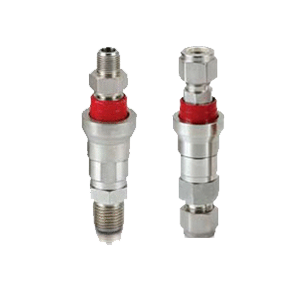
- Row distribution to the rack. Vertiv places quick-disconnect fittings in the secondary network for easy rack connections.
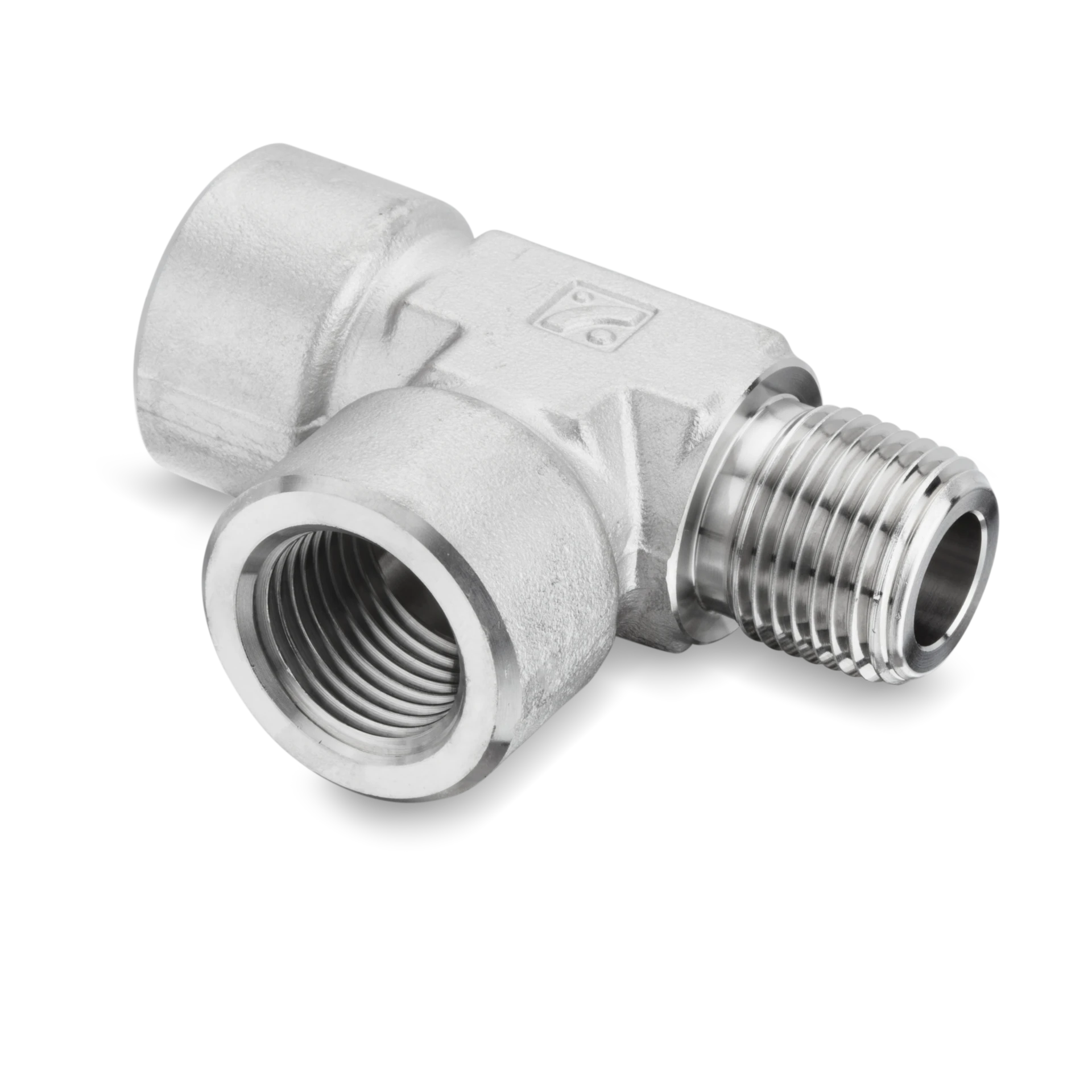
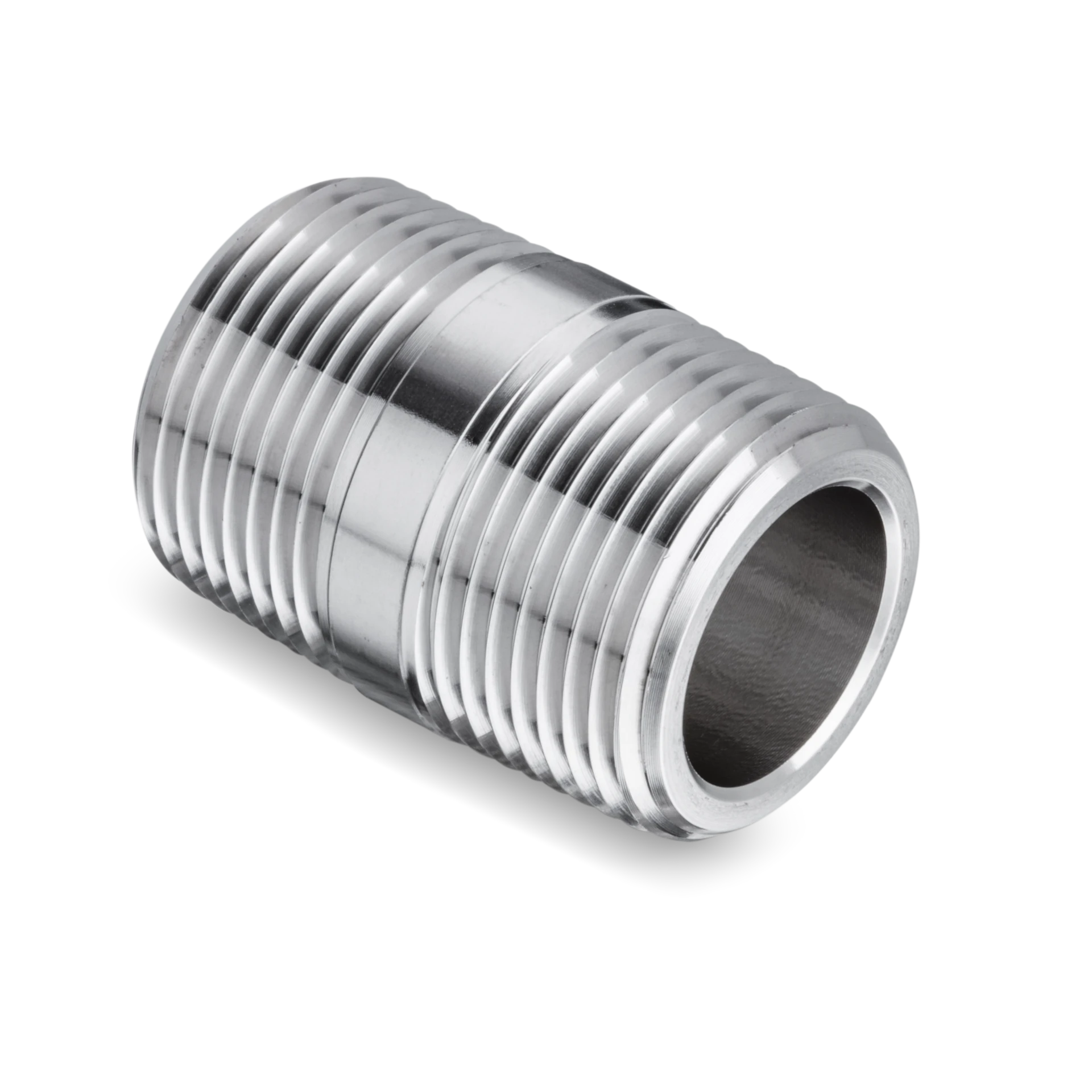
- Manifold ports. The Consulting-Specifying Engineer article says threaded terminations are typically preferred on rigid tubing or manifold ports, and that tapered pipe threads usually need sealing paste. See NPT thread sealant and NPT vs BSPT before mixing thread standards.
- Manifold to server. The same article calls for dripless quick disconnects on manifold-to-server tubing, with dry-break connectors limiting spillage inside the server to no more than 1 cubic centimeter.
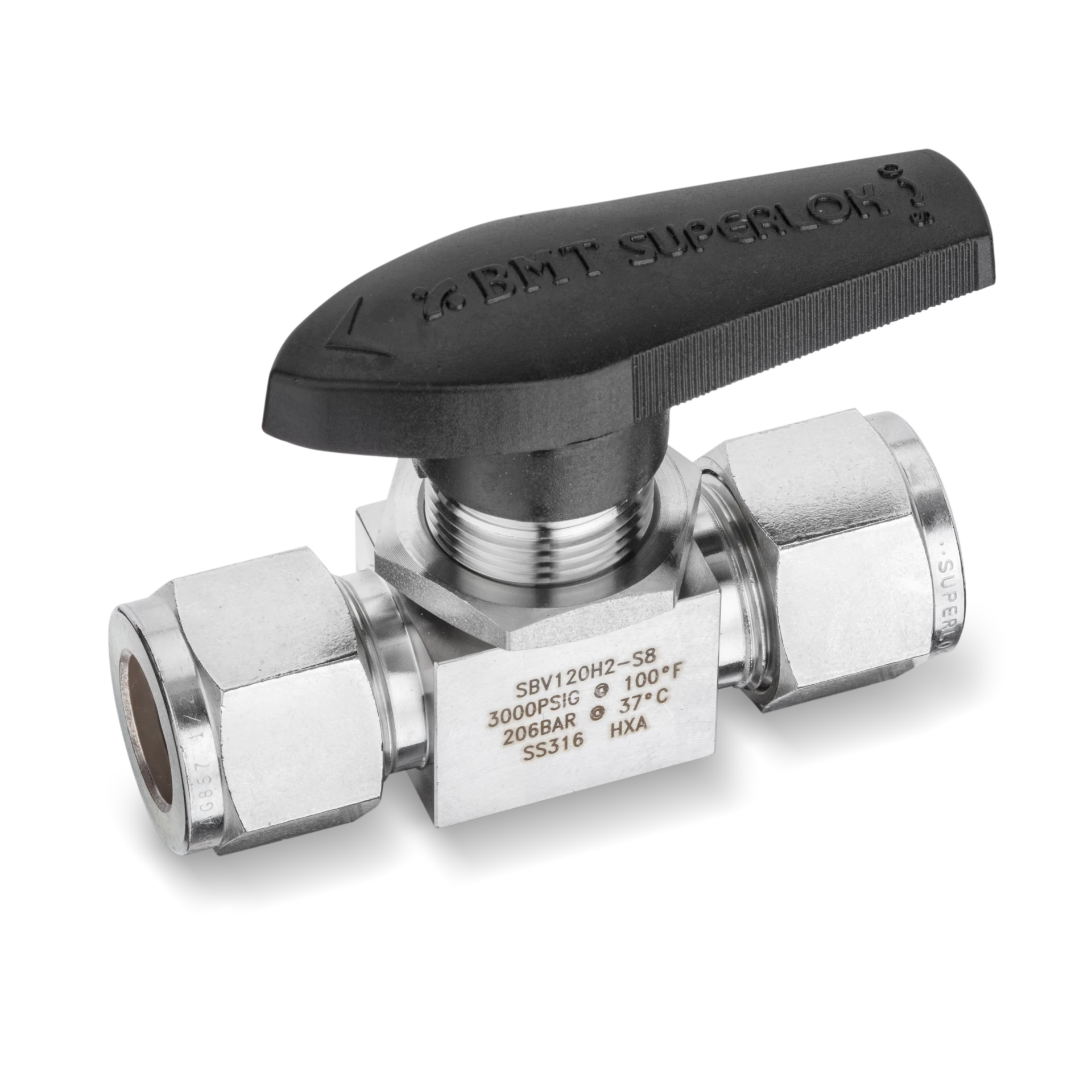
- Rack isolation. It also recommends isolation valves on each rack, and leak detection placed through the system and reporting to the CDU.
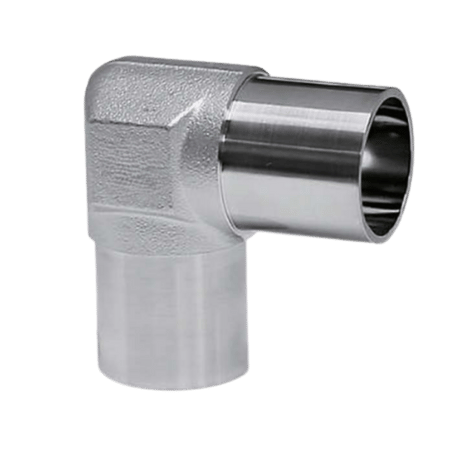
The ASME column by Robert Sty of HDR Engineering (May 2026) adds a design fact that bears on all five: piping is typically looped so water has multiple pathways to the equipment, which only works if sections can be isolated. It also notes that material and joint selection matter because leaks cause downtime and equipment damage.
Matching Hardware to a Loop
None of the sources gives a pressure, temperature or seal-material requirement for fittings in these loops, so we do not quote one. Treat the design pressure, the coolant and the temperature of each loop as inputs, then check them against the part rating on our pressure rating page. Superlok® supplies ball valves for isolation and quick connects for service points. Whether a given part suits a given coolant or a given dripless requirement is a per-order question, confirmed with us in writing, not something to infer from a catalog family.
Questions on the Loop Layout
What separates the facility loop from the secondary loop?
The CDU heat exchanger. Heat crosses it, coolant does not, which is why the two loops can run different fluids.
Is the secondary loop plain water?
Not necessarily. One engineering article prefers 25% propylene glycol with deionized water in most cases. Lenovo only says different fluids may be used in each loop, and Vertiv does not name the secondary coolant.
Where do quick disconnects go?
At the rack edge and between manifold and server, per Vertiv and the Consulting-Specifying Engineer article. The rack-level view is a separate subject.
Why would a loop need isolation points?
Looped piping gives water multiple paths to the equipment, per the ASME column, and the Consulting-Specifying Engineer article recommends an isolation valve on each rack, so a section can be closed off for service.
Bring the loop schedule
Send the coolant, design pressure and connection list for each loop and we will reply with options per line.
SUPERLOK NORTH AMERICA
Closed loops stay clean when the wetted surface is smooth, and Superlok® builds toward the finest interior surface finish of any tube and pipe fitting on the market.
Sources
- Meta, "Meta Reports Third Quarter 2026 Results," 21 October 2026. Company publication. Supports Q3 capital expenditures of $34.91 billion and the $135-145 billion 2026 outlook, narrowed from $130-145 billion. investor.atmeta.com
- Vertiv, "Understanding fluid networks in liquid-cooled data centers: A complete guide," page dated 10.3.26. Manufacturer publication. Supports the primary loop, secondary fluid network, CDU functions, 4-inch or 6-inch stainless steel or polypropylene headers, and quick-disconnects in the row network. vertiv.com
- Ardas Sabuncuyan, "How to design piping systems for data centers that require liquid cooling," Consulting-Specifying Engineer, 8 April 2025. Supports CDU capacity classes, coolant mix, filtration, ASHRAE material guidance, threaded terminations, dripless quick disconnects, spillage limit, isolation valves and leak detection. csemag.com
- Robert Sty, "Designing for AI Workloads," ASME magazine, May 2026. Supports FWS and TCS terminology, looped piping, CDU separation role and the note on joint selection. magazine.asme.org
- Lenovo Press, "Lenovo Neptune Direct Water-Cooling Standards," LP2018, created or updated 13 September 2024. Manufacturer publication. Supports separate facility and IT loops, CDU placement and integrated leak detection monitoring. lenovopress.lenovo.com
Technical note: These sources establish how the loops are named and divided, what the CDU does, and where engineers say quick disconnects, threaded ports, isolation valves and leak detection belong. They do not establish a rack power density, a fitting pressure or temperature requirement, or the suitability of any Superlok® part for a given coolant; the Vertiv page date is read from a day-month-year stamp and the ASHRAE guidance is reported second-hand through one article. Material grade and rating are confirmed per order.
Trademark disclaimer: Superlok® is a registered mark of its owner. Meta, Vertiv, Lenovo, ASHRAE, ASME, HDR and Dynaten are named only to identify cited sources, and their marks belong to their owners. Cross-references are made by form, fit, and function only.