
SUPERLOK NORTH AMERICA · UHP SYSTEMS
Orbital Welding vs Compression Fittings on a Fab Build
Which joint goes where on a high-purity build, and what each one costs you in cleanliness, service access and site labour.
Every high-purity build settles orbital welding vs compression fittings one joint at a time. According to SEMI’s press release of 13 October 2026, a trade association publication, 13 new 300mm fabs or lines begin operations or ship first silicon in 2026, rising to 23 in 2027. The gas and chemical lines serving a fab are joined in two ways: welded, or mechanical. The sections below sort them by job, from the point of view of the maker of UHP fittings and tube fittings.
Orbital Welding vs Compression Fittings: Where Each One Belongs
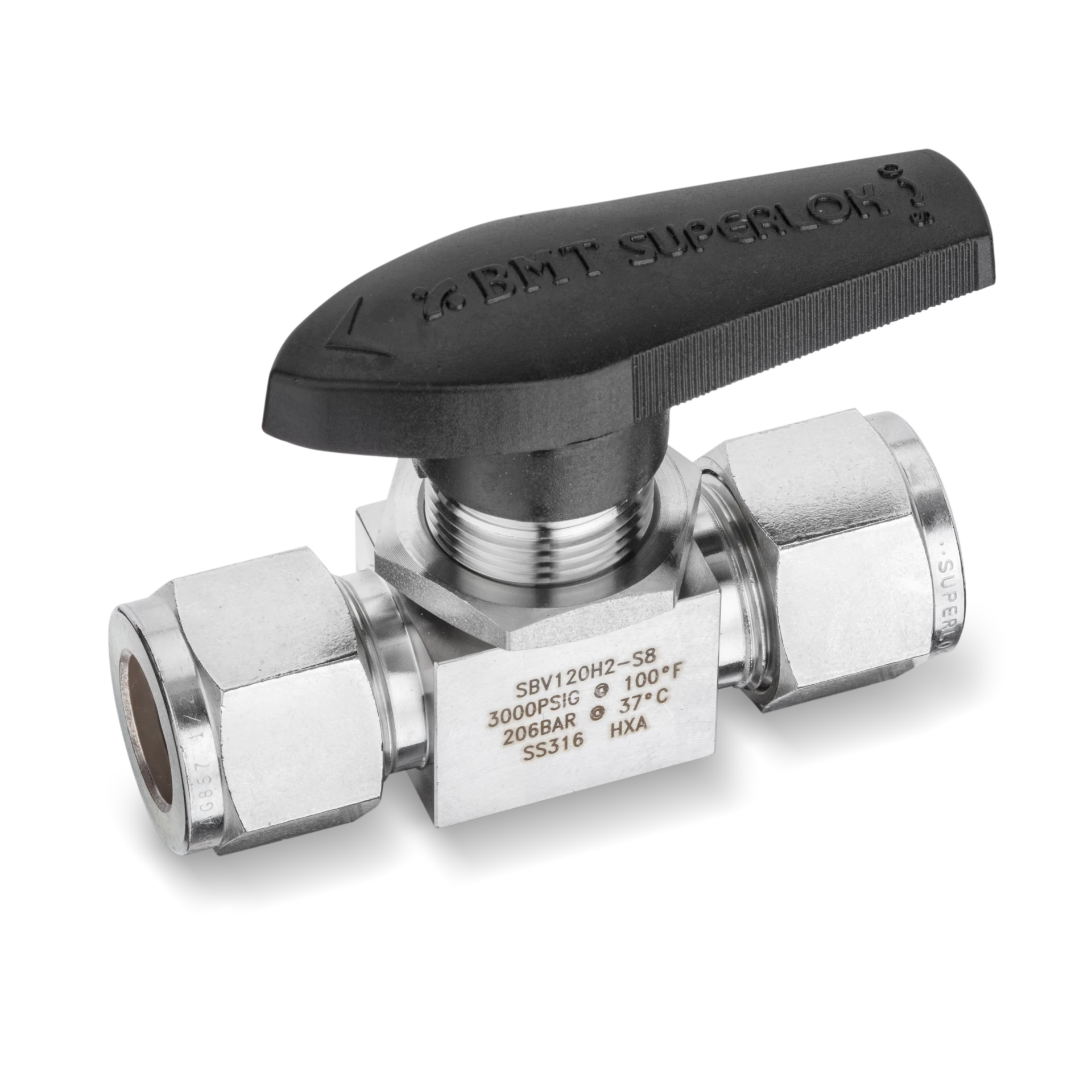
A workable rule has three parts. Long runs of high-purity gas line are welded. Connections that will be opened again, such as a component on a gas panel, use a metal gasket face seal. Instrument, utility and sample lines that do not carry a high-purity requirement use compression tube fittings. The owner’s specification overrides this rule, and nothing here replaces it.
The welded part is well supported. TWI, an engineering research organisation, describes orbital welding as a standard joining method for high-integrity liquid and gas systems in the semiconductor and pharmaceutical industries. For the other two, the questions are about access and cleanliness. If you are choosing between a ferrule and a flare, that is a different decision, covered in compression vs flare.
| Question | Orbital weld | Metal gasket face seal | Compression |
|---|---|---|---|
| Cleanliness | Argon shield and backing gas, which TWI says gives very clean results with low particle counts | Swagelok® says face seals trap less than tube fittings | Choose by purity class of the line |
| Taking it apart | Cut out and re-weld | Make and break, with a new gasket fitted | Make and break |
| Proving it | Sample coupons, then leak test | Turn count, then leak test | Turn count and gap gauge, then leak test |
| Site labour | Machine, weld head and a monitoring welder | Wrenches and a turn count | Wrenches, a turn count and a gauge |
A qualitative comparison, not a ranking. No leak rate here applies to any Superlok® part.
Cleanliness and Dead Volume at the Joint
A weld removes the joint as a feature of the bore. Tube meets tube and the arc fuses them, so there is no seal, nut or crevice to clean. What matters instead is the weld itself. TWI notes that coupons must continue to show full penetration and consistent bead width, and that weld quality depends on arc length, current, pulse frequency, travel speed, shielding gas and preparation. A poor bead leaves its defect inside the line.
A mechanical joint has parts, and the parts have gaps. According to Swagelok®, a manufacturer of metal gasket face seal fittings (VCR® is its trademark), its face seal fittings have less area of entrapment and are cleaner than tube fittings, and its catalog lists no “virtual leak” zones in the design. Both statements are the manufacturer’s, about its own product, and they are the reason designers specify a face seal at a gas panel instead of a ferrule joint. Superlok® makes its own range, the metal seal fittings with weld glands, and nothing here treats it as a VCR® product. The seal itself is a UHP gasket, listed in 316 stainless steel.
The bore matters as much as the joint. Superlok® markets its fittings as having the finest interior surface finish of any tube and pipe fitting on the market, and a rough fitting bore at a smooth weld wastes the weld. Tube finish is covered in electropolished tubing.
Serviceability and Qualification
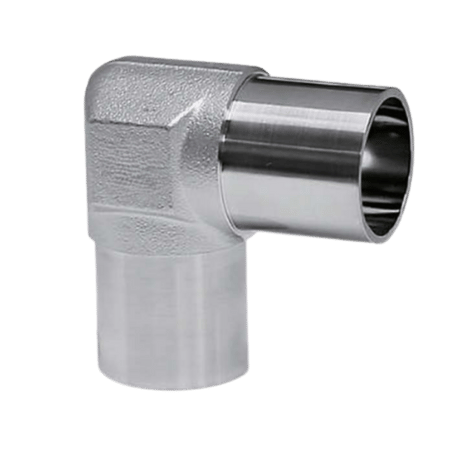
Serviceability is where mechanical joints earn their place. Swagelok® describes its face seal line as metal-to-metal sealed, make-and-break connections in high-purity welded systems, which is the same split described above: welded runs, with mechanical joints where the line has to open. A welded joint cannot be opened. It is cut out and a new joint is made, which means a weld head, purge gas and a qualified procedure again.
Qualification differs by joint. For welds, the proof is in the coupon and the weld record. TWI says orbital welding parameters are set by a microprocessor and can be stored and reused, and that the process is highly repeatable, while a welder still has to monitor and adjust it. For a face seal, the proof is assembly. Swagelok® shows a turn count after finger-tight, one-eighth turn for stainless steel and nickel gaskets and one-quarter turn for copper, in its catalog. For compression, the Superlok® installation guide gives a turn count and a gap gauge check, described in gap gauge check. Every joint then goes through a helium test; see helium leak test.
Labour and Schedule on Site
Orbital welding trades capital for consistency. TWI says orbital equipment can cost five to ten times the initial capital cost of conventional welding, that productivity can be two to three times higher than conventional TIG, and that skill levels are lower than for manual welding. Not every object can be orbital welded, and different weld heads are needed for different objects.
Mechanical joints need no machine, but each one takes assembly time and its own inspection. The sources here give no hours per joint for either method, so the schedule comparison belongs to your installer’s own records. For 2027, the SEMI figures set the context: a year of commissioning and a year in which construction spending rises 33% to $63.3 billion. Installers will be stretched, so sequence the work. Welded distribution first, then the connections to equipment, as covered in UHP gas line installation, and then the panel, as in gas panel design.
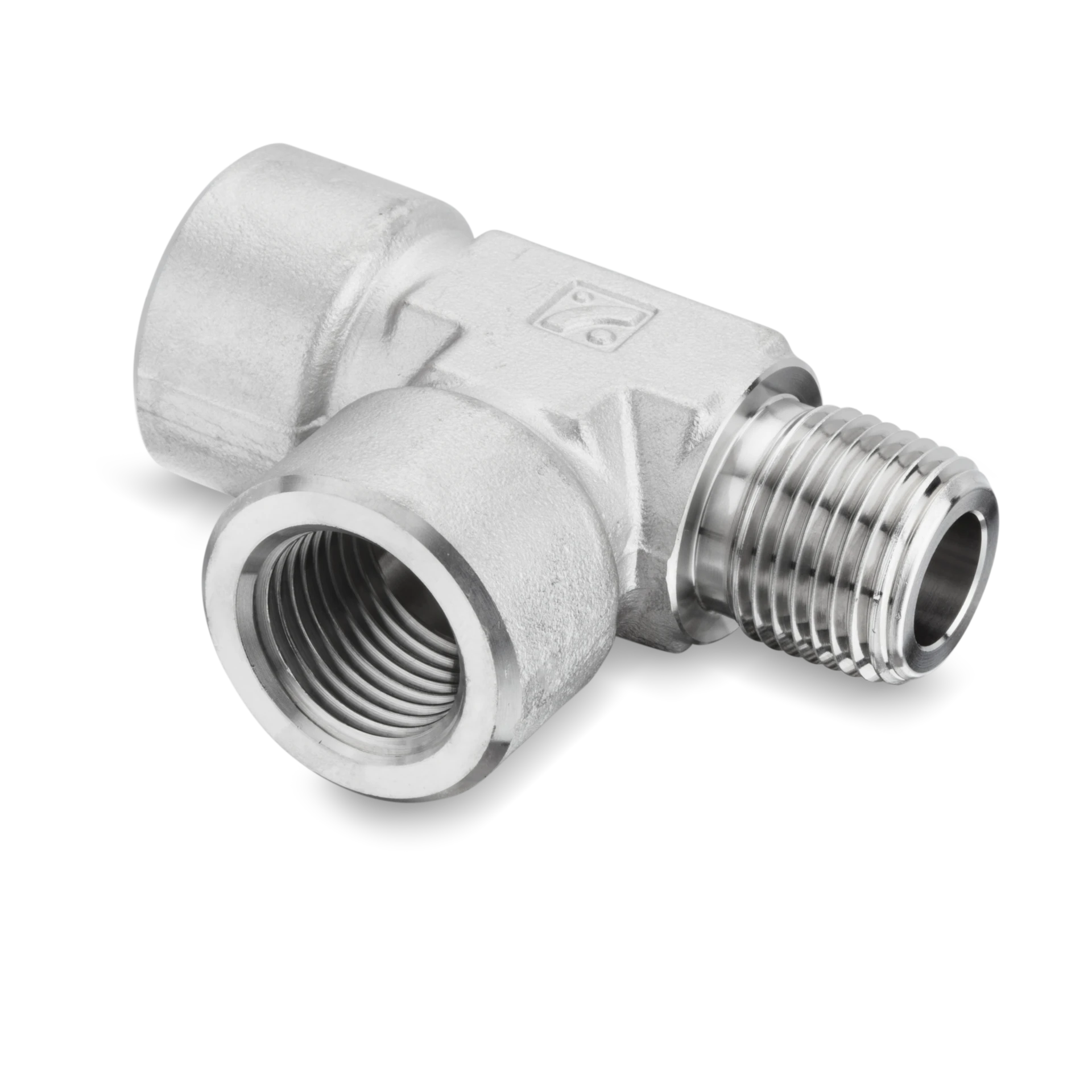
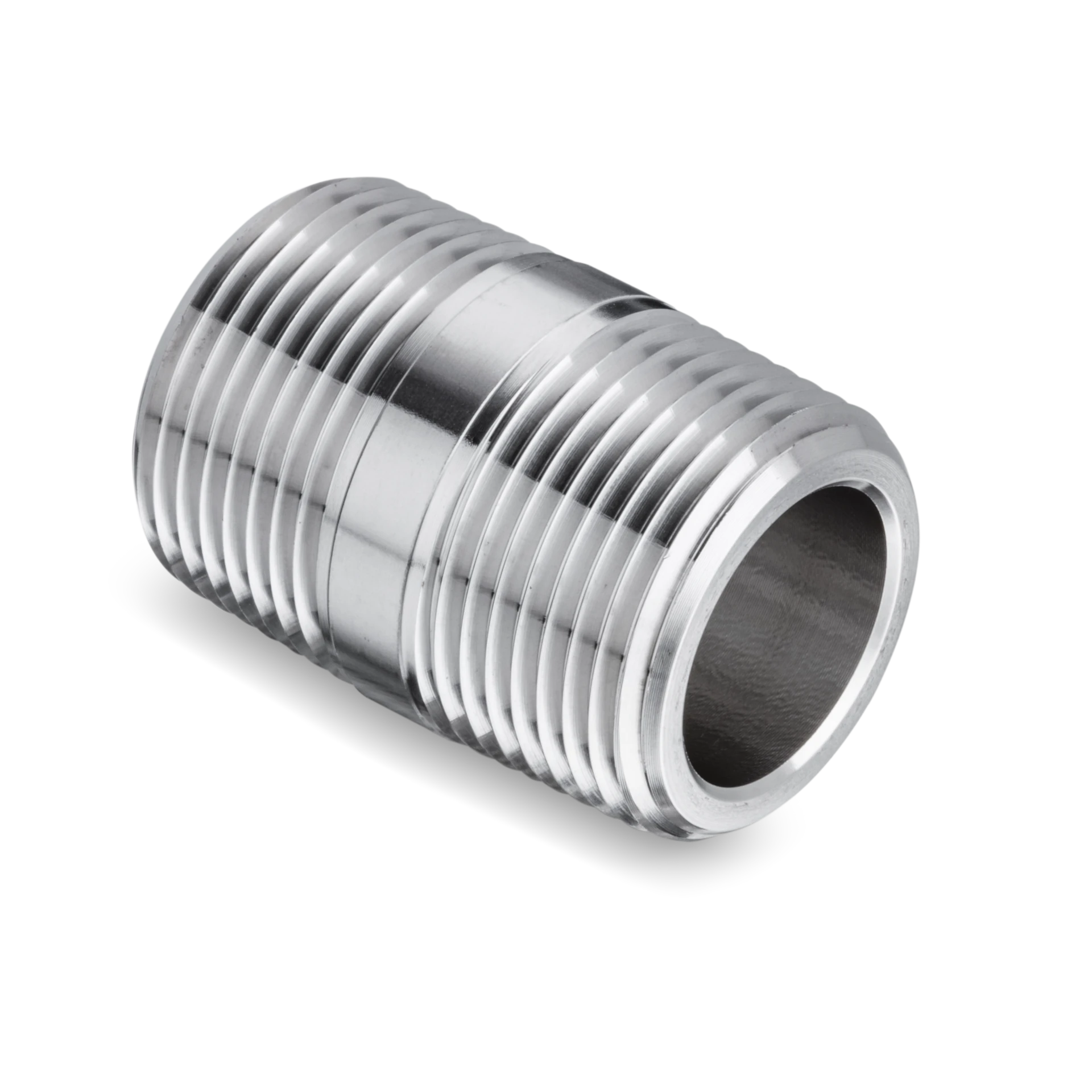
The same split recurs on the whole semiconductor fab fittings bill of materials. Our range covers weld glands and seals for the high-purity side and tube fittings for instrument lines. Stainless steel is corrosion-resistant, but grade and rating are confirmed per order.
Questions on Weld and Fitting Choice
Can a whole high-purity line be mechanical?
Possibly, if the owner’s specification allows it. The sources here do not set a limit, so ask for the written requirement.
Is orbital welding always faster?
TWI quotes a productivity gain over conventional TIG, not over mechanical joints, and it adds that weld heads suit some geometries only.
Why not weld everything and skip gaskets?
A welded joint cannot be opened. Anything that may need replacement, such as a regulator or filter on a panel, needs a joint that can be made and broken.
Do the same leak tests apply to both?
The method is the same, but the acceptance figure comes from the project specification, not from this post.
Send the joint schedule for a check
Tube size, joint type and a quantity let us match weld glands, gaskets and tube fittings to your drawings.
SUPERLOK NORTH AMERICA
Weld it where it stays shut, seal it where it opens, and finish the bore well either way.
Sources
- SEMI, "Global 300mm Fab Equipment Spending to Reach $227 Billion in 2029," press release, 13 October 2026. Supports 13 new 300mm fabs or lines beginning operations or shipping first silicon in 2026, 23 in 2027, and fab construction spending of $63.3 billion in 2027, up 33%. semi.org
- TWI Ltd, "What is Orbital Welding? (A Definitive Guide)," page dated 17 September 2021. Supports the process description, parameters, coupons, argon purge, semiconductor use, equipment cost, productivity, skill and geometry limits. twi-global.com
- Swagelok® Company, VCR® Metal Gasket Face Seal Fittings catalog, MS-01-24, Rev X, September 2026. Manufacturer publication. Supports the turn counts, the "virtual leak" statement and gasket materials. swagelok.com
- Swagelok® Company, VCR® Metal Gasket Face Seal Fittings product category page. Manufacturer publication. Supports the make-and-break description and the statement on entrapment and cleanliness versus tube fittings. products.swagelok.com
- Superlok North America, UHP gasket product page. Manufacturer publication. Supports the 316 stainless steel listing. superloknorthamerica.com
- Superlok North America, installation guide. Manufacturer publication. Supports the turn count and gap gauge check for compression tube fittings. superloknorthamerica.com
Technical note: These sources establish the SEMI fab counts, how orbital welding is described by TWI, and what Swagelok® states about its own face seal line. They do not establish a weld acceptance criterion, a hours-per-joint comparison, a leak rate for any Superlok® part, or which method your project requires; the rule of thumb in this post is a design convention, not a quoted standard. The Swagelok® statements are manufacturer claims about a different product range. Material grade and rating are confirmed per order.
Trademark disclaimer: Superlok® is a registered mark of its owner. Swagelok® and VCR® are registered marks of Swagelok® Company, named only to identify the manufacturer and the source documents cited; no Superlok® part is described as a VCR® part. SEMI and TWI are named only as sources. Cross-references are made by form, fit, and function only.