

SUPERLOK® NORTH AMERICA · FUELLING HARDWARE
Thermal Cycling Fatigue in Fuelling Hardware
What a precooled fill, repeated thousands of times, does to seals, ferrule grip, tube and joints.
Thermal cycling fatigue is wear that builds when a part is chilled and warmed again and again, even when no single swing looks harsh. A hydrogen fuelling line shows it clearly: gas precooled toward -40°C runs through the same joints, hoses and valves fill after fill. This post follows that cycle into seals, ferrule grip, tube and joints, using tube fittings as the reference point. According to a company release that Toyota Motor North America issued on 20 October 2026, not an independent study, Toyota and the National Laboratory of the Rockies ran multiple rounds of testing to show a heavy-duty truck can be refuelled at 70 MPa in about eight minutes. The release gives no temperatures and no component data, so the thermal evidence below comes from US Department of Energy laboratory documents.
How much temperature one fill really swings
Precooling exists to protect the vehicle. An NREL report of December 2023 says the tank liner has an operating limit of 85°C, that the limit can be exceeded in fast fuelling if the hydrogen is not precooled, and that conventional light-duty stations chill the gas to -40°C before it enters the vehicle. The same report puts the upper boundary of the SAE J2601 window at -33°C, and says stations are typically sized for at least five back-to-back fills before a cooling-down period.
Heavy-duty work aims at the same temperature. A DOE webinar of March 2024 carried NREL’s Shaun Onorato, who gave a delivery goal of -40°C, reported a test fill that stayed around it, and said hoses become very stiff at that temperature. The gas at the component is warmer than the delivery target at the start of a fill. DOE’s 2020 dispenser review measured -13.0°C at the start and -34.8°C at the end of -40°C-class fills, with an average thermal shock of 13.0°C in the first 30 seconds. Back-to-back fills kept the system from warming to ambient. A joint on such a line is therefore cold, then partly warm, then cold again, with a longer drift toward ambient whenever the station sits idle.
Thermal cycling fatigue in seals: where the evidence is
The strongest public data is on polymer seals. Sandia and NREL ran accelerated tests on dispenser valves, nozzles, breakaways and a filter at -20°C and -40°C, then took the O-rings apart for analysis. The Sandia report says damage and failure rates were higher at the lower temperature, that more cycles at -40°C increased damage, and that cycling at the -40°C required by SAE J2601 can reduce component life. At -20°C the project slides report no significant increase in damage with more cycles. The damage was mainly physical, not a chemical change from hydrogen.
Scatter was wide. A valve with a PTFE seat failed after 99 fills at -40°C and a breakaway after 132 cycles, while a nozzle leaked at 1,063 cycles. The project also lists a particular concern: compression set at low temperature leading to leaks as the temperature rises. The slides do not report compression-set measurements, so treat it as a stated risk, not a result. Material choice mattered, with Buna N and PTFE showing more damage than polyurethane and PEEK in that work.
| Part | Documented finding | Reading for a tube joint |
|---|---|---|
| Polymer seals | More damage at -40°C, rising with cycles | Any seal in the line needs a cold rating |
| Valves | 26 of 31 failures; about two-thirds of valves out of specification for stem torque | Check torque as built |
| Hoses | Very stiff at -40°C | Allow for load transfer at the end fitting |
| Metal tube and ferrules | No test data found in these sources | Ask the maker for cycle evidence |
The right column is our reading, not a finding of the sources.
Ferrule grip, tubing and the joint itself
The same DOE review recorded failures as parts needing replacement, repair or retorquing, and its takeaways stress the O-ring-to-metal interface, especially under thermal shock. It also reports metal debris from build and cleaning carried through a station. None of that tests a ferrule joint, so what follows is engineering reasoning. When tube, ferrules and body are the same stainless steel they shrink together, so the cold alone is not the main worry. The worry is anything that is not that steel: seals in adjacent valves, thread lubricant, and a make-up that relaxes. A tube run fixed at both ends also cannot contract freely, so load goes into the joints and the supports. Bends give a run room to move, and bend radius and ovality limit what you can do with them.
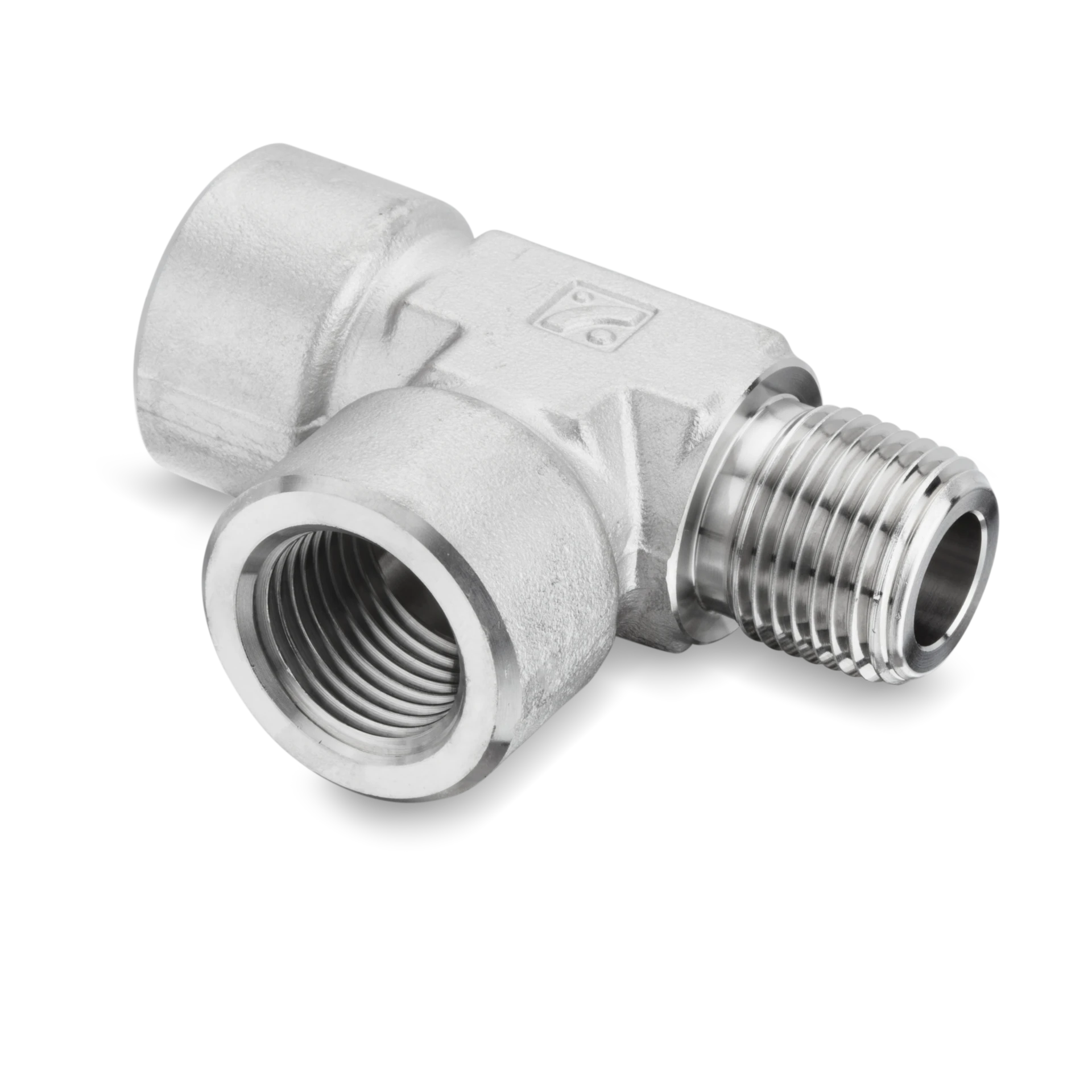
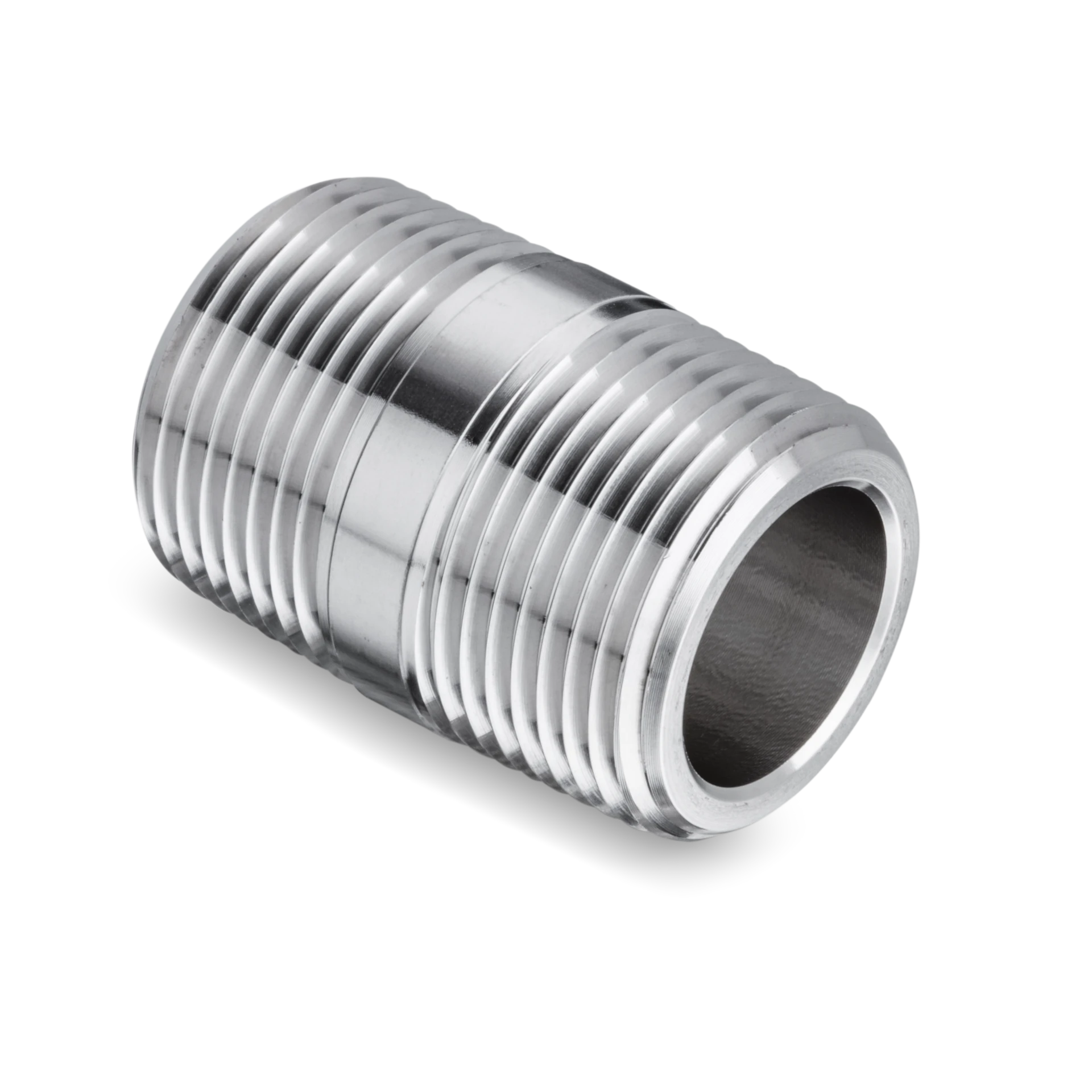
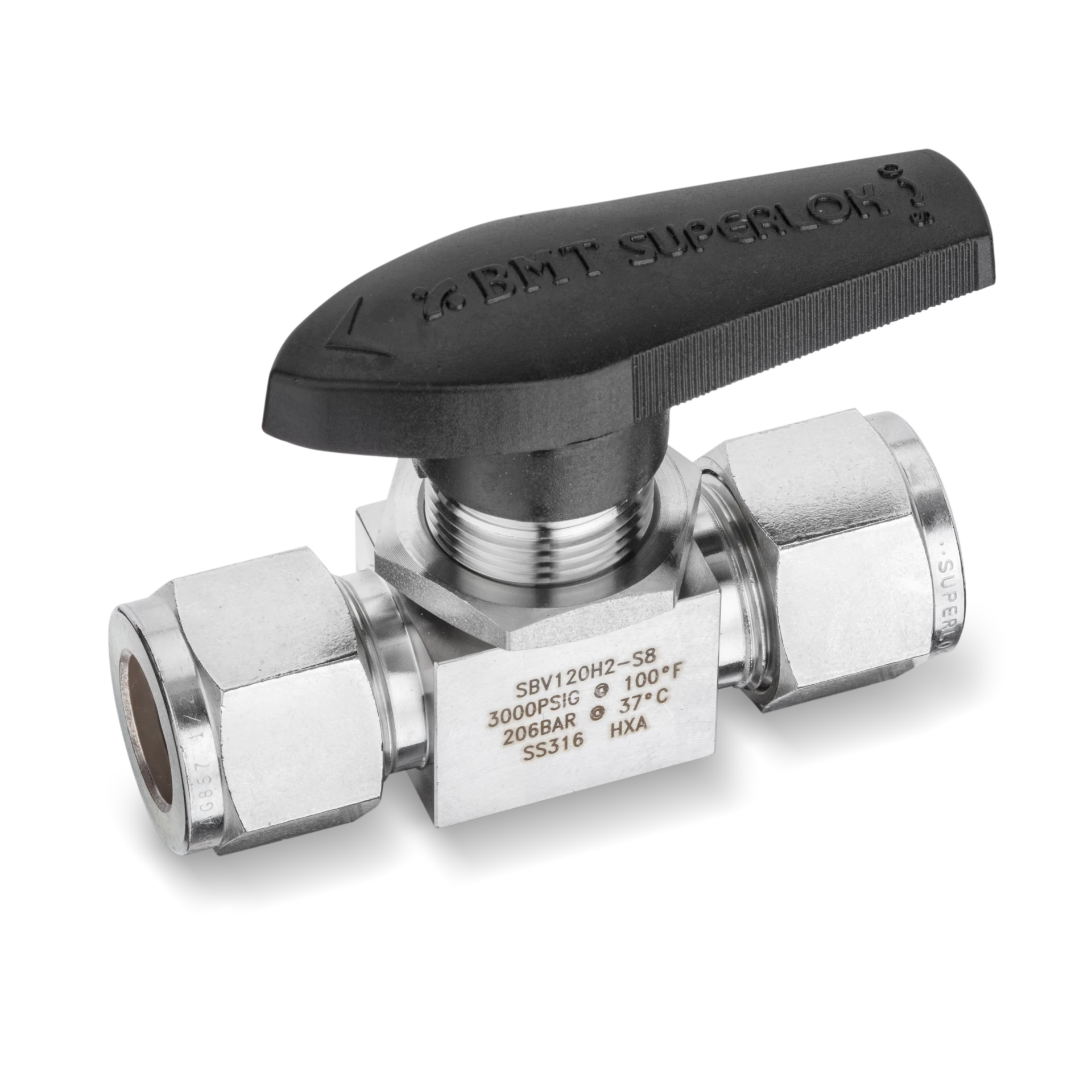
Superlok®’s own tube fittings page says the fittings are leak free under shock, vibration and temperature cycling. For a specific temperature range, cycle count or hydrogen duty, ask for the test basis with your quote and we will confirm it per order. Ferrule design is covered in front and back ferrule.
It is also a contrast with other work. The coolant loops in our data center liquid cooling and liquid cooled server racks posts are, in our reading, steadier in temperature. The leak-catching habits carry over to fuelling; the thermal duty does not.
What to ask for before the line goes cold
- Test conditions: the temperature range, cycle count and pressure used, and whether the assembled joint was cycled or only the seal.
- Seal materials: for every elastomer or PTFE part, the cold rating, and a warm leak check after a cold soak, because compression set shows up on warming.
- Assembly: follow the installation guide and confirm the make-up with the gap gauge check.
- Records: log leaks against fill count, so a trend shows before a failure.
Listed in 316 stainless steel, a corrosion-resistant grade, Superlok® tube fittings carry a rating confirmed per order. For the metallurgy of hydrogen service, read hydrogen embrittlement and our guide to high pressure hydrogen fittings.
Questions on cold-cycle duty
Do tube fittings see -40°C?
That is the delivery target, not a measurement at every joint. In the DOE test the gas at the components ran from -13.0°C to -34.8°C. Your station design sets the real figure.
Does this show tube fittings failing from thermal cycling?
No. The sources tested dispenser components and polymer seals. We found no test of a ferrule joint.
How many cycles can a fuelling joint take?
No source gives a count for joints. For dispenser parts at -40°C, DOE reports about a 50% survival chance near 2,000 fills.
Did the Toyota release report temperatures?
No. It reports the 70 MPa research, 300 g/s peak flow, SAE J2601-5 and the eight-minute fill.
Planning a cold-cycle line?
Send the temperature range, fills per day and tube size, and we will reply with the ratings we can confirm.
SUPERLOK® NORTH AMERICA
Every joint should start clean and tight, and Superlok® offers the finest interior surface finish of any tube and pipe fitting on the market.
Sources
- Toyota Motor North America, “Toyota Achieves Heavy-Duty Hydrogen Truck Milestones,” news release, 20 October 2026, via PR Newswire. Company publication. Supports 70 MPa research with the National Laboratory of the Rockies, multiple rounds of testing, about eight minutes, SAE J2601-5, and the absence of temperature data. prnewswire.com
- Post et al., NREL, “Turboexpander for Direct Cooling in Hydrogen Vehicle Fueling Infrastructure,” NREL/TP-5700-86669, December 2023. Supports the 85°C liner limit, -40°C precooling, the -33°C boundary and the five back-to-back fill sizing. nrel.gov
- U.S. Department of Energy, “March H2IQ Hour: Hydrogen Fuel Dispensing for Medium- and Heavy-Duty Vehicles,” text version, webinar of 26 March 2024, speaker Shaun Onorato of NREL. Supports the -40°C delivery goal and stiff hoses. energy.gov
- Peters et al., NREL and Sandia, “Dispenser Reliability,” DOE Annual Merit Review project in008, 30 May 2020. Supports gas temperatures, thermal shock, valve failures, torque, the O-ring-to-metal takeaway, and the 2,000 and 6,000 fill statements. hydrogen.energy.gov
- Menon and Hecht, Sandia, “Dispenser Reliability: Materials R&D,” SAND2021-6364R, 30 November 2020. Supports higher damage at -40°C, more damage with more cycles, and the effect on component life. sandia.gov
- Menon et al., Sandia, “Dispenser Reliability: Materials R&D,” DOE Annual Merit Review project in013, 2020. Supports seal materials, the compression-set concern, no significant increase at -20°C, and the individual failure counts. hydrogen.energy.gov
Technical note: the Toyota release is the company’s own account and contains no temperature or component data. The DOE and Sandia work tested dispenser valves, nozzles, breakaways and a filter in light-duty conditions, and measured component damage and failures over cycles, not the fatigue life of tube or ferrules. The ferrule and tube paragraph, the contrast with cooling loops and the right-hand table column are our reasoning. Test basis for temperature cycling is confirmed per order. Older reports cited here were published under the NREL name; the Toyota release names the National Laboratory of the Rockies in Golden, Colorado. Grade and rating confirmed per order.
Trademark disclaimer: Superlok® is a registered mark of its owner. Toyota, SAE, NREL and Sandia are names of their respective owners, used only to identify sources and a standard, with no affiliation implied. Cross-references are made by form, fit, and function only.